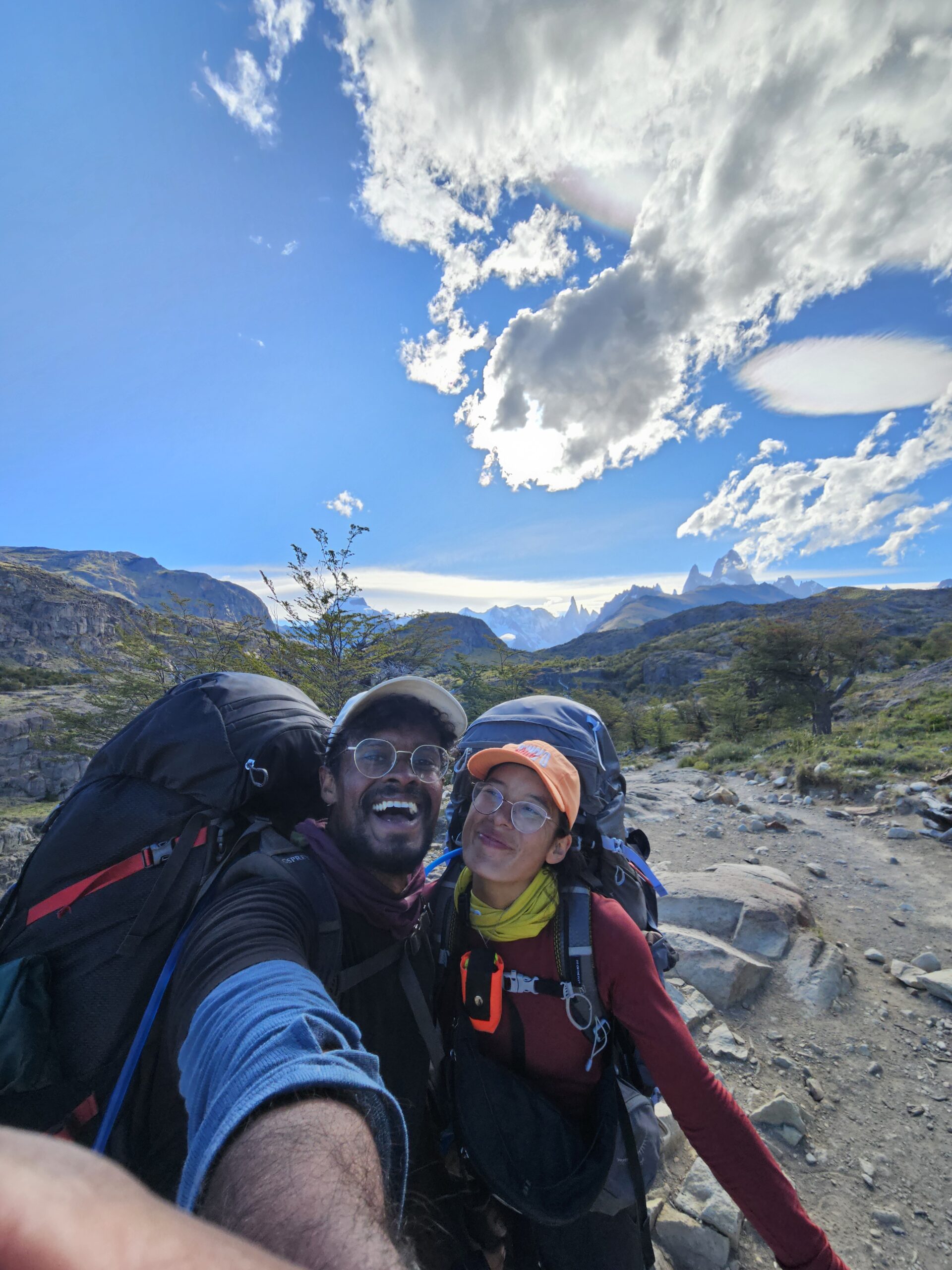
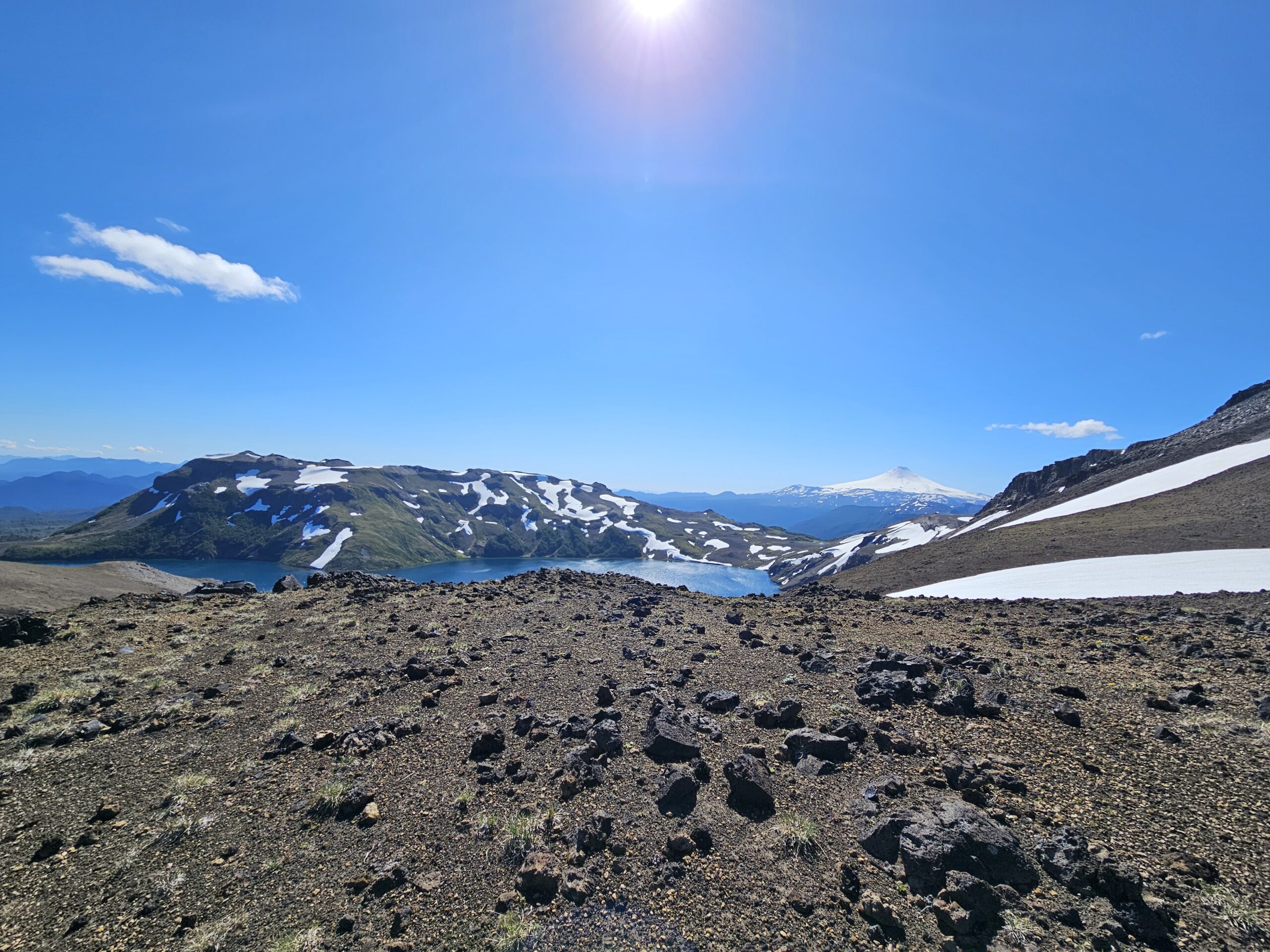
There’s no rest for those who love to hike – we had one night in a hostel in El Calafate before jumping on a plane to our final Patagonian destination: Bariloche, where warmer weather finally awaited us. In fairness, the weather was too warm – a series of wildfires had started a few hundred kilometers south of Bariloche, and for the previous few weeks the wind blowing from the south had been bringing ash and smoke into the skies. We got super lucky, and arrived as the prevailing wind turned. We had wonderful weather without a trace of the disasters further south.
Bariloche was the first reasonably sized town we’d been to since we left Puerto Montt. It was a bit of a shock to see so many bustling people, both locals and tourists, but overall the vibe was pretty cool – fancy chocolate shops line the main street, with stores full of Argentinian knick-knacks and anime filling the gaps. A small plaza overlooks the lake, and we arrived on a Sunday so there were plenty of locals out enjoying the sunshine, purchasing snacks and generally contributing to a sweet summer vibe.
Bariloche was to be our last stop in Patagonia before we took a break from hiking and began to travel north towards Bolivia. We had eight days to explore the surrounding parks – but after already spending 10 nights in the tent, we were keen to combine the hiking with some R&R. Thankfully, we spied a little B&B for a reasonable price, so the b
Tell me everything:
The Four Refugios Hike (well, two)
Two days in Bariloche and we were off again, onto the popular Four Refugios hike. Of course, we weren’t staying in the refugios ($$) , but our tent (-$), although some of the refugios do have a large enough common area to accommodate campers – at least until dinner is served.
This one didn’t go quite the way we had planned – it wasn’t just that the budget allowed us to spend less time in our tent, but that the rain forced us to cut this hike short. We spent two nights at Refugio Frey, taking a day in the sun to relax a bit, followed by one night at Refugio Jakob before the rain packed it in. The staff at Refugio Jakob strongly discouraged us from taking the route the next day to Refugio Negra (which also happened to be the most difficult section), and told us the National Park had actually closed the track for the weekend, the weather was forecast to be so bad. One of the staff described an ‘alternative’ route – that was, hiking down to the road, along it for 5km, and then back up the track to the next Refugio – totalling about 30km in the rain, with about 1000m of elevation in both directions. Once we got to the road, wet and cold, we decided it was a no-go plan. We ended up booking a last minute AirBnB within an hour’s walk of the trailhead, in the small village of Villa Nahuel Malal. Call us softies, but it ended up being the perfect little cottage – with a wee kitchen and a comfortable outdoor area – it made us feel as though we were still in the outdoors, but with the creature comforts a roof and hot water bring. Awal’s knees had started to play up with the elevation changes, so the extra days of recovery were well worth it. It does turn out that some of that ended up being beach time, because the forecasted ‘weekend storms’ never arrived! We had days of blue skies by the lake.
The standard Four Refugios loop takes only four days. The order is Frey – Jakob – Negra – Lopez. You can book at the huts online, either camping or in the refugio itself. They all have a limited number of booking slots (which is why we stayed at Frey two nights), although in the end as far as we could tell, they aren’t too worried on the number of campers who actually turn up. Please note that it snows during winter here so sometimes it is not possible to access certain huts and they are closed. Each respective website will be the best place to find the most recent information. Each refugio has a different amount you’re meant to pay to camp, though Frey was free when we were there. There are flushing toilets at all the refugios too – fancy! The refugios provide dinner & breakfast (for extra $$$), and you can buy lunch, so if you’re not inclined to bring food up the hills, you can purchase meals (and extra snacks) as needed.
Each refugio is accessible from the road, but the track goes over mountain passes to join up to each of them. This does mean that on weekends & in general throughout the summer, they fill up, as locals can do overnighters easily. Frey is also a popular spot for climbers – which makes it extra busy!
Getting There:
There’s a public bus that leaves every hour from Bariloche, #55, that you can catch to “Cathedral” (ski area), which drops you at the trailhead. A Sube card is necessary, but you only need one for a group. The fee is relatively higher than others (we recall 5k ARS each), as it’s about an hour on the bus and it’s a popular tourist route both in summer and winter.
Day 1 (~4 hours)
Once at Cathedral, you’ll be dropped at a big parking lot. Check your GPS for the track start (or follow the line of people). It is well marked, once you find it. The track climbs steadily for about 30 minutes until you reach a highpoint over Lago Gutierrez. The track is exposed and provides gorgeous views as you walk alongside the lake. Eventually, you reach a pass, where you will turn northeast and begin to ascend again through forest – we spotted a woodpecker in this section, so keep an eye out for birdlife! Eventually, the forest clears and it becomes rocky scree and low bush again, and there’s a final ascent to Refugio Frey, which sits next to another Laguna for picturesque views.
Note: Some people do this as a day hike, or you could do it as an overnighter loop, looping this section in with the start of day 2. The circuit goes up the first pass, and then back down to the west around Cerro Cathedral. We didn’t check out the route, but we read a few other blogs that said this path can be pretty steep and sketchy in sections – so have some good boots to keep you steady.
Day 2: (~5 hours)
As above, the track continues on around the laguna and up the first pass. The first uphill section is just a tough slog upward, and you eventually will arrive at a second, smaller laguna. The next section is a bit more challenging and fun – there’s a bit of boulder scrambling to get up, using your hands and a little rock climbing. Once through the pass, there are some gorgeous views of the surroundings, so take it in for a moment before beginning your descent! The descent is pretty steep, with some sections of thick scree (fun) and some of light scree (slippery as hell). You’ll descend into the forest and skirt the edge of the valley, walking east. There’s a campground marked on the map here, if you’d prefer to wild camp off the tops, and it seemed like a really nice spot. Continue on from there to eventually start rising again – one more pass! This climb is much less technical and a lot gentler, although the descent on the otherside is again, rough, the shots of the refugio nestled in against another the laguna are very very cool.
Day 3: (supposedly, 10 hours)
From here on, we have no personal experience. This section of the track is supposed to be the most difficult and the most poorly marked. As noted, it does seem like the National Park is a bit overkill on what is difficult and what is probably totally doable, but it is still above the bushline so always take care with the weather and ask if there is snow or ice on the trek. We do have some friends who couldn’t attempt this trek because all the passes we snowed out!
Day 4: Trek to Refugio Lopez
This day takes you over another pass to Refugio Lopez, but it’s meant to be quite a short day. Enjoy a long rest at the refugio!
Day 5: Trek out of National Park
You have a couple of options for this day – the short option, straight down the hill to the road for a couple of hours, or take the scenic route around to the lakefront and end in Bahia Lopez.
Once you’ve finished your hike, you can take the bus from along RP77 (so if you take the short route, youll need to walk along the road a bit) back into Bariloche, but we’d recommend finding some accomodation along the waterfront and out of Bariloche so you can enjoy some of the day hikes at the end of the peninsula!
Cerro Llao Llao
This regional park is the main section of daywalking. There are several tracks that sort of join up, which offer hiking in between some huge & gorgeous pine trees, plus beach access. Visiting Mirador Llao Llao is a must, as the views to the lake are stunning. If you stay back in town, or somewhere along the coast, buses go from Bariloche, along the coastline to near the trailheads. The stops are by a handful of fancy restaurants and hotels, if that’s your post-hike vibe ($$$$).
Biking Circuito Chico
An alternative way to reach Cerro Llao Llao, and explore a bit more of this area, is to explore by bike – known at Circuit Chico. This (quite) hilly circuit should take at least a whole day, as it’s not just the riding that you’ll want to do but also the day walks around Cerro Llao Llao and stops to some of the pueblitos on the route, such as the quaint Colonia Suiza. We didn’t end up completing this circuit – although we wanted to – as the bike hire was actually quite expensive, and Awal’s knees were still on the ginger side!
Nahuel Huapi National Park
We’ve described one hike in Nahuel Huapi, but this national park encompasses more than just the four refugios trek. Check on the National Park website for all of the refugios, campsites and tracks that you can link up. You could spend days in the park, drifting between refugios and enjoying the outdoors, but as mentioned before, check on conditions in the mountains before you head out, as some of the passes can get gnarly.
Check out the official website for a list of hikes, both multi-day and single-day. Note that the park has an entrance fee, though the only place this seems to apply is in the Cerro Tronador area (which does look like a wonderful overnighter!). https://nahuelhuapi.gov.ar/
Seven Lagunas
If you’ve got time and, more importantly, a hired car on your hands, there’s more to do around the Argentinian lakes district. We had neither, but we would love to return one day to complete the seven lakes road trip. This driving route runs from Villa La Angostura to San Martin de Los Andes. You can stay in gorgeous little Argentinian villages and drive through spectacular scenery of glossy lakes and mountain peaks. A quick look can be taken in one day, or you could spend a few checking out the route and exploring the little towns and some small hikes.
Hiking to the South
With a car, you can also turn to the south of Bariloche – and to more national parks. Alerces is another very Popular park with plenty of hiking options, although with the lack of accessibility it should take you away from the crowds somewhat. Alternatively, you can visit Lago Puelo NP, which is closer.
Overall, Bariloche itself offers plenty of cool things to do, gorgeous scenery, and yummy snacks (we went to this chocolate shop (https://maps.app.goo.gl/X211zoyUukaqMeLL8), which was a lot cheaper than the ones on the main strip, but the chef was genuine and enthusiastic and the choccy was delicious!!), we would love to return one day and continue exploring the area.
Keep it Short and Sweet
We only did 2 days of this hike as the park closed due to bad weather
the bad weather never arrived!!!
You need to book spots at the refugios and campsites
You can purchase breakfast, lunch and dinner at the refugios
Catch bus #55 from Bariloche to the “Cathedral” (ski area) for the start of the hike
You will need a Sube card to catch the bus. You only need one per group. You can buy them from a kiosko but get one early as they seemed to be nearly all sold out when we were there!
Day 1 and 2 were moderate in difficulty. Day 2 specifically has alot of desending so take care of your knees!
Cerro Llao Llao is a beautiful regional park for day hikes
You can also do a bike ride along Circuito Chico. We found bike hire to be 35000ARS
You can do the seven lagunas- if you have hired a car we strongly recommend this!
It’s curious to consider how a region gets famous, and the fine difference between popular and overrated. Is it the difference between online-generated expectations and reality? Is it the crowds of people? Is it the burgeoning prices? Or some perfect, unfortunate combination of the above.
Parque Nacional Los Glaciares is probably the most heavily visited area of Patagonia, iconic for Petito Moreno Glacier in the south, near El Calafate, and for the Cerro Fitz Roy mastiff in the north, by El Chalten. The accessibility of natural beauty from these two towns is a key reason for their popularity. Petito Moreno is an hour bus ride each way, but only a 30 minute walk to see an advancing glacier. And while trekking to Fitz Roy is a fairly long day (25km return), the trailhead is right in town. These two small Argentine towns have a mountain-village charm that – for us – was somewhat worn down by exorbitant prices.
Prior to summer 2024 – 2025, there were no fees to enter Los Glaciares. Prior to January 2025, there were no camping fees in the park, and wild camping was permitted – but all of this changed, quickly, without warning, and without the infrastructure to support the changes.
Entry to Los Glaciares now costs 45k ARS per day – although Guardparque Stations only exist on some trailheads, and the Guardparques are only serviced from 7am-5pm, so avoiding the fees is very much doable. A night’s stay at any of the campsites in the park costs 15K ARS per person – with long-drops available, but no campers’ shelter.
As in our previous budget posts, the high cost of goods is some unlucky combination of Argentina’s changing economy and Patagonia’s isolation, but all prices are also driven by demand, of which there is plenty. Of course, we are complaining as reasonably well-off tourists – so if we found the prices in supermarkets rough, it only stands that the locals have it even harder.
But while consuming food and booking accommodation supports the local community, it sounds like the changes to the park and park fees themselves are having little impact on the local people or the park maintenance itself. Although, whether that is the truth or a tale designed to make us all feel better, we have no proof.
We’d say that in general, we’re pretty rules-driven people. We like lines. We think sign-in books are cool. We’re comfortable paying for an honesty campsite. And we both instantly feel guilty when we do something that we know isn’t right – so camping in Los Glaciares was a mixed bag for us.
We planned the trip to El Chalten based on information collected from the previous year – which turned out to be wildly wrong. It wasn’t until we had booked flights in and out that we checked again – on reddit – only to find out about all the changes to prices. We were already massively over-budget in Patagonia (a good start to a year travelling!), and couldn’t even remotely afford an extra 60USD each per day. Our only option was to hide out in the park, free camp in secluded places, and enjoy the solitude as much as possible.
Tell me everything:
Overall, we spent 11 days in Los Glaciares, with one restock. Five days were on the Huemul, which we’ve detailed in another post, then another 6 in the ‘main’ section of the park.
Skipping Petito Moreno
We flew from Ushuaia to El Calafate, as we’d already travelled through Punta Arenas and Puerto Natales, and didn’t need to return (and it ended up cheaper). We decided to only spend a single night in El Calafate, skipping a visit to the Petito Moreno Glacier. If you’ve the cash to burn – don’t do what we did! It does sound spectacular. The walkways are close to the glacier front, so you get stunning views all around. In the afternoon, it’s supposedly common to see the glacier calving, where it sheds chunks of ice. But it’s 45k ARS entry (as part of Los Glaciares), plus 50k ARS for the return bus. That’s about 100USD ea…
Bus Prices: Calafate to Chalten
Talking about extortionate – buses in Argentina are far more expensive than those in Chile. The three hour ride between the two mountain towns will set you back 38K ARS per person, each way. Apparently, there is one bus that’s cheaper, but we don’t think it runs often (or at all) anymore.
Camping at Laguna Sucia
After the Huemul Circuit, we restocked and reentered the park late, snagging an uninspired camping spot in some trees a couple of hours in. The next day, we continued on with the intention of enjoying Fitz Roy from the neighbouring Laguna Sucia, rather than the main track, and camping there the night – we’d read and heard that there were lots of good campsites on this track. As mentioned, we had snapped a picture of an old park map, which had multiple tracks that are no longer displayed or ‘recommended’. So when we went to turn off onto the Laguna Sucia track, there were a couple of signs telling us to turn back! We ploughed on, crossed the river and did some fun boulder hopping to get to the laguna – which is absolutely worth it. It was super quiet, and the weather was stunning – no wind, no clouds, and only one other person, who wasn’t camping there. We picked a spot with a big rocky barrier someone had kindly built, and settled in for a calm evening.
Little did we know – although perhaps it should’ve been obvious by the absence of other campers at the laguna – a storm was coming over the mountain. And that’s the problem with camping near such dramatic peaks; the sudden changes they can cause. From 9pm, the wind and rain picked up more, and more, and more, until we were pulling on rainproofs, crawling out of our shaking tent, restaking pegs and tightening guys – and eventually, changing clothes completely, packing up everything non-sleep related, and considering packing down and leaving. But at 3am, the storm eased off a bit (to the point where we didn’t have to hold up the tent’s buckling pole system), and we slept uneasily until sunrise. We snapped a cute photo and enjoyed the morning light on the mountains, slept a few more hours, then made our way down the mountain and away from the horrors of the previous night.
Camping by Lago Electrico
We’d wanted to spend two nights at Laguna Sucia recovering from the Huemul, but there was no way we were taking another chance there. Our next goal was Lago Electrico – at the far end of the park, and far away from the big crowds. It also turns out, Lago Electrico is actually private land and isn’t technically part of the park. There’s a shitty little barbed wire fence that has been maneuvered to fit a hiker, but otherwise we were easily able to move between the two without any guard stations.
From the base of the Fitz Roy trail, we traversed down the true left of the Río Blanco, which enables you to take a side trip to some cool views of Glaciar Piedras Blancas. There’s a bit of rock hopping around this section too, which is fun, but will slow you down a bit. With the pack weight and the tiredness, this actually ended up being a much longer day than we anticipated.
Río Electrico and the valley run perpendicular to the Cerro Fitz Roy mastiff – that is, it runs in the direction that the storm came the night before. This didn’t become obvious until we exited the cover of the forest, right after the Piedra Del Fraile refugio. Camping at the refugio was available for 20k ARS a night, so we continued on to brave the winds…
… which did not work out in our favour. It took over an hour to reach the shores of Lago Electrico, where again, we’d read there were good camping spots – all of which were super exposed! There were a few ‘sheltered’ areas amongst the rocks on the way, but the wind simply said no – it must’ve been gusting at well over 100kph, and always found a way to rush around or over the surrounding escarpment. As we retreated back from the beach, we tried to set up in three different spots, quite unsuccessfully, and eventually were forced to run back to the trees, racing a rain front and the dying sunlight, and setting up camp alongside the cliff-face ascending to Piedra Negra. It was cookies and nutella for dinner.
We spent three nights in the same spot – the next day, the sun shone and the trees gave us shelter, so we spent the whole day lazing around, eating our spare food and enjoying the break. The following day, the rain packed it in again, so we had a slow morning before taking a day-walk back to the shores of Lago Electrico. Emma really wanted to see the marked ‘Playita’ campsite on the map, but the river was impossible to cross without getting boots wet – so in the spirit of taking it easy, we enjoyed the view of the back of Fitz Roy and headed back for an early night.
Cerro Fitz Roy
Day 10 in the park – a few hours walking took us from Lago Electrico and back to the big crowds, and it was time to join in – for the most famous peaks in Patagonia. Actually, only Emma ascended to admire Fitz Roy from the traditional spot, and Awal stayed with the packs (a kind gesture, but also driven by being a wee bit hoha). It was a gorgeous day; although the wind was howling the whole time, the clouds would part to expose the peaks. What I found most hilarious was the line of people waiting patiently to stand on ‘the’ rock in the laguna, which provides the best shot of you, the clear blue waters, and the dramatic peaks. Do take care heading up – there is a steady line of people in both directions, and some places are well worn and quite slippery. It’s great fun to race up and down (especially being pack-less after walking 10 days with a pack!), but watch out for the wind in the exposed sections, it will blow you over if you’re moving too fast…
After snapping a few shitty (hilarious) selfies with ol’ Fitz, we carried on to find a new campsite, again running away from a rainfront, and trying to find a spot nice and close to a trailhead for an early morning exit. We eventually set up near Laguna Capri, and had an early night hiding from the rain.
Over and Out
We exited super early the next morning down the main Fitz Roy track, and en route were greeted by dozens and dozens of other early risers! So many people complete this trail, from keenos who want to see the sunrise to trail runners getting their ks up to the majority – who just want to get through before the guard gets onto their shift. Since we’d been off the main tracks in the popular hours, this final part of our hike was the real ‘holy shit’ moment of the density of people walking in Los Glaciares.
And it was a good thing we left early – we rocked up to the bus stop to check our tickets at about 7:50am, and found out that our midday bus was cancelled and we could only get on the 8am bus! There was a rush to grab some snacks, and then it was a prompt return to El Calafate and the biggest pot of post-hike maccy cheese you’ve ever seen. Delicious!
Keep it Short and Sweet
Normal Routes
So we did a few odd things, and spent a few extra days just chilling out, but in the end didn’t backtrack on ourselves that much. We’ve put a little annotated map below, with a similar circuit and some options for wild camping that we thought might be good. Aside from our recommendation, there are apparently two massive circuits that you can complete – one that links up the Huemul to the main attractions instead of re-entering in the town, although you’ll need to do an extra Tyrolean and hire the harness for your whole trip. There’s also a super hardcore route, which you should only do guided or with expertise, that takes you over the ice sheet itself from Lago Electrico down to midway on the Huemul – it sounds so amazing!
Our route in Los GlaciaresOur recommended route in Los Glaciares
So… Our Recommendation
In conclusion, we had a superb time enjoying the hiking in Los Glaciares – there are plenty of trails to fit a journey to your liking, and plenty of spots that are less crowded to explore. What we did absolutely not enjoy was the continuous stress. Will someone find us without a ticket? Are we allowed to camp here? Is someone going to fine us? Is any of it worth it? On this trip, we realized the extent to which we are not rulebreakers, and while we loved the walking we were able to do, we aren’t sure that we could stomach doing it again.
So, a lesson for us and maybe some insight for anyone reading, always stay true to your values, because doing the opposite doesn’t feel good!
El Chalten and Parque Nacional Los Glaciares is one of the most popular parts of Patagonia, primarily due to Cerro Fitz Roy and the two neighboring peaks, which create a dramatic backdrop to stunning mountain lagoons. However, it’s not all that the park has to offer, and in our opinion, the centre of the park is Absolutely NOT the highlight. The Huemul Circuit is a 4 day, 65km loop that runs around the southern of Los Glaciares (but still starting from El Chalten, so not that south – it’s a big national park!). It’s technically a very normal hike, with two exceptions – two Tyrolean Traverses, which require you to hire a harness in El Chalten and carry it for the hike. The Tyroleans are so cool, and an awesome experience if you haven’t done it before (like us!). But the true highlight of this track is the Southern Ice Fields. If you’re lucky enough to complete this track with good weather, you’ll come across the first pass with an unbelievable view of the world’s second largest non-polar ice field. If the mouthy title doesn’t impress you, the views absolutely will!
If you are only here for planning purposes and only want key info about the trek, then please CLICK HERE to take yourself to ‘Keep it Short and Sweet’
Tell me everything:
Hiring a Harness:
A harness, safety rope, a steel carabiner and a aluminum carabiner are all musts. Optionally, you can hire a loop of retrieval rope. We didn’t know much about the traverses before we did them, so we hired this, but it’s absolutely not necessary if you’re completing this loop in the direction we describe. The only reason it can be helpful is if you have a big group and want to pull all the bags over at once (instead of each person clipping on their bag), or if you complete the track clockwise (and you’re in a multiple), because there is only one retrieval rope on the second Tyrolean, and it’s on the wrong bank.
The cheapest place (Feb 2025) we found was Viento Oeste, at 8k ARS per day for the essentials, and 2k ARS per day for the retrieval rope. The other four shops in town were 10k per day. Viento Oeste was also the only shop that checked we could put the harness on correctly before hiring it out – which made us feel more comfortable!
Starting Off:
El Chalten is your start point. From the bus stop, head back south across the bridge to the visitor centre for the trailhead. At the centre, the staff can give you any up to date information on the track, and there’s a form to fill out with your intentions. I don’t think they check it, to be fair, so have your own safety system set up (as always!).
At this office, we were lucky enough to snap a photo of an old park map, which marks a number of tracks that new park maps don’t show. It was very helpful once we moved back into the main section of the park!
More details on the above photo will follow in our Los Glaciores post.
The track starts behind the office. This is one of the trailheads that was marked by a guardparque toll booth in 2025. Enter after 6pm as required. The track is marked well in places, and can be unclear in others. Make sure you have a GPS or offline maps. The campsites are all free, but there are also no facilities. Always be a good hiker and bury your shit well and away from water sources, and piss somewhere it will get washed away. Be aware there are lots of stinky spots!
We’re describing the ‘normal’ way to do the track, anti-clockwise, though it is doable clockwise too, we can imagine the ascent up on the 2nd day (3rd in our blog) would be quite rough.
Day 1: El Chalten to Laguna Toro; 16km; 4 hours
Day 1 is fine, but our memories are limited as is not hellishly interesting compared to all the other days. We completed it quite late, as we arrived late in El Chalten, and were hustling down the track. The trail starts quite rocky and uphill, but eventually changes to a mix of boggy fields and drier forest. There is a lot of cattle on this section, weirdly enough, but also great views to the north of the iconic tip of Fitz Roy. Eventually, the track descends back down towards Río Túnel, and then alongside it for another hour or so until you reach the (very basic) campsite, sheltering In some trees. We actually started so late we didn’t make it to the campsite, just found a flat spot near the Río Túnel.
Day 2: Laguna Toro to Paso del Viento Camp; 16km; 5 – 7 hours
From the campsite, start weaving your way around the rocky formations on the true left of the river. The track can be a little unclear at times, so check for cairns, but you’ll know you’re in the right place in about 30 minutes, when you reach your first Tyrolean Traverse! This Tyrolean runs over a ravine that the water has carved – there isn’t an alternative crossing place. The traverse is short and a bit steep, so definitely keep your bag off your back, and clipped in by your feet. ALWAYS remember: steel-on-steel. Make sure your harness isnt twisted. Take your time! Safety is more important than someone else’s impatience. There are plenty of videos out there, either keep one downloaded or screen-record if this is your first time to make sure you’re comfortable with the process.
Awal did the traverse with his backpack on his back and he would not recommend this! Your back pulls you down and you cannot stay upright as you’re attempting to pull yourself uphill. DONT MAKE THE SAME MISTAKE I DID! Take your backpack off and clip it too the steel carabiner aswell.
We were lucky to reach this Tyrolean first, so we could get comfortable with the gear and set up. As we said, it’s short but quite steep, so it can be a bit rough on the forearms. The dismount is also a bit hectic, because the rock face is fairly steep, so again take your time here!
Once over the ravine, and the adrenaline rush wears off, continue along the true right of the river along the rocks. This wends around a bit until you come to your next challenge – walking on or next to a glacier!
It’s important to be careful here, as the moraines are unstable and the glacier, well, is icy. We found there was a well travelled path on the moraine, that wasn’t too slippery, so we followed that along the edge of the glacier, and just jumped on for a walk on it at the end. Poles definitely help with the slipperiness. There were lots of crevasses on the glacier that we could see, even right next to the moraine, so we kept off it until right at the end.
Once youve had your fun on the ice, the track begins to ascend steeply, providing awesome views of the glacier below. Continue climbing for views over the glacier, which is broken up into two pieces now (or maybe it splits into two? Either way, it looks amazing!). The climb continues for an hour or so until you come to the top of the saddle.
Now, if you’re lucky with the weather, this is the real extraordinary part, with the Southern Ice Field opening up below you. The views descending the pass into the valley below are the best you’ll get – we advise stopping and taking your fill of the view here and now.
When we completed the O Trek, one of the rangers told us that as we ascended the John Gardener pass, if we were lucky we’d be able to see up the glacier to the Southern Ice Fields – and we were not lucky, so seeing it this time was so spectacular.
The main campsite descends to the left of the pass, and is only another hour’s walk. It sits next to a little lagoon and at this one, there is a tiny little campers’ shelter – which smelled like piss. There are several camping boundaries set up with rocks, and there’s not a lot of privacy. Being people who don’t love that vibe, we managed to find a little flat spot up in the rocks above the campsite (beyond the ‘toilet’ section – watch your step).
Before that though – if you have terrific weather and time to spare, we recommend heading down to the right and camping at Laguna Ferrari for an extra night, which is a brilliant blue and is close to a series of moraines that overlook the ice sheet and give brilliant views. Obviously, being close to so much ice means it is quite cold, so wrap up tight overnight! It’s only an hour between the two campsites.
Day 3: Paso Del Viento Camp to Bahia de los Tempanos; 14km; 5-7 hours
As above, this was our day 4, but we’ll keep the numbers as is. The day starts with some easy, flat walking parallel to the ice sheet, between rocky moraines and stream ridden grassy fields. Eventually, the trail starts turning to the east, and you’ll start catching views of the Glaciar Viedma, which splits off the ice sheet. There’s a particularly nice view, and a good spot to take a break, just before the track begins to narrow and follow a sheer wall on the left, and a solid drop on the right. This is also where, for us, the famous Patagonian winds began to really pick up. The ascent up the pass is very steep, but not too technically difficult, and we did it with the wind blowing into our backs, making us trip up into the hill, but there were times where standing was nigh impossible!
There’s a slight reprieve of a bowl at the top of this section, though the real ‘peak’ of the pass is up to the left a bit further. We took a right turn here before checking the GPS, and had to backtrack (big regrets in the wind). The track descends through scrubby legua forest – we assume the roots keep erosion to a minimum, but they make for some leg raises as you’re walking! The real rough bit comes on a very steep, eroded section a little way down. There are some ropes to help (it’s basically on sand covered rocks, but at about 45° – hell), but we both spent most of it sliding down and not really walking. The descent overall is quite long, so take care on your knees.
Eventually the track flattens out though. Take care, as you’re again in a section with lots of cattle, and misleading tracks. The campsite is only about 30 minutes walking more, where the final stretch descends to Bahía Tempanos of Lago Viedma, sheltered by the trees. There a lotsssss of rats at this campsite, so keep your food triple bagged and out of your tent. We think there’s an alternative campsite another 30-60 minutes along the trail, but we didn’t check it out. The beach is rocky and slippery, and with the wind can be quite rough, so take care if you swim (but it’s so worth it).
Day 4: Bahia de los Tempanos to El Chalten; 16km; 5-7 hours
As mentioned, take care with the cattle trails compared to the track. GPS can be helpful in this section to keep you confident. Also note that when we completed this section, we had to do a small stream crossing about an hour in. It’s a couple of hours trekking through grassy countryside until you reach the second Tyrolean.
As mentioned, this Tyrolean only has one retrieval rope, but you should be on the correct side. Just make sure you don’t forget anything on the pulley (or let go of the pulley too early… maybe before you’ve attached your harness for your trekking partner… just a thought). This one is also quite long! So be prepared for a workout, and possibly wear gloves to help with the rope chafing.
From here, it’s pretty flat walking out of the park. If youre lucky, or organised, you can plan a ride to picn you up another 30 minutes along the track. If youre not so organised, or cant afford the taxi, its another hour and a bit to the road, which at this point, is really just a slog. But you’ll get there eventually, joining up to the road, and a beer and a bed.
Keep it Short and Sweet
Track Type: Circuit
Distance: 65km
Elevation: 2500 meters gained
Days: 4
Park Entry Cost: 45k ARS (the guards leave after 6pm)
Camping Cost: Free. No facilities at campsites.
GPS needed in sections, in general the track is easy to find.
Cattle tracks can be misleading.
The cheapest place to hire a harness is from Viento Oeste, at 8k ARS per day for the essentials, and 2k ARS per day for the retrieval rope.
Day 1: El Chalten to Laguna Toro; 16km; 4 hours
Cruisy day
Day 2: Laguna Toro to Paso del Viento Camp; 16km; 5 – 7 hours
First tyrolean traverse, glacier walking
Day 3: Paso Del Viento Camp to Bahia de los Tempanos; 14km; 5-7 hours
Walk up a pass with a sketchy downhill
Day 4: Bahia de los Tempanos to El Chalten; 16km; 5-7 hours
From Puerto Natales to Punta Arenas – we’ve been detailing our moves to the south, and our next stop is the most south we’ll ever go – Puerto Williams, on Isla Navarino in Chile.
There’s not much to Puerto Williams. Being at a tiny town so close to Antarctica has a real charm, but we travelled there for one reason – the hike at the end of the world, the Dientes de Navarino.
The trail is named for the mountainous prominence the circuit winds around, which look a lot like – well – teeth. If you fly into Puerto Williams, you’ll probably be able to see them out your windows. They really are an impressive rocky feature, like stone canines protruding from mountain gums. The best views (and photo opportunities) are on day one, as you initially climb up into the range but there is plenty to see on the track that will make your own jaw drop!
Click here to take you to ‘Short and Sweet’ that summarises this blog post!
Tell me everything:
Getting There:
Being the end of the world Puerto Williams is not the cheapest or easiest place to arrive in. There’s three ways in and out:
Ferry from Punta Arenas: a 30 hour trip through Patagonia fjords. Apparently, one of the most gorgeous trips you can take, even if the sleeping conditions are questionable.
Fly from Punta Arenas: the quicker option and for a similar price, but you miss out on the experience of the ferry. We did this, and wished we’d taken the ferry!
Ferry from Ushuaia: this is the only way to get to Ushuaia from Puerto Williams, but it is so expensive – 320USD for the ride!
Generally, whichever method you take, your accomodation should offer to pick you up. Puerto Williams is tiny and tourism not a core industry, so the airbnb and hostels are pretty kind.
Accommodation
We stayed with Luis, at his airbnb cabin – it would be at least 40 minutes walking from the town, but it is only ten minutes from the beginning of the Dientes track. We don’t usually comment on where to stay, but we would highly recommend this accomodation – it’s super cute, quiet and an amazing way to disconnect. The family is incredibly lovely, and a friendly homestay lives out the back, too. If we ever found ourselves down that way again we’d stay there in a heartbeat.
The Hike
The Dientes actually has reasonable information on Wikiloc, and the trail is reasonably well marked for the most part. A GPS is still necessary – some sections are confusing and, this part of the world gets a lot of rain so there’s also a lot of bog. Also, clearly, it’s very close to Antarctica – so while not all the track is what would usually be considered ‘alpine’, the weather is incredibly changeable. The passes can snow up and be impassable all year around. If you have the flexibility, arrange to be in Puerto Williams for additional days, and certainly take an extra days’ food and extra dry food, in case you get stuck in your tent. In saying that, the weather forecast should be reasonably accurate – just be prepared that you may arrive and not be able to start in the first place!
The Dientes de Navarino track itself is not very long. The days are around 10km on average. The beauty of the track is in the scenery and the wildness, and being one of the southernmost people in the world. The challenge is in the isolation. You could do it in three days sure – but why would you? You’ll probably never be so far south again, so enjoy the seclusion!
Day 1: Puerto Williams – Laguna Del Salto; 11km, 6-7 hours
The track starts as a day hike, climbing up with switchbacks through forest to Cerro Bandera. There are multiple viewpoints along the way, but the view at the summit is the most spectacular. Treat yourself to the view of Tierra del Fuego. The track then continues along the side of the ridge and towards the Dientes de Navarino. Coming around the ridge you’ll get awesome shots of the Dientes and lakes and rivers below. This is actually the view that our logo is taken from! Eventually, you’ll descend to a lake below the Dientes, where the first campsite is located. All along this route, the campsites are clear with people having set up stick or stone walls to give the tents some shelter.
There is an alternative route into this location, alongside the river, if the winds are too high to walk to Cerro Bandera. We believe some people also walk this as an overnighter loop. There was certainly a large group on the day we stayed at this campsite, and we didn’t see them again.
Day 2: Laguna Del Salto- Laguna Escondida; 9km, 5-6 hours
Where day 1 was all great views and chill walking, day 2 was a shitty slog for us. It started raining at about 8am and didn’t let up until the next day. Day 2 is where you should get even better views of the Dientes, as you pass underneath them and through the mountain pass. We didn’t see anything – to be honest, we can hardly recount the track, except that there was a lot of up to start, and a bit of slippery boulder clambering next to a lake. The campsite on the map is pretty nice, situation by a laguna with a great view (we saw in the morning), but we continued onto the other side of the laguna to get a little more privacy – we knew there were quite a few other hikers behind us!
This was a day we were so glad for our tent setup – we can put the footprint and fly up, then sit in the shelter and dry off before putting the inner up. Awal almost got too cold, but our setup meant that everything important stayed dry. The rain did not stop, so it was a cold bread & cheese dinner for us.
Day 3: Laguna Escondida- Laguna Martillo; 7km, 5-6 hours
We woke up to a smattering of sun and rain, and quite a bit more cold. Today was the day we were the most south we’ll ever be! It was to be a tough day – another pass for the southernmost point, plus snow and wind on and off all day kept us guessing what we should wear. At times, it was a winter wonderland, but it never lasted too long. As we circled the mountains we got spectacular views of the surrounding valleys. On this day you also pass the turnoff for the Windholm circuit which does actually pass further south than the Dientes. The Windholm passes into more difficult territory(verify). After the southern pass, the track circles the mountain for some time before dipping into another laguna for the campsite. We followed the track a little further to find a lovely campsite overlooking that laguna, however we did camp next to a beaver site, so we had to be more careful with our water. We managed to set up the tent before another bout of snow arrived!
Day 4: Laguna Martillo- Laguna Los Guanacos; 10km, 6-7 hours
This was a boggy day. The track carried on down into a valley filled with forest and a lot of waterways, which made going fairly slow. Then, the final pass – where we lost the track multiple times because the way up through the trees was also a bog! We struggled uphill for an hour or so before it changed to a rockier and drier track. Eventually the track levels out to some flat top walking. Some of the cairns are hard to spot, so keep your eyes peeled. Eventually, this last high pass does end – you’ll come to overlook the final laguna and again you’ll have an amazing view of the Beagle Channel. The descent to the laguna is pretty fun (although, if it were icy or snowy it would be awful). The scree is thick enough to run or bound down the slope. The track then travels around the left, to a viewing platform and the campsite. Continue down through the bush for some more sheltered campsites – the wind coming up from the channel can be strong.
Day 5: Laguna Los Guanacos- Puerto Williams; 3km, 3 hours
The last day is meant to be short, but don’t rely on it! The start of this day is filled with beaver dams, tracks and general skulduggery. This makes it really difficult to follow the trail, both because of the misleading tracks and the dams which block the real track. Not so fun fact – all the beavers are introduced, initially for hunting game. However, the beavers have no natural predators, and the trees have no natural defenses, so the result is some serious deforestation where there shouldn’t be any. The result is also a nightmare of a couple of hours, where there is no real track to follow. Eventually, it dries out as the track ascends a ridge and follows it for some time, before descending into a normal forest – we found that the markers were inconclusive in this forest, so keep an eye out and on your GPS again!
The track eventually meets the road by some means. You can follow the road back to Puerto Williams, but we were lucky enough to pick up a hitch and shave a few kms of road walking off our hike. Then Luis’s wife drove us back to the airbnb, we lit a fire and had a warm, toasty evening of celebrating our achievement!
Keep it Short & Sweet:
Trail type: One way
Distance: 40km
Time: 4-5 days
Day 1: Puerto Williams – Laguna Del Salto
Day 2: Laguna Del Salto- Laguna Escondida
Day 3: Laguna Escondida- Laguna Martillo
Day 4: Laguna Martillo- Laguna Los Guanacos
Day 5: Laguna Los Guanacos- Puerto Williams
Important checks:
GPS
Amount of snow/ weather forecast over the next 5 days.
Entry fee: FREE
Camping fee: FREE
Facilities: None (complete camping kit, cooking kit and pooping kit are essential)
Awesome 5 day trek- De Dientes De Navarino; to be some of the most southern people in the world
Chill and relax, very cosy and comfortable vibe
Ushuaia:
The boat fromj Puerto Williams to Ushuaia costs $160USD per person. Pay at the only tour agency in Puerto Williams (Turismo Shila) in Chilean Pesos so you aren’t disadvangted by the Argentinean Peso exchange rate!
Day hike to Laguna Esmeralda and if your up for it, continuing further to Glacier Albino del Ojos
If you got the $$$ bills, take a tour to Antartica. If the tour leaves tomorrow, make sure you bargain because you can get a massive discount (We heard from other travelers who were offered $5000USD compared to the usual $10,000 USD)
Take a boat tour to see penguins.
High end cafes and shopping
Pretty expensive overall
Tell me Everything
Puerto Williams
Reaching the end of the world – except Antarctica – is a pretty exciting feeling. We flew from Punta Natales to Puerto Williams, officially the southernmost city in the world. Hilarious fact: this is a reasonably new title, as Chile only recently changed their municipal definitions to include the tiny population of 2000 to be defined as a city. Puerto Williams pushes boundaries in that sense and no other. It is a quiet, sleepy coastal town, boasting a single tourism agency. It’s vibe is “end of the world”, but in the sense that it’s the end and nobody goes there. It is honestly, completely lovely. Not that there is anything to do; our opinion is probably skewed by our choice of accomodation – a cottage that we found on Airbnb, tucked into the forest, away from the township with chooks, a garden and a wood-burning stove. We picked it because it was only 5 minutes away from the the start of the Dientes de Navarino, the southernmost hike in the world & the reason we visited Puerto Williams. However, it turned out to be the best choice, and the peaceful setting gave us the utmost sensation of being at the end of the world.
This is our recommendation for Puerto Williams, if you aren’t (or can’t be arsed) hiking. Enjoy the peace. Unless you’re made of money and can head to Antarctica, this is the time to appreciate the fact that you’re one of the southernmost people in the world!
Ushuaia
Now, while Puerto Williams gives you the sensations of isolation and tranquility at the end of the world, you will find neither at the original Fin Del Mundo. Ushuaia feels like a city, and has the price tag to match. Picture this: two silly kiwis enter Argentina at its most isolated town, at the country’s most expensive point in history. That makes two hungry, hungry kiwis. To be fair, the “ferry” crossing from Chile to Argentina costing 160USD ea should have given it away. “Ferry” = 60 mins of driving along the coast of the Chilean side to reach the narrowest point of the Beagle Channel, then 30 mins on a speedboat to reach Argentina.
There are many more activities in Ushuaia, but all of them have a hefty price tag.
Channel cruises to see seals, penguins, and a few random attractions (lighthouse, anyone?) can be taken on big catamarans, or you can take a smaller boat for a higher price. We opted for the latter, and got to see some penguins up pretty close, but we would say it wasn’t worth it for the cost. There are better, cheaper places to see penguins, and the breeds aren’t endemic to the Beagle Channel. The channel itself has some interesting history – we enjoyed some explanations of the local indigenous population and
As with all the national parks in Argentina, Tierra Del Fuego is now a pay-to-enter model. There’s a single shuttle group which has a monopoly of price, so you’ll be paying around 50k ARS to enter the park. There are options for camping, with a multi day circuit available. For reference – kiwis should be thinking “west coast”, aussies should be thinking “tassie”. It rains a lot in this region, so be prepared for some very boggy group and knee high mud patches. With a big price tag and tough conditions, we avoided!
There are a few other day hiking options around Ushuaia which are not national parks. Absolutely our favourite was Laguna Esmeralda and Glaciar Albino del Ojos. This was also a shuttle ride away, so they took a fair bit of money off us for a very short ride – but we spent the whole day out, enjoying the track. This is an out and back – Laguna Esmeralda is an easy walk, well graded and well marked. It’s worth it and gorgeous. However, if you’ve got a good pair of boots and are feeling strong and fresh, we highly recommend continuing onto the glacier. The track is not well graded, it’s big rocks and some scree, which eventually turns into some rock climbing. It’s technically a little challenging and so – to us – super fun! As long as you have good weather, good boots and experience using them, there is no need for a guide. The glacier at the top has receded a fair bit but is still very cool to look at, and a great reward. We saw some people hanging our right under its shadow (but always take care doing this – glaciers can calve at any time!). We spent so long enjoying the views and chatting that we had to run back to our shuttle – worth it, though.
Glacier Albino del Ojos
There are also some options for short hikes closer to Ushuaia. We climbed around the old ski lift, which is near the entrance to the Martial Glaciar track, for some great views and generally nice walking. We think we read you can get to the Martial Glacier yourself, although there are lots of (expensive) tours if you want to do it guided. Wandering around the wetlands and along the promenade is also pleasant, although the wind can really chill you, and watch out for the seagulls! They’re super aggressive.
Other than that – being a city, Ushuaia has plenty of cafes, restaurants and cute nooks that you can sit and have a bevvy and a treat. It’s also got at least three supermarkets (Emma’s dream), which gives you plenty of options to cook at home if you’re on a budget like us. It’s definitely a different “end of the world” vibe – think ‘Fin del Mundo’ plastered on shopfronts, the world’s southernmost mall, European and American outdoor brands in stores, flash coffee places. It’s a place made for money, especially with the Argentinian currency as it is, but there is still a place for a backpacker if you’re willing to skimp a little!
There are some things that are on every tourist’s bucket list, and this hike is one of them. If you are heading to Patagonia, then this trek really is a ‘must-do’.! This 8 day trail will take you on a 120km adventure around Torres Del Paine (TDP) National Park. You will see beautiful glaciers, beautiful lakes and the famous Torres.
This post will equip you with all you need to know if you are planning to complete the O-Circuit. The O-circuit is usually open from November to March, although the track can see snowfall and heavy winds all year around.
We completed this trek with all our own gear. We had our own tent, food, sleeping bags, mats, liners – the whole honky. It’s nice to be able to rely on your own gear, and cheaper to boot. We assume you want to do the same thing, so all costs will show how to book this as cheaply as possible.
If you are only here for planning purposes and only want key info about the trek, then please CLICK HERE to take yourself to ‘Keep it Short and Sweet’. This section at the bottom of the post will provide all the essential info for planning & logistics with no extra details. We get it! Sometimes you just want to enjoy it by experiencing it on the trail.
Tell me everything:
Why the O-Circuit?
Whilst researching what hikes to do in Patagonia, the O-Circuit will definitely come up on your radar. Most likely, it will be on every single “South America Hiking” list you look at, and even on some ‘top 10 hikes in the World’ lists. There are 2 main treks you can do in Torres Del Paine National Park, the O- Circuit and the W-Trek. Old maps show that there used to be several extra tracks around the park, but most have been closed, for a combination of conservation and tourism management.
The O-Circuit is a loop around TDP national park. You can only do this loop in an anti-clockwise direction, in the Patagonian summer and shoulder seasons (Dec – Mar is easiest, Oct/Nov and April you may get snow). The loop makes its way around the north side of the park and meets up to include the W section at the ‘front’, southern side. It totals up to 120km over the 8 days. The alternative W-Trek can be completed in 4 days, in either direction, but it is only a one way track. You have to ferry in or out, although we did hear that some people were planning to walk from Paine Grande all the way back to Central.
For the rest of the post we will only be talking about the O-Circuit. The W-Trek is far more popular, and far more trafficked – fair warning for those attempting the O-Circuit and arriving into Refugio Grey! The W-Trek is shorter, more easily accessible, and has more of ‘classic’ photogenic spots, but we wanted to do the O-Circuit for a few main reasons:
We love spending time on the trail!
We prefer taking the path less traveled
Glacier Grey – a sight which has become one of the highlights of our trip
How do I plan this hike?
When we were in the planning stage, we were overwhelmed with information. There is a lot to process before booking this trek. We will take you through everything you need to know from organising buses to organising shuttles to buying the park entrance tickets and most importantly, booking the campsites!
Firstly, let’s start with figuring out what the 8 day itinerary looks like with the relevant campsites/refugios. All of the refugio/campgrounds have flushing toilets (!) with toilet paper, and most have hot showers. There are no cooking facilities for campers, so you need your own cooking system. There is boiling water available in some refugios, but it wasn’t super consistent. All of the sites have a minimart with a variety of small (expensive) snacks and hiking gas if you run out. On the W-side, there tends to be spare gas left behind by those who don’t need it, so if you get in early you can avoid paying for extra.
Day 1 | Start at Central and hike to Serron to stay the night | Managed by Las Torres
Day 2 | Hike from Serron to Dickson | Managed by Vertice
Day 3 | Hike from Dickson to Los Perros | Managed by Vertice
Day 4 | Hike from Los Perros to Grey | Managed by Vertice
Day 5 | Hike from Grey to Paine Grande | Managed by Vertice
Day 6 | Hike from Paine Grande to Frances or Cuernos | Managed by Las Torres
*Day 7 | Hike from Frances or Cuernos to Chileno or Central | Managed by Las Torres
**Day 8 | Hike from Chileno or Central to Las Base Torres Lookout, back to Central and out of the national park.
*Frances or Cuernos are fairly interchangeable.
**Chileno is much better, as you cut 2 hours off your sunrise wakeup time! But it fills up super fast, so you may need to stay at Central.
There are 2 companies you have to book through, called Vertice and Las Torres. In the past, you could stay at the CONAF campsites for free but they are now closed. While we were on the trail, we had some chats with the CONAF park rangers, and they indicated that the cheap campsites will likely never reopen. CONAF now works with Vertice and Las Torres to upkeep the track and park as a whole.
As we’re sure you can imagine, this is quite a chaotic working relationship, which makes your life as a tourist confusing as hell. Vertice and Las Torres release the dates for booking at different times, with very different pricing models The release time varies year on year but should be sometime between April and June. The prices increase annually so the only way to know how much each campsite will cost will be when the company opens up the bookings. For our 2025 bookings of the Vertice campsites, we paid $11USD per person and for the Las Torres campsites we paid $40USD per person. Yes! This is to camp, bringing all of our own gear… so it is ridiculously expensive. All you get is a piece of ground that you can pitch your tent up in and access to a hot shower. At those prices, you’re damn right we used the showers!
If you have a fixed time frame you can go to Patagonia, then booking well in advance, as soon as the spots are released, is your best bet. We would recommend joining the reddit Patagonia page as when the bookings are open, info generally gets posted there first. At the time of writing, Vertice 2026 bookings are already open – so get booking!
We booked the ‘simple campsite’ option as this one does not include any extras and is the cheapest. This also books out the fastest. Though, don’t necessarily trust what the company tells you. We had a pretty crazy time booking the simple campsite last year. The bookings at Las Torres opened online with no option for a simple campsite. Awal then proceeded to spend a couple of days going back and forward (via WhatsApp) with someone at Las Torres, who insisted that there was no such thing as a simple campsite, despite all the evidence to the contrary! We eventually managed to book the spots, but there was a pretty stressful time where our Vertice spots were booked and our Las Torres ones were not. And once the simple campsites sell out, the premium options are crazy expensive – and they really aren’t very ‘premium’
If you’re getting a bit overwhelmed and have some cash to spare, there are 3rd party companies that you can book with, which will save you from booking with Las Torres and Vertice directly. There’s about a 15% markup for the service. The most popular one is Torres Hike: https://torreshike.com/en
If you’ve already missed out on your ideal dates, don’t stress too much. The simple campsites can become available at a later date. This is because Vertice and Las Torres reserve some campsites for tour agencies to use up. If they are unable to sell it, the campsites become available. We came across a family of 5 who booked a week before! This comes with its risks – but we know there are people out there who froth that kind of last-minute organisation.
Once you have booked your spots at each location, you need to book the bus that will take you from the town of Puerto Natales to Laguna Amarga. Laguna Amarga is the entrance of the National Park. You can find buses through BusBud [https://www.busbud.com/en]. You don’t need to reserve this bus months in advance (in fact, you can’t), but it’s worth checking a week or two before to make sure you can get on one of the earliest buses. There will be many people who catch the bus for a day hike to Las Torres, not just people completing the O- & W-Treks. Try to book the earliest bus which will leave around 6:45am from the bus terminal in Puerto Natales and will arrive at Laguna Amarga at 9am.
TIP: throughout your travels in South America, you can find buses through BusBud and then jump on the website of the bus company to buy your ticket there. It will save you just a few $$, but over time it all adds up.
The day you catch the bus from Puerto Natales to Laguna Amarga, you will then need to present your national park ticket at the registration area. The ticket can be bought up to a day before you start the hike. The ticket to the national park can be bought here: https://www.pasesparques.cl/en/parks/torres-del-paine. We have heard some tales of people skipping the park entrance fee – there’s not a very efficient system at Laguna Amarga, so we could see how this would be doable. However, CONAF does an awesome job of servicing this park, the money really does go straight to them, and the systems in place are really effective for managing tourism, so we would definitely encourage you to pay your fair share 🙂
Once you have checked in at Laguna Amarga with your park entrance ticket, you will walk about 400 meters to the shuttles that will take you to Central which is where the hike begins – you cannot book these in advance but yes, there will be enough shuttles for everyone – don’t stress. The shuttle cost us 4500 CLP each.
TDP Park Rules and Guidelines for etiquette:
You can only camp at the designated campsites
No open fires allowed. You’ll read a story about a dumb traveller who tried to burn some toilet paper and set fire to a large portion of the park.
You can only use a burner at the cooking areas at the campsites.
You can drink the stream water and water is drinkable at all the campsites
Check In to campsites are usually from 2pm. If you arrive early with a reservation to the campsite, the staff will let you set up your tent whilst you wait to check in.
The checkout times are only for those staying at the refugio and staying in a pre-made tent as they need to be cleaned for the round of hikers. This being said, spending more time on the trail and appreciating the views outweighs sleeping in.
You need to have your campsites booked before you arrive
You are not allowed to hike at night. We weren’t specifically told this but there were lots of signs pointing to this act.
Please note that swimming is not allowed in the national park. It might be tempting but, these are the rules for the park. We noticed many travellers breaking the rules and this is not a good look!
Now the fun part, TREKKING!
Below we will provide a description of what to expect on the O-Circuit, based on our own experience. One thing we can’t predict is the weather; this will vary dramatically in Patagonia, even over the course of a single day. Do note that your timings will be equally variable depending on the weather and your level of fitness. For reference: we’re fairly fit, but we also like a good sit-down in the middle of the day. If you are concerned about not being able to do it, trust us, you can! The track is in great condition, and there are plenty of people around to offer encouragement. If you know you are a slower trekker, start earlier in the day, take plenty of breaks, and trust your own pace. Another important note: every blog, website, signpost, you name it, will have a different distance and time on it.
Day 1: Central to Serrón (Approx. 13 km, 4-6 hours)
Your trek will begin at Central. There is a tourist shop you will walk through before beginning the hike. We recommend not buying things until the end of the trek as you will just have to carry it. The trail winds through recovering farmland and you will mainly be walking on a 4×4 track that Las Torres use to service their refugios and campsites. It’s not great walking, but about halfway through you get views of a glacial river, which is a stunning colour. Upon reaching Serrón, you will set up camp, have an afternoon tea, socialise with the other campers and those in the refugios, take a nice refreshing shower and enjoy a peaceful night in the park.
Day 2: Serrón to Dickson (Approx. 18 km, 5-7)
On day 2, hike from Serrón to Dickson. The trail is filled with scenic views and takes you through more diverse terrain than the previous day. You will pass Guardaria Cuoiron where you will need to sign in by showing the park ranger your booking for the campsite ahead. A screenshot is all that’s required. As you approach Dickson, you’ll be greeted by breathtaking views of the mountains, lakes and the very top of a Glacier, if you’re lucky. Settle in for the night at Dickson. We would recommend taking your time on this day as it is mostly flat and you will begin to see the beauty of Patagonia, as the day before was merely on a 4×4 track. If you wake up in the middle of the night, do some star gazing. The night sky is beautiful!
Day 3: Dickson to Los Perros (Approx. 12 km, 2-4 hours)
On day three, trek from Dickson to Los Perros. This section of the trail is mostly a gentle uphill as you climb the valley, and features lush forests that eventually turn into a rugged glacial valley. You will also begin to cross dodgy bridges at this point, maximum one person per bridge for good reason. There will be a few of these over the next few days and it honestly does not get better until you reach the more travelled W-Section of the hike. Towards the end of the day, you will be greeted with the beautiful Los Perros lake along with its glacier – very cool to see, but it has receded a lot. However, never fear, tomorrow you’ll see the real deal. After a pleasant but short day on the trail, arrive at Los Perros, which is a beautiful campsite nestled nicely into the forest, away from the winds where you can recover, chill and have an early night. The next day will involve a very early morning wakeup!
Day 4: Los Perros to Grey (Approx. 18 km, 6-12 hours)
Our View of Grey Glacier
Today’s hike is probably the toughest. It will take you from Los Perros to Grey, through the John Gardener Pass. This can be a very long day, somewhat dependent on your fitness, but realistically mostly dependent on the weather.. CONAF are very strict about the timing. You must be out of the campsite by 7am but they recommend starting at 5am or 6am. This is because you must arrive at Paso Guarderia below the pass by 2pm or they won’t let you continue, and you have to stay there for the night. From Los Perros, it is a steep, exposed climb uphill to John Gardener Pass; when we completed this section, the winds were pretty mental. Lots of rain covers were lost and people were being blown over so start early and take your time. CONAF will brief you on the weather the day before. Once you cross John Garner pass, you will be greeted by the beautiful and majestic Glacier Grey. If you’re really lucky with a clear day, you should be able to see all the way up the Glacier to the Southern Ice Fields – the 3rd largest continuous sheet of ice in the world. Just take a moment at this stage. One of the most breathtaking views we have ever seen.
After admiring the glacier, you will head into the forest for a steep descent until you get to Paso Guarderia. From Paso Guarderia, it’s another 3-4 hours descending towards Refugio Grey, along which you will find many opportunities to take in stunning views of Glacier Grey until the Refugio, where you will take a well deserved hot shower, have dinner and get some well earned shuteye.
Day 5: Grey to Paine Grande (Approx. 11 km, 2-4 hours)
This is a short day, only around 3 hours, so we had a really nice sleep in after the long day before. The trek to Paine Grande is very gentle as you will be trekking along a mountain edge alongside Lago Grey where you’ll be able to see Glacier Grey from another beautiful angle. Take your time and take it all in. The trek ends next to the beautiful Pehoe Lake where the Paine Grande campsite is located. We tried to resist buying anything from the minimarts but we caved in here and got some snickers! A well deserved treat! This is the most exposed campsite in the park. We were there on a very sheltered day and had nothing to worry about, but if you hear horror stories about tents getting destroyed – this is the place it happens.
Day 6: Paine Grande to Francés (or Cuernos) (including Miradors Frances and Britanico ~22 km, 6-8 hours)
On day six, hike from Paine Grande to either Francés or Cuernos. On this day, you must make two choices. The first is the direction you approach Guarderia Italiano – there’s a fork about 10 minutes after leaving Paine Grande, with the right option taking you in between lakes, ponds, trees and a wetland, and the left option taking you along the base of the mountain. We took the right option (not knowing the difference) and it is much less travelled, if you’re looking for a quieter morning. We only walked past one couple, right at the end. It did feel quite exposed though – we nearly lost two pack covers on this day!
The tracks meet back up at a bridge. The next decision must be made at Guarderia Italiano, where you may leave your bags and take a steep trek up to Mirador Frances (2.6km one way) and Mirador Britanico (5.8km one way). This is the middle line in the “W”. Mirador Frances is approx half way to Mirador Britanico, and the total elevation gain is about 800m. This means that there’s a good chance the weather at the base is not the same as the weather at the Miradors. On the day we did it, we walked up to Mirador Frances but not to Mirador Britanico as we ended up in the clouds, soaking wet, without all our layers. Please consider taking your warm & waterproof clothes even if it is not cold or wet at the bottom. It’s so changeable, and especially without your full pack you might regret it!
Mirador Frances is stunning, even during bad weather. We recommend you don’t miss it. The hike is steep and involves clambering up lots of big boulders. Don’t feel like you have to rush – though we did, enjoying the thrill of walking without a full pack. Britanico is also supposedly gorgeous, although we can’t comment – see photo evidence of the ‘view’ before we turned around, about 30 minutes from the Mirador.
Once you descend back to Guarderia Italiano, you will walk 20 – 30 minutes to your campsite at Frances. The trail passes straight through the camping/refugio area so you shouldn’t miss it! The camping check-in kiosk is located up a little hill. Frances has a beautiful common area inside the minimarket where you can spend the afternoon drinking tea (free hot water!) and journaling or reading. In the evening, this area is used for the trekkers who purchased dinner, so we retreated to our campers’ shelter.
Cuernos is a few kilometers further along the trail, so if this is your campsite expect a slightly longer day (30min – 1 hour).
Day 7: Francés (or Cuernos) to Chileno (or Central) (Approx. 14 km)
On this day, you will pass through Cuernos campsite (or not, if you stayed here) and continue your trek alongside Lago Nordenskjöld. This is a pristine blue lake where you’ll have the opportunity to take some photos and take in all of nature’s beauty. As you continue your trek, you will come across a turnoff that says ‘shortcut to Chileno’. Take this shortcut if you are staying at Chileno, or if you want to see Las Torres on this day, as it means you don’t have to walk all the way to the turn off on the W section. If you are staying at Central and don’t want to ascend Las Torres, take the normal route. It was a very worthwhile shortcut, and probably cut an hour off our time.
To Chileno, the trek becomes a slog uphill, and when we did it, boy was it windy. At some points, we had to stop & brace so we didn’t get blown off the track! After about an hour more, you’ll join the main track to the towers. Soon after is ‘Paso Viento’, the windy pass. And holy f***, it gets windy. This is the most exposed section of the entire track, with the valley creating a wind tunnel especially for your hiking pleasure. It can be scary but it’s so awesome – enjoy it! But we definitely recommend using hiking poles. This is the last section before you find the Chileno campsite which is nestled in the forest and reasonably sheltered. Make sure you get an early night because tomorrow you will wake up at 3am to make your way to Base Torres lookout for one of the most beautiful sunrises you will ever see.
Day 8: Chileno (or Central) to Las Base Torres Lookout, back to Central and out of the National Park (Approx. 10 km)
Sunrise shot at Base Torres
On your final day, it’ll be an early wake-up if you want to see the sunrise. You can leave your main pack in the lodge (both Chileno and Central allow this) and only take a day pack up, which is a great relief! From Chileno, it’s on average 2 hours to Base Torres. Because you won’t have your pack, and it’s cold as hell, you’ll probably be hustling. It took us 1.5hours, which was kind of a mistake… we just had to freeze at the top for even longer (not ideal). Additionally, we asked the staff what time sunrise was and they said 5:30am. The sunrise was actually at 6:30am. Even more freezing time 🙁
PLEASE, take warm clothes with you. Sure, you will already be in some warm clothes as it’s a cold start to the morning but by the time you get to the top, you will stop moving, your body will start cooling down and you will get coldddddd. Yes, this is advice from experience. Awal ‘forgot’ one layer and got super cold at the top so we had to leave a bit earlier than we wanted to. Don’t make the same mistake we did!
The harsh dawn sunlight shining on the towers is a sight to behold. Keep warm and enjoy.
After you’ve soaked up all Base Torres has to offer, hike back down to Chileno, pick up your pack and hike all the way down to Central. From here, you will catch a shuttle back to Laguna Amarga, another 4500CLP each. DON’T STRESS, there will be enough shuttles for everyone. There is a shuttle timetable on the board at central. It aligns with the buses that will transfer you back to Puerto Natales. We caught the 2pm shuttle to Laguna Amarga, as we had booked the 3pm bus. There is an earlier bus, at 11:30am, with a 10:30am shuttle. We arrived at 10:35 – classic. However, the 11:30am bus was full anyway, so if we had taken the shuttle, we would’ve been sitting at Laguna Amarga for hours. Moral of the story? Check the schedule when you arrive, but really just take your time. We were hustling back to Central in the hopes of moving our bus ticket, but what it meant was we spent the least time on the trail and the most time in an incredibly expensive cafe with no food left to eat. Eight days on the track makes two very hungry kiwis.
So, was this trek worth it?
Heck yeah! The trekking, Glacier Grey, the lagoons, the amazing people you will meet along the way. This trek is one of our favorites and we will recommend it to everyone we know.
Yes, it is expensive and some would even describe it as a money grab. We were hesitant when we realised how much it cost but we made sure we got in early and booked the absolute cheapest option.
Keep it Short & Sweet:
Why do the 0-Trek?
Beautiful lagoons, glaciers and mountain views. Well managed tracks.
We say: it’s worth it.
How Long is it?:
120km, 8 days
What do I need?
To do it cheap: take all your own hiking gear ($$$)
To do it fancy: stay in a combination of pre-setup tents and refugios, totally catered ($$$$$)
For everyone: Standard mountainous hiking gear – good base layers, proper hiking shoes, proper waterproof gear. All of the refugio/campgrounds have flushing toilets, showers, and toilet paper. Boiling water is available in most refugios. There are no camper cooking facilities (you will need a stove). If you don’t have enough food, snacks are available at all refugios.
When do I go?
October – April (best luck for weather Jan-Mar)
What do I need to organise?
Book Campsites/Refugios – as soon as they open, generally April-July.
Standard itinerary and Booking Information:
Day 1 | Start at Central and hike to Serron to stay the night | Managed by Las Torres
Day 2 | Hike from Serron to Dickson | Managed by Vertice
Day 3 | Hike from Dickson to Los Perros | Managed by Vertice
Day 4 | Hike from Los Perros to Grey | Managed by Vertice
Day 5 | Hike from Grey to Paine Grande | Managed by Vertice
Day 6 | Hike from Paine Grande to Frances or Cuernos | Managed by Las Torres
Day 7 | Hike from Frances or Cuernos to Chileno or Central | Managed by Las Torres
Frances or Cuernos are fairly interchangeable.
Day 8 | Hike from Chileno or Central to Las Base Torres Lookout, back to Central and out of the national park.
Chileno is much better, it’s closer to the towers & you can more easily wake up to see the sunrise. It’s also much more popular.
As above, there are 2 companies you book campsites/refugios with:
Logistically, this part of our journey was not well planned. As Worldwide Walkies, you can guess why we were in Chile in the first place – for Patagonia, and its wealth of trekking destinations. We wanted to do the whole honky – south as south goes, the big treks with big names, and anything we could fit in between. We knew it would be expensive – but just how expensive? We didn’t get to that level of detail, and we ended up with a number of shocks to our system (and the budget spreadsheet)!
You can definitely complete Patagonia on the cheap, don’t get us wrong. There are always options to cook in your hostel, to avoid the expensive tours, or to walk everywhere you conceivably can. However, there are three things which really contribute to a full ‘Patagonia Tour’ being very expensive, despite being in countries which are traditionally considered cheap.
Distances, Weather and Isolation
The Patagonia region is nearly 2 million km^2 of the world’s southernmost countries. Most of the places that offer the best hiking (and therefore receive all the tourism) are along the spine of the Andes, which are a substantial roadblock in any easy travel. The western side is peppered with fjords and mountains that are beautiful but basically uninhabitable. Most of the civilisation on the Chilean side lies along a single, dead-end road which traverses 1240km of Chilean Patagonia from Puerto Montt to Villa O’Higgins. This is the Carretera Austral. There are a few crossover points from the Carretera Austral into Argentina, but it is an extremely isolated route – and half of it isn’t even paved!
The eastern side of the Andes slowly flattens out into an arid plain that alpine grass and nothing else grows on. Roads (and ferries) do connect the southernmost point of Argentinian Patagonia to the northernmost, but the next consideration is the weather. Ruta 40 runs adjacent to the Andes and connects up the popular tourist towns of El Calafate and Bariloche, but the road is not passable in the winter, and can be questionable in the shoulder seasons. For the perspective of our kiwi readers: Stewart Island ends at about halfway down the Carretera Austral, and it’s another 900km South to Puerto Williams. That’s pretty far south.
So we have – towns that are connected by one road; roads that close in the wintertime; sub-Antarctic weather patterns all year around – which all in all, smells like true isolation. That’s part of the beauty of Patagonia – a real sense of being far, far away from anything else. Sure, there is still normal infrastructure in the towns, but just out of them, you can get a sense for how wild the countryside really is. That beauty just comes at a cost – and the costs are your groceries, which can be up to double the price that you’ll find in the northern regions of both Chile & Argentina.
National Park and Camping Fees
In Aotearoa, you pay for huts and the occasional campsite – and nothing else. Paying to enter a national park is a concept that was entirely foreign to us, although we have since heard it is common in many parts of the world. It seems like every National Park across Chile & Argentina have fees to enter, ranging from 10USD to 50USD – and it varies to pay by entry, and to pay by day. What really caught us out is that the fees in Argentina were introduced at the start of the 2024-2025 summer season and without warning – so just before we started travelling, but well after we’d done all of our research. For this very reason, we did not visit Tierra del Fuego National Park in Ushuaia.
Camping in Patagonia is also not always cheap. We paid, at maximum, 40USD per night per person in the O-Circuit in Chile – sure, this was in a campground with running water and hot showers, which was a pleasant surprise, but still a hell of a price to sleep in your own tent! In Los Glaciares in Argentina, campgrounds wanted to charge 15USD per night plus $45USD per day to enter, with the absolute bare minimum of facilities (long drop & no campers shelter). It seems crazy to us that we could be so self-sufficient and still be charged so much money!
The Cheap Countries are No Longer Cheap
Chile’s economy has been stable and strong for some time, so prices steadily increase over time as tourism and infrastructure develop. To be honest, the work of CONAF in a place like Torres del Paine felt genuine and really positive; despite the heinous amounts of tourists, we thought that the rangers were honest hard-workers who care about the diversity and conservation efforts in the park.
The major spanner in the works is Argentina. In 2022, people were travelling to Argentina and living like Kings and Queens. Argentina was renowned for its “Blue Dollar Rate” – an unofficial exchange rate (although, sanctioned by Western Union) of USD into ARG which could (at one point) double your pretty money. In 2024, inflation was 200% – the stability of the dollar compared to the chaos of the peso drove the blue dollar rate. However, the more recent political party has stabilised the inflating economy, which has resulted in the Blue Dollar Rate closing into the official rate – using Western Union still gives a better rate than the official, but only by about 10%. It also means that the cost of goods has increased dramatically, all over Argentina but felt even more strongly in Patagonia, where as above, distance and isolation further drives up the costs of goods. Talking to Argentinians living in Patagonia was rough – the wages of the local people haven’t increased with the record inflation, so the cost of living for the locals is sky-high.
Tell me everything:
What we did:
As per our previous blog posts, before descending into Patagonia we thought we would take a break and enjoy the north of Chile. This meant we’d been through Santiago de Chile, Pucon, Valdivia, visited Chiloe before flying out of Puerto Montt. If we hadn’t had the O-Circuit booked in our third week of travel, or maybe if we’d just thought a little harder, we would’ve decided to do a more efficient South > North route (or vice versa).
Our route, briefly, was as so – including the key trekking points:
Puerto Montt > Puerto Natales (plane) – Torres del Paine NP & the O-Circuit
Puerto Natales > Punta Arenas (bus)
Punta Arenas > Puerto Williams (plane) – the Dientes de Navarino
Puerto Williams > Ushuaia (ferry) – Tierra del Fuego NP & other hiking in the surrounds
Ushuaia > El Calafate (plane) – Perito Moreno Glacier in theory, but it was too expensive for us
El Calafate > El Chalten (bus, return) – Los Glaciares NP
El Chalten > Bariloche (plane) – Nahuel Huapei NP & other hiking in surrounds
Bariloche > Puerto Varas (bus) – to collect our gear!
That’s four flights, and a whole lot of doubling back and forth on ourselves. Looking at how to travel through Patagonia is confusing – there are buses, but some aren’t direct, or your sequence of stops is important to ensure you can bus from place to place. To top that off, some of the buses (looking @ El Calafate > Bariloche) can be far more expensive than flying – we booked our plane ticket 4 weeks in advance and saved around 100USD (with checked baggage!).
One thing that we do regret is flying from Punta Arenas to Puerto Williams. Apparently, the ferry is beautiful – 30 hours on a boat, but you’ll sail through the fjords of Patagonia, seeing wildlife and glaciers for the whole time. Apparently it is also very common to get all the seasons in one day 🙂 So if you’re travelling and you’ve got the time, we would definitely advise the ferry over the plane. For us, the decision was made because flight was slightly cheaper, but we definitely think that the ferry sounded worth it.
In hindsight, we have two routes we’d advise depending on whether you start in Argentina or Chile, minimising your time on the bus or the need to catch so many flights!
From Argentina:
Buenos Aires > Ushuaia (plane)
Ushuaia > Puerto Williams (ferry)
Puerto Williams > Punta Arenas (ferry)
Punta Arenas > Puerto Natales (bus)
Puerto Natales > El Calafate (bus)
El Calafate > El Chalten (bus, return)
El Calafate > Bariloche (bus)
From Chile:
Santiago > Punta Arenas (plane)
Punta Arenas > Puerto Williams (ferry)
Puerto Williams > Ushuaia (ferry)
Ushuaia > Punta Arenas (bus, which will get on a ferry!)
Punta Arenas > Puerto Natales (bus)
Puerto Natales > El Calafate (bus)
El Calafate > El Chalten (bus, return)
El Calafate > Bariloche (bus)
Argentina
Chile
Buenos Aires > Ushuaia (plane)
Santiago > Punta Arenas (plane)
Ushuaia > Puerto Williams (ferry)
Punta Arenas > Puerto Williams (ferry)
Puerto Williams > Punta Arenas (ferry)
Puerto Williams > Ushuaia (ferry)
Punta Arenas > Puerto Natales (bus)
Ushuaia > Punta Arenas (bus, which will get on a ferry!)
Puerto Natales > El Calafate (bus)
Punta Arenas > Puerto Natales (bus)
El Calafate > El Chalten (bus, return)
Puerto Natales > El Calafate (bus)
El Calafate > Bariloche (bus)
El Calafate > El Chalten (bus, return)
El Calafate > Bariloche (bus)
And if you want to do everything at once – instead of returning to El Calafate and continuing onto Bariloche, you can cross back into Chile from El Calafate and hitch-hike or bus up the Carretera Austral! Buses are available in some sections, but we’ve heard that in particular the southern section is very quiet, so you’ll need to be happy to chill out and spend some time waiting for a mate:
El Chalten > Villa O’Higgins (bus, ferry, hike/bike – this crossing sounds awesome, albeit a little complex. There are pletny of blogs out there with detailed descriptions, and we met lots of people who did it, it sounds amazing!)
Villa O’Higgins > Puerto Montt (hitch, bus)
Puerto Montt > Puerto Varas (bus)
We believe that both Puerto Varas and Bariloche are worthwhile destinations, of the lake districts of Chile and Argentina. There’s a lot to do in the Lakes Districts of both countries – we’ll cover the details (and the details of each of the different locations) in different posts!
Also just a random aside – the Andes are renowned for being high altitude – the highest capital, the highest lake, etc. However, the Andes in Patagonia are not high altitude. The maximum point above sea level would only be around 2000m. That doesn’t mean you don’t do lots of elevation when you’re hiking – just that your starting elevation won’t be adding in an extra factor of difficulty!
It is time for a good ol’ Walkie. That’s what we thought, anyway, with little consideration of two facts: 1, that neither of us had really broken in our new hiking boots, and 2, nor had we had completed a hike since Easter 2024. That’s 8 months to have forgotten what the weight of a backpack does to your perceived fitness (which was at an all time low, post Christmas feasting). Yet there we were, hyped as hell to get on a trail and explore the Chilean wilderness.
This was in the last post, but I feel like it’s important to reiterate – CONAF are great, but not super reliable. A lot of hiking information is difficult to find – in Chile and, as we have found out, throughout all of South America. When we emailed CONAF about the state of the Villarrica Traverse, they didn’t reply for 4 days (we were halfway through the hike!) and they sent me a link to a non-official description of the track, on WikiExplora (http://www.wikiexplora.com/ENG:Villarrica_Traverse). Thankfully, there was a kind local tour guide who answered a number of our questions on Whatsapp. We also got a little bit of information from the tourist office. There were a few key points to note:
The track only opened on the 4th of January, and we started hiking on the 7th Jan. The track was pretty clear overall, but there was reasonable treefall in all the forested sections, which sometimes made our pace very slow.
Most of the waterways rely on snowmelt, so the water situation can be variable, and later in summer it can be tough to get enough water (specifically on the first day)
Make sure you have a filter too – because it’s an active volcano, the waterways can have icky particulates in them.
In general, WikiExplora is your best resource for information on hiking in Chile, and some other parts of South America. AllTrails tends to be less current. Our other go-to has been WikiLoc, which is often updated with photos by locals and local guides.
Part of the inspiration for this blog came through on this very hike – there was so little information! Coming from Aotearoa, where every trail, campsite and hut is detailed, marked, rated, mapped, and maintained by the Department of Conservation – hoo-ee, this was a shock to our privileged hiking expectations. We knew it should take 5 days, and that there were volcanoes to look at. We hardly knew anything else!
Click here to take you to short and sweet that summarizes this blog post.
Tell me everything:
Getting There:
This trek started with us being so damn lucky. We woke up with our bags already packed, had a quick breakfast and were ready to go at 7am or so. Our plan was to call an Uber – we had talked to a few of the tour companies running expeditions up Volcano Villarrica, who had offered us seats in their vans (leaving at 6am!), for 10k per person. When we checked Uber the day before, we saw we could get one for just 10K CLP – and we were feeling budget-y, so we decided, confidently, that an Uber at 7am was a good idea. Open up the app and – what do we have? – no Ubers in Pucon – at all! Several minutes of panicked waiting ensued, until we got a driver – who accepted the ride from Villarrica no less. An insane spot of good luck. The lad had to drive 30 minutes along the lake just to pick us up, before taking us 25 minutes up a dusty, gravel road for his first drive of the day. Plus, he had to wait for us for 5 minutes while we paid out park entrance fees (10400CLP each) and signed in for the trail (there was someone standing at the Guarderia waving cars over, it’s hard to miss). It was a wee car (imagine a tiny Suzuki Swift), too, so we felt every bump along the way. We were so grateful (and felt a little guilty), so we also tipped the guy in cash. Eventful as it was, we had arrived at the ski lodge, and were ready to hike!
Day 1: Volcano Villarrica Ski Lodge to Estero Ñilfe. (4-7 hours)
At this time of year, the ski lodge is used by mountain bikers, testing out the downhill trails. Another previously unknown, not very fun fact – the actual trail for the Villarrica Traverse starts another 3km uphill along a very boring dirt road. The road is reserved for ski-lodge staff. There’s an option to take the ski-lift, but this was a budget-friendly day – we were not paying for none of that!
So we began to trudge, packs weighted and boots poorly fitted. And then – another stroke of good luck. Old mate from the ski lodge (who we’d asked for directions) pulled up in his ute and urged us into the car. He struck up a friendly conversation in English, obviously taking pity on the two gringos who had no idea how long this road would actually take to trek along (at least an hour). Even in the ute, it took us another 5 minutes (uphill!) to reach the start of the trek – which starts in a South Westerly direction. We left him with a flurry of thank-yous, before starting our Traverse in earnest.
Lift from good ol mate
We should preface the remainder of this walk: we had spectacular weather. It was always sunny, with enough wind to keep us cool, but not so much to be a pain in the arse. Another important note for this hike – most of the signs have conflicting distances. A reliable GPS should give you the confidence you need. We were lacking on this front. We bought a second-hand GPS in Aotearoa before we left, but never really tested it out on the trail. Within an hour of starting the trail, it stopped working. An absolute classic! But we were already on the trail, and we were committed to making this hike work out.
The first real section of the track rolls around the foothills of Volcano Villarrica. There are plenty of amazing rock formations to admire, and sections where you can see the differences in lava flows. The scenery differs between harsh rock and wildflowers, always with views down the mountain into the surrounding lakes. Eventually, after moving through some short lengua forest, we arrived at a section which drops from a lightly forested cliff into a flat sandy ravine. The track took us up and across the valley slightly, onto some more volcanic rocks, where there was a lively stream – this looked like a good place to refill. The track then rose up the other side into more forest. Within 30 minutes or so, we arrived at the Challupan Lagunas, which was marked as the first campsite on the map we were given. The lagunas are all quite stagnant and icky, so the water would definitely need filtering. Although the shelter of the trees was nice, we decided to keep going to find a better campsite.
The next ‘water’ on our map was another stagnant non-event, much to our disappointment, but the Estero Ñilfe was running rapid in the next valley along, so we stopped for the night, pretty exhausted and ready to have a rinse and relax. This was probably about an hour along from the Lagunas, and is a wonderful peaceful place, with a great view and the perfect angles to watch the sunset! If you want to go further, there are opportunities to camp further along, but stock up on reasonable quality water at Ñilfe.
Day 2: Estero Ñilfe to near the CONAF Guarderia (6-8 hours)
This day starts again with more volcanic walking – called the “Valle del Fuego”, the valley of fire. It sounds like more of the same, but the changing angles of Volcano Villarrica to your left and the valleys and lakes far to your right really are spectacular, and will keep you entertained for hours. The track eventually started winding through steeper hills with sheer drops, past summer flowers of reds and orange filled with buzzing bees. At the top of this section, you can turn off for a few minutes to the Mirador Los Volcanes, but the main track turns to the right and begins a steep downhill to the Rio Pichillancahue. This Mirador is accessible from the road, so we met a few families puffing their way up the hill on an afternoon dayhike.
Our experience of this next section was, to be frank, not fun. Descending into the Rio Pichillancahue almost made Emma cry. The track is very steep (at this point we didn’t have poles yet – rookies), and we were still carrying extra water ‘just in case’. Being heavy going downhill equates to some very sore knees.
Secondly, the bottom of this descent was marked clearly on two maps as the next campsite. But there are massive signs that clearly say “no camping”. Like, what??? So Rio Pichillancahue is a good place to restock water before continuing on.
Finally, this next section of track is pretty weird walking. Coming out of the ‘no camping’ area by the river, turn left to continue along a rutted out 4×4 track. This track winds up the hill, towards a turnoff for the Pichillancahue Glacier (we met some guys earlier who had all the gear to walk on the glacier – pretty cool stuff). Continue following the road up to the highpoint, and then back down the other side of the hill. Partway down, there’s a sign that says “Chinay Campsite”, essentially on the roadside, with average access to the water and no real grass to pitch your tent, just some dirt that has slightly less gravel. Also weird. We continued on.
Eventually, the track meets up with the river properly, and the water is easy to dip into. Another few hundred meters along is the CONAF Guarderia. We stopped as soon as we found the river, setting up our tent in what was essentially a parking lot (remember, some of us were very close to tears a couple of hours earlier). If you continue past Guarderia, you’ll cross the track over a small bridge, and there is a much nicer spot to camp in a grassy area with great water access. We saw another tent there the next morning.
Day 3: CONAF Guarderia to Laguna Azul (6-8 hours)
Day 3 is the toughest day, with the most elevation gain. We first checked in at the Guarderia. He checked our passes, gave us some guidance on the track, and sent us on our way. “On our way” really meant “sent us up the hill”. The day begins with 3 hours of ascent, mostly switchbacks, rising through a forest of Aracuanias. We took our time enjoying the views and taking breathers. Eventually you rise above the treeline and rise to a high point, where you can enjoy 360 degree views of your surrounds, including views of all of the volcanoes! There were a few wind-walls set up when we were here, so this does seem like a place you could camp if the wind is calm enough. We enjoyed the views here for a while, but the horseflies here were real arseholes, so we didn’t stay too long.
360 views at a highpoint
The descent from the viewpoint takes you through some scraggly, low-hanging lengua forest. There are equal opportunities to smack your head (Awal) and trip over roots (Emma), so take care. Eventually, you descend into some thicker forest, which is quite beautiful but unfortunately the high quantity of snowfall in the area means there is a lot of treefall. The track is not super well maintained, so expect this section to be slow-going, with a lot of rerouting and clambering over branches to keep you entertained. After a dip, where another track meets up from the road end, you’ll start climbing again. Tricked! The first three hours up didn’t actually take you to the highpoint on the track, but now you will climb up to it. Another 30-60 minutes will take you through to the edge of the forest, and then you will see the track disappearing off into the distance, on a saddle next to volcano Quetrillipan.
When we completed this section, there was plenty of snow melt. The scenery is rugged and stunning. The mounds of snow are melting into rivers into water, and plenty of them make waterfalls that fill the valley. The section is mostly rock and scree, so expect some scrambling amongst the snow walking. During the last 400m of ascent, take regular breaks to look back across the valley. Once you near the top, check your GPS again to ensure you’re heading in the correct direction, slightly to the left. The track then curves down and to the right, eventually giving you a gorgeous view of your campsite. If you’ve got snow in the right places, this is an excellent opportunity to enjoy some sledding on your ass – it’s way more efficient and wayyyyyy more fun!
From the top, it should only be about 30 minutes or so descending into Laguna Azul. Enjoy the views of the laguna and the valleys stretching out from the foot of the mountain as you walk. Once at the base, pick your camping spot amongst the small grouping of trees or pick one right on the beachfront. Take a well deserved swim and relax in the best camping spot on the track!
Note that this campsite can be accessed from the road, so it may be busy on weekends, and unfortunately there was quite a bit of rubbish there when we visited 🙁
You can actually summit the Quetrupillán volcano if you so wish, either for a magically sunrise or just for bragging rights. Instead of going all the way to Laguna Azul, pick a camping spot of your pleasure to prepare for your ascent the next morning. The peak sits at 2370m.
Day 4 – Laguna Azul to Laguna Avutardas (5-6 hours)
This day will let you traverse some very cool trail through scree and sand valleys. There is really no shelter for most of this day, so ensure you have lots of water.
The track initially almost doubles back on itself – you may have been able to see it coming into Laguna Azul the day before. Pick your way through the volcanic rock field until you reach the well marked trail – and don’t rip any of your clothes in the process! Your first viewpoint will be Laguna Blanca, a milky white lagoon made so by the chemicals in the water. There’s a track that goes to the lakeside, but there’s a small rise you can run up, just as you come over the hill and first view the laguna. We’d recommend doing that, it’s a pretty good viewpoint!
Whichever method you decide to take, the track winds for some hours into real mountain valleys. It’s very dry and barren here. At some point, the track technically crosses the border from Chile to Argentina and back again, although it’s not marked! The track in general is a bit sparsely marked here, and with large sections of snow it can be difficult to see any marked path. Keep an eye on your GPS.
Eventually, the scree and the sand will stop, and you’ll have a view of your next couple of hours of descent – first into a valley of scrubby alpine grasses and lengua, and further afield into a humid forest. This is a great place to take lunch, and appreciate the sound of snowmelt and views of the trees and rugged rock formations that make up this next valley.
Because of the snowmelt, the initial section can be quite boggy. Take care where you put your feet, and generally prepare to get a little wet. As the track crosses this wetland and begins to descend into forest, the same applies – the track basically follows a big slip down into the valley, and the soil is full of clay. The red colour is a lovely contrast in photos, but for walking makes a big slippery mess. As you descend, you’ll be able to see your next camping destination – Laguna Avutardas. Check your GPS regularly as you descend – there was one grassy clearing where we missed the track direction, and ended up confused for 15 minutes or so.
The Laguna Avutardas Camping area is a little back from the beach, although it’s possible to camp on the beach if you want to be close to the water. The lake is shallow, but certainly swimmable – a lovely end to another day on the trail.
Day 5: Laguna Avutardas to the highway at Mirador Parque Villarrica (3-5 hours)
The final day is short on paper, but as with all the forested trails you’ve been on in this hike, will be filled with treefall. There’s a lot of rerouting and clambering on this day, so the track time can be very variable. We found sections quite boggy too, so we had some careful stepping. It’s not hard – there’s not too much descent – but it is slow going for the first couple of hours.
The track will eventually transform from trail to a dusty 4WD track, which you will follow for another 30-60 minutes before arriving at a suspicious, unmarked gate. Open it and finish the track! We didn’t, and assumed that it was part of the ‘do not pass fence’. Instead, we turned right and hiked uphill (a very, very steep hill) for about 15 minutes before the trail disappeared. The trail was, in fact, made by cows. It was several minutes more of map checking, scrambling and swearing before we eventually descended again, opened that damn gate and completed the Villarrica Traverse. Now all we had to do was figure out how to get back to Pucon.
Getting Out
This trek also ended with us being very lucky. Having taken our little detour, we were pretty over it! There’s a carpark where the track finishes, and a little cafe. It was a Sunday, so there were several people arriving to begin their day hikes – but not many people going in the other direction, as the road only comes in from Argentina. We sought advice from the staff at the Villarrica Traverse Cafe, who were super helpful and kind, offering us water and WiFi. Unfortunately, the advice was that 1) the bus from Puesco Bajo doesn’t run on a Sunday 2) the track running next to the road was closed, so we were definitely going to have to trek to Puesco Bajo via the road. Thankfully, the track finishes at a high point, so the trek to Puesco Bajo is all downhill. If you want to chill or can’t get a hitch, there are hostels in Puesco Bajo, or there’s a CONAF campsite (according to our map – which was wrong in all other regards, so take this with a grain of salt).
We were lucky enough to grab a hitch with a couple of Argentinians within about 20 minutes. They’d come across the border for their Sunday shopping (which really shows you how crazy the economy is in Argentina!). There were actually a couple of girls who were already in their car, hitching, and they kindly jumped out for us. We rode with them all the way back to Pucon, which is about an hour’s drive. We’re sure they were very friendly people, but our Spanish was still terrible at this point, and the Argentinian accent really is something different! So it was a bit of a quiet ride.
The GPS Drama
So, we’ve got an ETrex25 Garmin. It must be about 15 years old. On the track, it suddenly wouldn’t turn on anymore. Stressssss. Since then, we guess because we were stress-pressing it so much, the power button has collapsed in – the silicone is too old, and it cracked and crinkled until it couldn’t take anymore. This means that this lovely, rugged model is no longer waterproof. Whoops. Also the only way to turn it on is with a Q-Tip. Difficult with gloves! Anyway, it turns out that the issue was the SD card. If the SD card isn’t sitting absolutely correctly in its slot (and it doesn’t love to sit straight), the misconnection causes the Garmin to freeze. Because it doesn’t sit very well, it’s really easy to mess up the connection when changing the batteries!
We’re not sure if there’s anyone who’s had the same issues, but this is a good lesson to always have a backup GPS – or maybe to test your gear properly first…
Keep it Short & Sweet:
Trail type: One way
Distance: 73km
Elevation:
Time: 4-6 days
Day 1: Volcano Villarrica Ski Lodge to Estero Ñilfe.
Day 2: Estero Ñilfe to near the CONAF Guarderia
Day 3: CONAF Guarderia to Laguna Azul (the best campsite on the trail!)
Day 4: Laguna Azul to Laguna Avutardas (attempt Volcan Quetrupillán summit on this day)
Day 5: Laguna Avutardas to the highway at Mirador Parque Villarrica
Important checks:
State of the waterways
GPS
Amount of snow/is the track open
Entry fee: 10800CLP
Camping fee: free
Facilities: None (complete camping kit, cooking kit and pooping kit are essential)
Getting there: 10000CLP pp with a tour company ascending Volcano Villarrica (6am start); call an uber from town (~10000CLP); hitch hike (free)
Getting back to Pucon: Hitch hike (free) or catch the bus from Puesco Bajo (it does not run on Sundays, and is ~7km from the end of the trail)

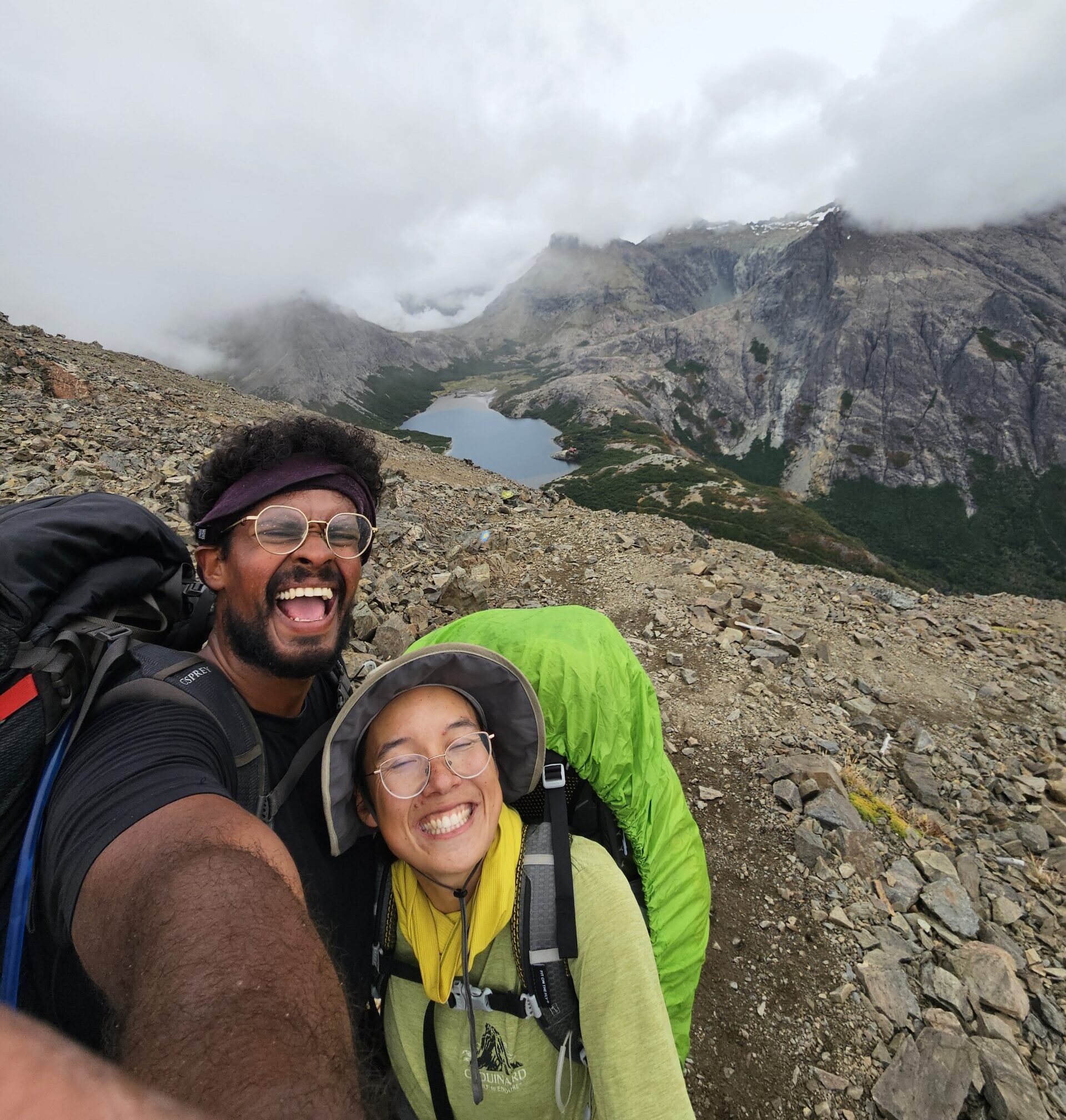
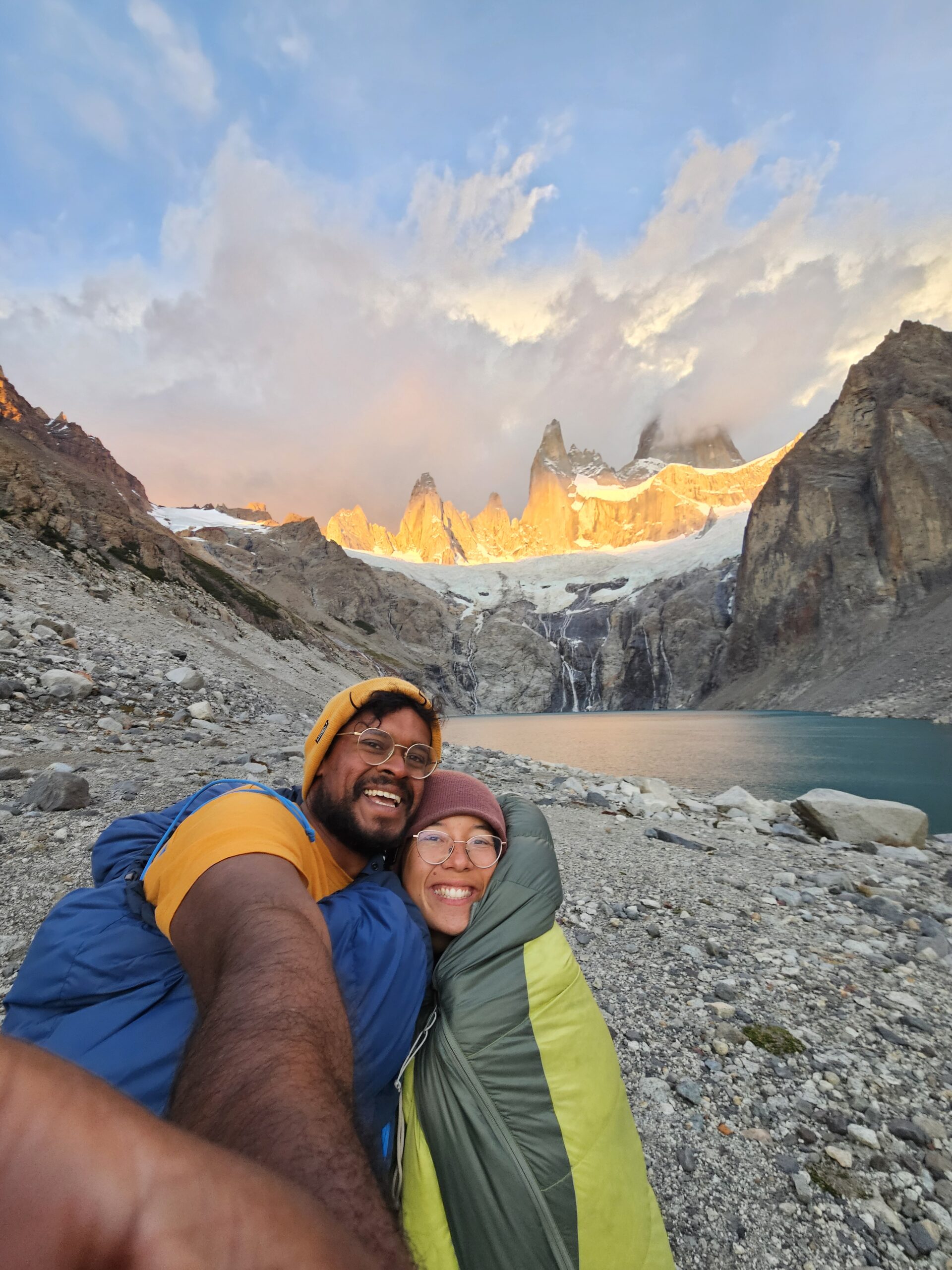


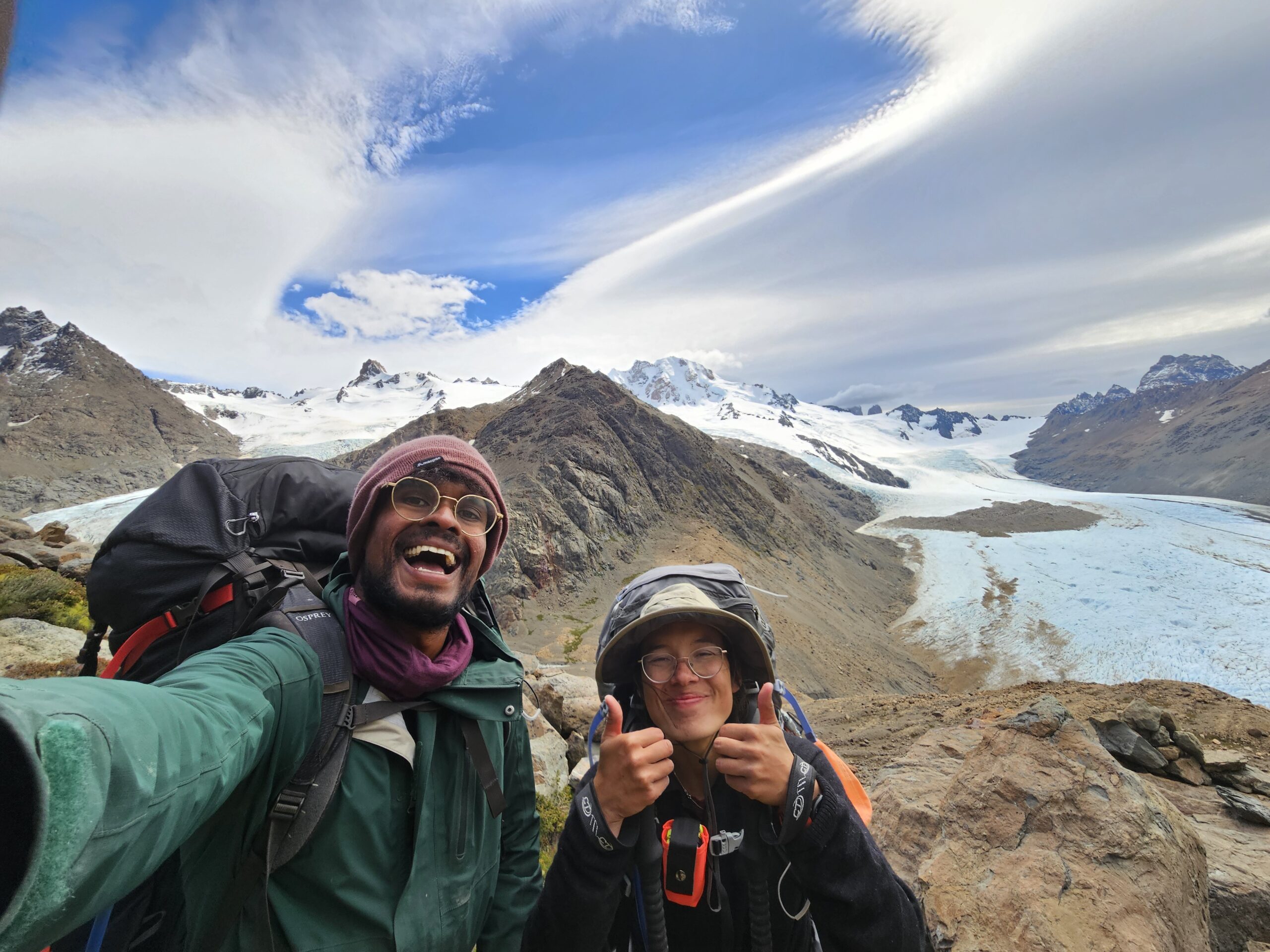


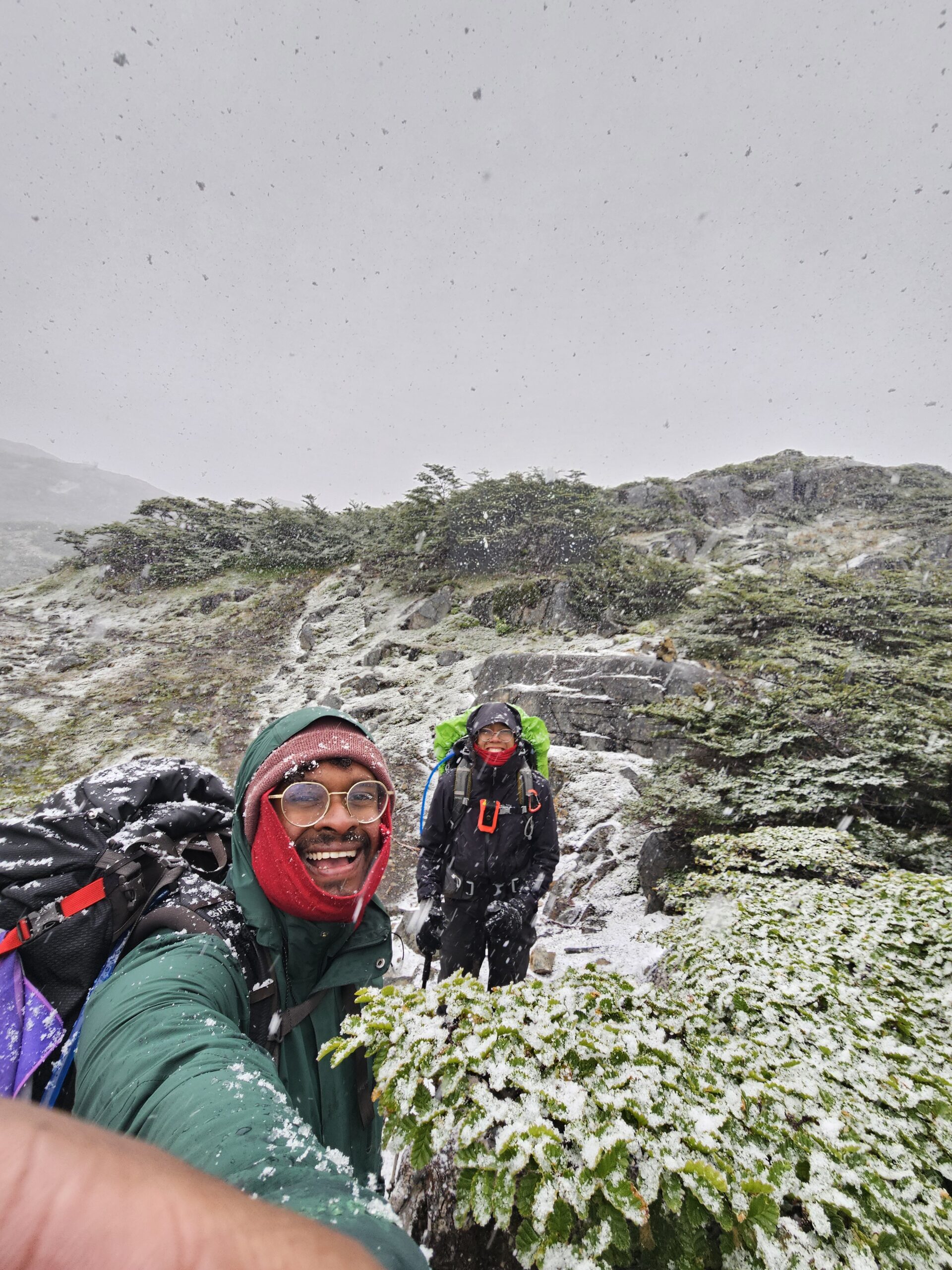

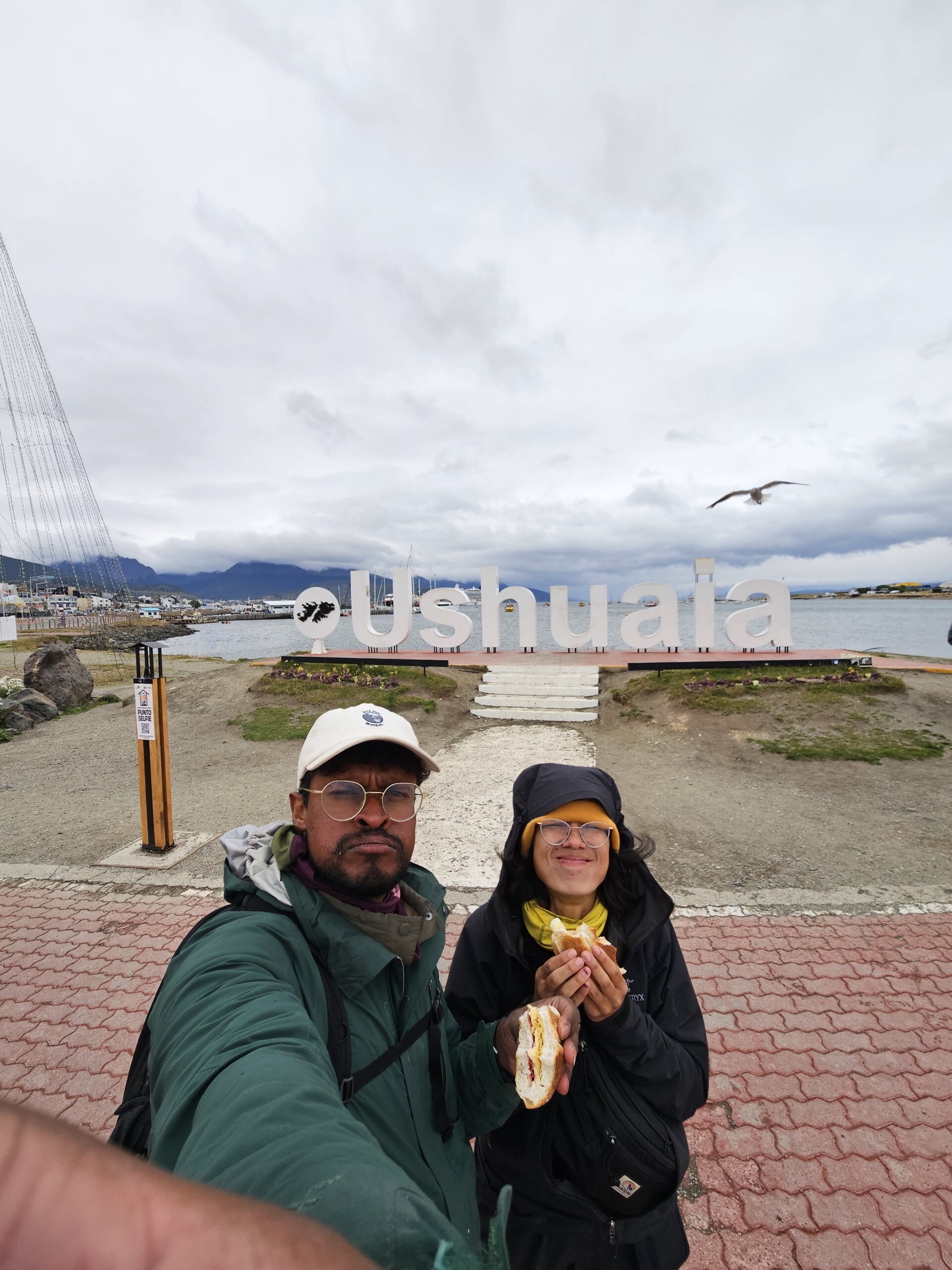

![Essential Guide to the O-Circuit in Torres Del Paine | [2024/2025]](https://worldwide-walkies.com/wp-content/uploads/2025/03/20250126_112657-2-scaled.jpg)