Tag: 2025

  • Traveller Talks: A Debrief on Touring India

    Traveller Talks: A Debrief on Touring India

    India is a privilege. 

    You’ll read and hear both sides of the spectrum. People love India – it’s culturally rich, the people are genuine, the food is incredible, there’s so much variety. People hate India – it’s hot, loud, overpopulated, dirty, smelly. Some people are unsure about India – it is foreign, huge, overwhelming on the senses and the mind. 

    But above all else, it is a privilege.

    In a hugely diverse country with over a billion people, and some of the richest people in the world and a lot of the poorest, you can only expect there to be an extreme range of individual experiences. As a tourist in a place that can feel so foreign it is almost unbelievable, it is most important to keep our perspective in place. The perspective that we are the foreigner; we are a guest in this place; that it is not simply a playground for us to spend our ‘strong’ currency with no regard for local customs or priorities. 

    We feel privileged to have visited, and to have seen so much of this country over three months. It was some seriously challenging travel – the stark difference in cultural practice absolutely takes a toll; most days something would happen to make us feel disrespected, cheated, or misunderstood. But we also experienced incredibly genuine kindness; we met locals wanting to share with us their land and their culture; and holy mcfreaking moly we got to eat some of the most incredible food on the planet. It was really a time of growth, and after a number of months of introspection and reflection we are finally feeling a little bit ready to write about it.

    Keeping it
    short and sweet

    Geography

    India is massive, so it’s got a bit of everything. High mountains in the Himalayas, lush forests in the foothills, the desert of the west, magnificent beaches on the southern coasts, and the jungle inland. One thing that surprised us was how green India is – cities can be fairly concrete, but there’s big swathes of forest.

    Climate

    India’s got the usual four seasons, but they’re a little different to temperature countries, as the tropical monsoons have a big impact. With such a massive variation in geography comes substantial differences in weather cycles regionally.

    .Summer | Mar – May | avoid especially May – the hottest it gets | Monsoon | Jun – Sep | hot and humid | Post-monsoon | Oct – Nov | still humid, but cooler and much more manageable | Winter | Dec – Feb | a good time to visit.

    cultural quirks

    There is so much that feels different about India from the west, but what stands out is the incessant staring, the lack of women in public, especially in Delhi, and the slightly hilarious, slightly irritating habit of asking ‘where are you from’ with no prompting, and certainly no ‘hi, hello’ first.

    costs

    You can visit on either end of the spectrum – spend the big bucks, or take every local route you can to be a real saver. Even on a shoestring budget, you can eat out every meal, though your stomach will need to be strong, but we’d recommend a the slightly more expensive options for travel – the ‘local’ routes in India are not for the faint-hearted, and a little bit of cash can go a long way.

    safety

    Safety varies a lot across India, but in general we felt safe, if not quite uncomfortable. I’d say that for a solo woman, or even women travelling together, a lot more lines would be crossed for the discomfort would be higher. The concept of personal space doesn’t really exist, and, as above, the tendency to stare can make you feel very defensive.

    transport

    The train system in India is well connected, but books out well in advance. Buses are also a great option, with lie-flat bed options. In the mountains, catch shared taxis or jeeps. Flying is a good option; there are lots of airports, and prices are really reasonable (even with bags).

    food

    The food in India is incredible… In the west, we talk about ‘curry’, but the variety is something you can’t access; wet gravy, dry meat, a thick sauce; completely different applications of spices; parantha and thali for breakfast; wazwan in Kashmir, kebab in Lucknow; momos and noodles in the mountains… Pure joy. You won’t find beef or pork; vegetarian, mutton (goat) and chicken are the main options.

    walkies?

    Hell yeah! While Nepal is known for its Himalayas, a good chunk of the lower valleys and mountains are in India, through the states of Uttarakhand, Himachal Pradesh and Ladakh, and Sikkim. These regions can reach high altitudes, so don’t be underestimating it. Our to-do list is below, but we recommend checking out India Hikes for an almost exhaustive list, and they are really helpful if you want to send them an email!

    our stops

    Usually this section is ‘hotspots’, but there are too many to name, so we’ve put in our highlights instead (yes, in order; yes, they don’t make any logistical sense)

    delhi

    We had to, but we would avoid it if we could… Delhi is a hellhole, but it’s got some beautiful monuments and wonderful history.

    ladakh

    An ancient kingdom with customs and vibes that mirror Tibet more than India; a high altitude desert perfect for hiking

    kashmir

    The disputed region of Kashmir has some of the most beautiful and dramatic landscapes in the world – unfortunately, unrest in the region makes it difficult to explore.

    mumbai & aurangabad

    Bollywood and bollywood’s money is evident in the classier side of Mumbai; yet it holds the world’s slum. We headed out of town for a day to visit the Ellora and Ajunta caves – incredibly preserved religious craftsmanship.

    sikkim

    Bordered on three sides by other countries, the beautiful mountains of Sikkim hold of our favourite memories. Gorgeous people, wonderful hospitality, stunning landscapes.

    rajasthan

    If you want a fort, or many forts, go to Rajasthan! Its history of Rajput royalty separates it from the Mughal royalty in the central regions of India. We visited Jaipur, Jodhpur and Jaisalmer.

    agra

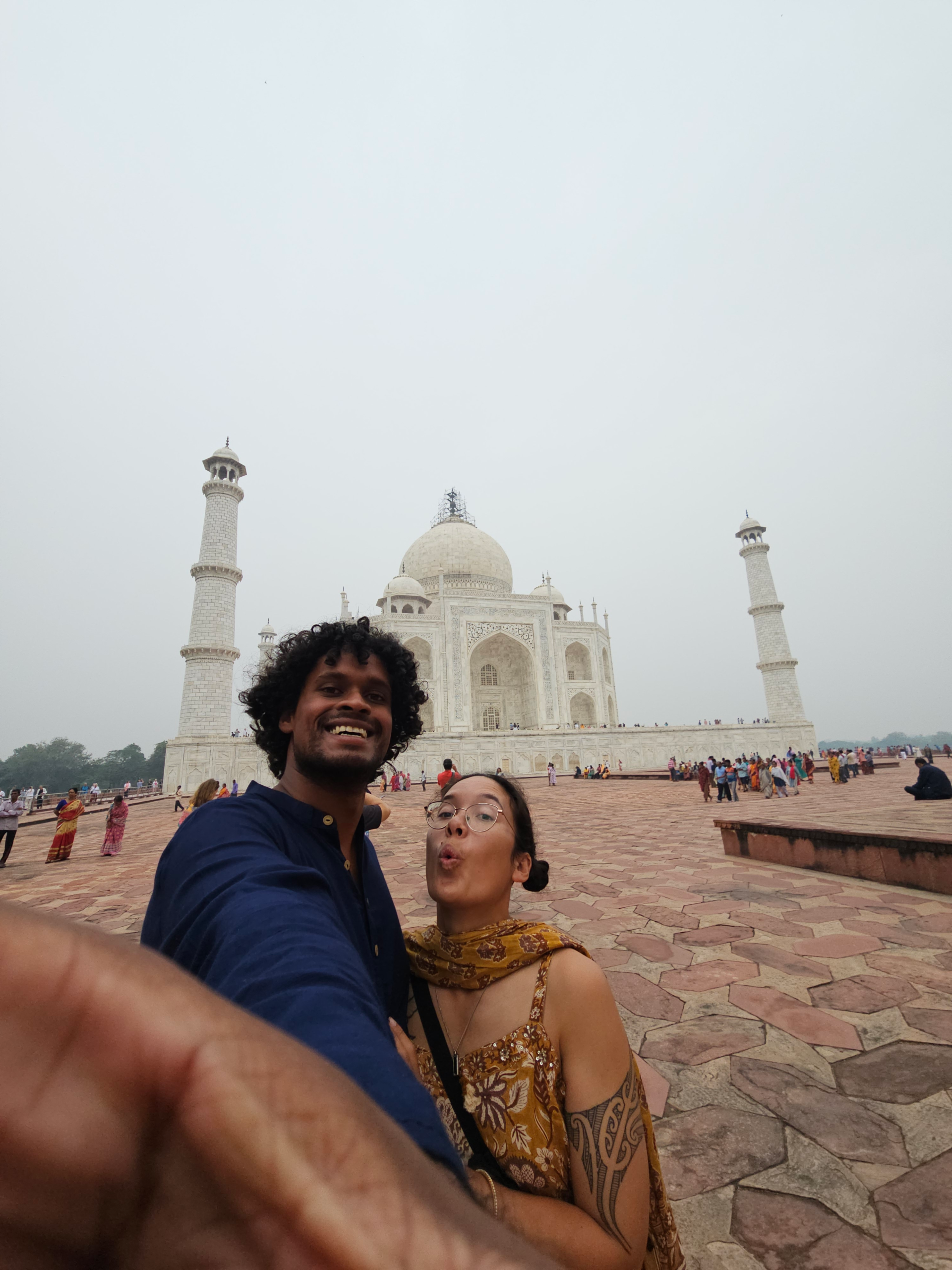
    Off to see the great Taj! It was really very impressive, and Agra wasn’t as awful as all the reviews describe – though we wouldn’t say ‘visit Agra for Agra’

    varanasi

    The most spiritual place to visit in India. Experiencing night-time pooja on the riverside was spectacular, and taking a walking tour is a great way to understand more of the local perspective.

    lucknow

    Food!! Lucknow is a gastronomical delight with phenomenal specific local dishes, and there are a few beautiful Islamic monuments to visit in the centre.

    where next…?

    We missed all of the hiking in Himachal and Uttrakand, and apart from Mumbai, didn’t even touch the south of India! That’s half the continent left to explore, one day.

    Tell me everything

    We approached India with a languidity born of 7 months of prior travel; while this is a manageable strategy for those with time, it did lead to a fairly rag-tag route. We were heavily impacted by the summer monsoon, so despite an initial determination to spend two solid months hiking in the Himalayas, Mother Nature had other plans. 

    India was a little bit of everything – we went to the limit of our visa, spending 3 months exploring as far as we could. The hiking was meant to begin in Ladakh, then we’d work our way through trails in Himachal Pradesh and Uttrakand (the lower Himalayas) as the monsoon eased. Everything got derailed when the monsoon stretched out longer than previous years and was far more devastating – not just in the Himachal, where the road from Leh to Manali got completely washed out, but also in Ladakh itself, which saw unprecedented rain and caused many buildings – not built to withstand the onslaught – to leak. So instead we bounced around – as above – in the most chaotic way possible.

    Interestingly, while it can be very affordable, India is no longer one of the cheapest places to travel, especially if you want a moderate level of comfort. In fact, with the extreme wealth disparity in India there is a lack of infrastructural support that seems mind-boggling, the preference for locals who can afford it is to take private transport, so public transport can be neglected and become overwhelmingly overcrowded for a traveller.

    important note!

    Check your visa carefully! Even though we got a year long visa, it was explicit that with 12 months we could only be in india for 6 months total, and within that, only 3 months (90 days) at a time. We also miscalculated that (3 months doesn’t mean exactly 90 days), so we had to move our flight forward…

    Geography

    The third largest peak in the world is in India, on the border of Nepal (Kachenjunga). It’s got a huge coastline with multiple ports that enabled the trade from East to West – centres of gold routes for centuries. There are natural parks filled with tigers, elephants and other large and small fauna. The Thar desert of Rajasthan borders Pakistan, filled with golden sandstone. To its east is the Aravalli Range, one of the oldest mountain ranges in the world, a crumbling relic of tectonic movement which holds many forts. It really has it all, with the variety in the population to match.

    Land border crossings in India are generally a no-no – our visa explicitly said that we could only enter and leave by air. Even over the Nepal border (with whom India have good relations), foreigners cannot pass.

    The higher risk disputed regions have a serious military presence. In Kashmir (where there was a terrorist attack in April 2025), there is military everywhere, but we also had trouble with very strict immigration at the airport in Bagdogra (the entrance point to Sikkim), as it is right at the intersection of a number of countries. We had to get permits to travel to places in Ladakh and Sikkim, and certain tourist attractions are too close to the border, so are inaccessible for foreigners.

    From the Thar desert…
    … to lush greenery in Kashmir

    climate

    As the geography varies so much, as does the climate. Every season is different in every region – you could freeze to death in the middle of the day in Ladakh or Sikkim, but in Rajasthan you’d still get a burning sun – though nights are always cold in the desert.

    For the part of the monsoon season we were in India, it really was wet. In South East Asia, monsoon means rain every day, but usually not for the whole day. In India, it was constant – and even in the rain shadow of the Himalayas in Ladakh, the conditions were bad in 2025.

    Even though India is hot as balls most of the year, having skin showing is pretty uncommon for the locals, both men and women. Awal wore a singlet a couple of times and got a lot of attention! You only really see modern western clothing in centres like Mumbai (not even in Delhi). Take light, loose clothing that covers your whole body, and if you’re a woman, try to get it as shapeless as possible – it helps to stave off the staring.

    Costs in 2025

    India is pretty damn affordable. As we said, it’s a spectrum – there are heaps of holiday packages that people take which are all inclusive – 5 star hotel, private transport, no thinking, the guide takes you from the monument to the bar. It’s visit, eat, party (idk who’s doing eat, pray, love). However, if you want to backpack, you can totally do it on a tight budget and a bit of patience.

    Accommodation was usually alright, but really frustrating in Delhi. Most of the hotels and hostels have fake reviews even on booking.com, so they can actually be super terrible – we ended up spending around 2500INR (~50NZD) per night in Delhi to make sure we got a hotel that actually exists. Mumbai was also really expensive – even a dorm room was 1000INR each (~20NZD). It’s really variable per town – but on average, we spent about 1600INR per night (32NZD).

    We cooked one time during our 3 months in India. We ate out every meal we could. Food prices have a massive range – a thali is a great basic meal; dahl, rice, roti, papad, and a curry or two. Sometimes, they’re refillable! It ranges from really cheap, around 150INR for a basic one, to 400INR for a ‘special thali’ with the fancier curries. There’s lots of snacky street food to try that’s around 50INR a pop; sit down meals at local cuisine AC restaurants will be more expensive, maybe 500-1000INR per person. There is literally a menu in the AC room that has different prices to the menu in the non-AC room – but some days, you gotta. 

    Because we caught flights for really long distances, our land transport budget was pretty low on average. However, we found it pretty variable, but here are some benchmarks: 

    • Agra to Varanasi |  10 hrs | 2000INR pp | the nicest lie-flat bus we caught by a LONG way
    • Lucknow to Delhi | 8 hours | 1200INR pp | a fine lie-flat bus.
    • Jaisalmer to Agra | 15 hours | 1500INR pp | a fine lie-flat bus
    From modern monuments…
    … to ancient monolithic temples, representing Hinduism, Buddism, and Jain religions

    Cultural Quirks

    There’s a lot going on in India, but we thought to list some of the things that jumped out… and it turns out there are quite a few.

    • Rubbish – okay, we thought the rubbish culture in Bolivia was bad. Nope. You will see people from all walks of life, from wealthy to poor, throw rubbish on the streets.  This is embedded a bit in the caste system, where cleaning is seen as a ‘low caste’ activity, and comes also a bit from the general living conditions – for many people, rubbish is the least of their problems.
    • Personal space doesn’t exist! Of course, in a place with overpopulation, you know that this is bound to happen, but it’s one thing to know it in theory, and another to experience it.
    • Staring is prominent – wherever you are, wherever you walk – especially for women. Staring is not seen as impolite as it is in the west, and even if you glare back, people often won’t care to look away. A smile and wave, will get you one back or they’ll finally look away in some embarrassment, so try that!
    • Dressing appropriately goes a long way to being more comfortable. Long pants, and at least t-shirts will mean you stick out less. Or get some ethnic wear! They’re usually really comfortable and floaty.
    • Something that was pretty uncomfortable was seeing predominantly men in public, especially in Delhi. In places like Ladakh and Sikkim, this was much, much less prevalent.
    • Despite being colonised by the British, the English language is not as common as you’d think in India. Thankfully, Awal speaks Hindi, so we (he) could navigate any sticky situations
    • Don’t expect kindness, but give it out – this sounds really awful, but hierarchy in India is deeply ingrained; service people might be hesitant to engage because they’re used to being completely shat on by locals, so be patient and ask clearly. Also, there’s just a lot of scams, so it’s worth being on your guard.
    • Haggle for everything except cooked meals – I know there is a lot out there that says ‘when your currency is so strong, there’s no point haggling for a couple of dollars’, but this is seriously just the way in India. Everyone will try to charge you at least double once they realise you’re a tourist, Awal could literally hear tour agencies talking in Hindi, asking what they should charge for the ‘white people’ price. If they start at 1000INR, you should start at 200INR, especially with clothing and jewellery (literal advice we received from a local)

    Safety

    As a foreigner in India, you attract a stupid amount of attention. Although we are not white-passing, we still got lots of looks, probably because of our clothing. As with some of the ‘quirks’ above, there are a lot of things which can make you feel really uncomfortable and obvious in India, however in general, we’d say that India feels safe. There’s unwanted attention but it’s generally not malicious, and if it is, there are usually so many people around that you could yell and someone would help you out.

    The biggest thing in India is the ridiculous number of scams that people try to pull. While travelling, it’s often the most fun to go with the flow, but if someone is offering you something insistently, it’s probably good to do a quick check of all the facts that are involved. If it’s too good to be true? Probably is. We came across so many scams that we could make an entire blog post on it.

    transport

    Whereas countries in South America have extraordinary alignment between the needs of the locals and the desires of backpackers, in India it doesn’t feel the same way. The train system is well connected, but popular routes will book out weeks in advance, so it is useless for last minute planning. Additionally, the locals often jump aboard without a ticket, even in some of the higher classes, so you aren’t guaranteed a stress-free ride.

    Buses prices are generally comparable to the trains, and the quality is fairly variable. They do have lie-flat sleeper buses, which are great, but on the daytime or cheaper lines, sometimes the driver will pick up people at any random location and the bus will end up super crowded. Our advice is to pick a top bunk so nobody can sit on your bed.

    In the border regions, bus options don’t exist, but you can catch a shared jeep or taxi. You might be able to find some information online, but often you’ll have to check in with a hostel to get confirmation.

    Flying is really common and really easy in India. There are plenty of well serviced airports. If you don’t have luggage, it can end up cheaper than catching the bus, predominantly because the country is huge, and so some of the distances are ridiculous.

    Tuktuks or auto-rickshaws are the normal way to get around in cities in India; in 2025, the normal going rate was around 100Rs per 10 minutes, but you’ll need to bargain them down. Check Uber prices to get a comparative negotiating point, but don’t order an auto through Uber – you’ll still have to negotiate with the driver!

    yeeewwww we miss the food
    We miss the food so muchhhhh

    Food

    The food… there will have to be a whole post on this, but we’ll go through the basics. Most meals can be eaten at any time – there’s not a ‘set’ breakfast-lunch-dinner spread, rice and roti are for every meal.

    • Paratha – stuffed roti (basically), pick aloo (potato) or pyaz (onion), or both
    • Thali – a complete meal at any time of day, dahl, rice, roti, papad, and a curry or two
    • Curry, roti, rice – if the flavours and gravies you want aren’t in the thali, pick your own.
    • Chai – get your local tea in a tiny cup to start your day
    • Gulab Jamun is incredible, but other hand sweets like barfi had too much ghee for us.
    • Kheer and halwa… my gosh.

    There’s also big variations by region. Lucknow has rich, spicy curries and kebabs. In Rajasthan, there’s a lot more ghee, and a few different desert-specific ingredients in their curry. Kashmir’s wazwan has big, bold, mutton flavours. And up in the mountains, Nepali and Ladakhi cuisine involves momo (dumpling) and noodle soups.

    If you want a break from curry on a budget, the takeaway chinese food is pretty great – noodles are Emma’s favourite food group, so we’re always hunting them down

    A Himalayan valley… grand on a whole different scale.

    Walkies!

    Up and down the Himalayas you could spend several seasons walking. While the Andes were incredible, the Himalayas have a scale that we’d not seen there. It’s actually really difficult to perceive how tall an 8000m+ mountain is from its base, but you can get an idea from the grandeur of the places you walk through just to get that peek of the peak.

    Ladakh | high altitude hiking | dry alpine desert

    • Markha Valley Trek | 4-8 days | Starting from Spiti is an 8 day route, starting from Chilling will be 5 days, all in homestays + one night in preset tents | done
    • Phyang to Hunder Dok | 3 nights | Over a massive 5400m pass, an isolated, incredibly thrilling walk in the mountains | done
    • Rumtse to Tso Moriri | 5 or 8 nights | Take a shorter route by starting near Debring. A wild, windy track over barren highlands | missed because of bad weather, so high up on our to-do!

    Himachal Pradesh | moderate altitudes

    • Hampta Pass | 2 – 3 days | 4200m | A good introductory trek for the region | End point can link up to Pin Bhaba or Pin Parvati
    • Pin Bhaba Pass | 5 – 6 days | 4800m | Longer and beautifully varied, but less technical
    • Pin Parvati Pass |  8-12 days | 5300m | Quite technical with glacier crossings | A guide needed without experience | a real challenge!

    Uttarakhand | moderate altitudes

    • Valley of Flowers | Overnight | Pick your season correctly to get the blooms
    • Bali Pass | 4 – 8 days | 4800m max | A tougher hike in the region

    Sikkim | moderate altitudes

    • Goecha-La | 8 days | Must be done with a guide | No longer going all the way to the Goecha Pass, but still providing views of Kachenjunga – as close as you can get in India | Done with India Hikes
    • Sandakphu | 5 days | Must be done with a guide | Homestays available | Runs along the border with Nepal.

    And a final word of warning for hiking in India: leeches.
  • traveller talks: a debrief on touring colombia

    traveller talks: a debrief on touring colombia

    A place of passion, a country of colour. Colombia is terrific. It has incredible biodiversity, an eclectic mix of culture influences, wonderful people, and a tumultuous history – some of which is very, very recent. While it is very stable compared to some years back, and is pretty safe for travellers, Colombia was the place we felt the most guarded over all of South America. Yet it is also the place we felt the most wowed – the two go hand-in-hand, and you can see how the strength and motivation and pride of the people of Colombia has helped them build a gorgeous place to live, plus a substantial tourism industry.

    Our travels in Colombia took us in a big loop – from Medellín, to the coffee regions, over to Bogotá, up to do some exploring in San Gil, up to the Caribbean coast to see the coastal jungle, 

    We missed a few major hotspots, unfortunately, because they fell outside our budget (and, a little bit, our capacity for heat). We didn’t complete La Ciudad Perdida, a very famous hike in the Sierra Nevada coastal mountain range which takes you to an ancient pre-colombian ruin in the middle of the jungle. It must be walked with a guide, and the fees are pretty high as it’s in demand and on indigenous land – absolutely fair, not in our budget. Tayrona National Park was another one we missed. Supposedly, the most beautiful caribbean beaches, including Cabo San Juan, are only accessible by a hike in the jungle (or a pricey trip by boat), but the entry fee is pretty high, which means it’s only really worth it if you camp a few nights in the jungle, which was something we weren’t super keen on. To be honest, we regret it a little, we could’ve prioritised it more monetarily and got over our perpetual fear of heat and mosquitos to enjoy a little Colombian paradise.

    However, we will return! Also, because we never went further south than the coffee region – we were told point-blank by a Colombian friend that by not visiting Cali, we had not seen the real Colombia. Cali has a reputation, so we were a little to chicken to see it this time, but after the wonderful experiences we’ve had in other places, we would definitely prioritise it next time – just staying sensible at the same time.

    Keeping it
    short and sweet

    Geography

    Colombia isn’t huge, and a large portion of its area is in the Amazon basin, but the geography is super varied. The mountains carve up the mountains into three sections, so you get plenty of regions in the hot tropical zone, but you can quickly climb into cold alpine sections. It makes for a really varied land to explore!

    Climate

    Colombia has two monsoon seasons!: wet (Apr – Jun & Sep – Nov) & dry (Dec – March & July – August). However, it’s always hot on the coast, and always cool in Bogota & other high altitude places.

    cultural quirks

    Tipping! We hate tipping! But in Colombia it has become a common occurrence in a certain type of restaurant.

    costs

    It’s economical, but less so than other places in South America – being close to America and loved by ‘digital nomads’ and rich immigrants, tipping culture is big and the safe areas are often gentrified.

    safety

    Colombia has a reputation (or, lack-thereof) for safety and you can definitely feel it. Check with your hostel, stay inside at night, and stay in recommended areas in cities.

    transport

    Colombia’s bus system is not on the same level as other places in South America! We took some really uncomfortable buses (narrow, poor recline, no footrests!), and the scheduling is pretty whack – on short journeys we’d arrive a few hours early (e.g. overnight = no sleep), and a couple of times we got stuck in mad traffic and spent extra hours on already long journeys.

    food

    Food in Colombia is awesome, and there is SO MUCH CHEESE. It’s got insane fruit variety and plenty of creativity in frying items, so always get on the look out for snacks.

    walkies?

    Yes, although unfortunately not unguided 🙁 Most of the national parks can be hiked, to some extent, though some are more accessible than others.

    hotspots

    We started in Medellín, but had done some poor planning and had to return to see the flower festival, so we visited Colombia in a loop! However, we did hit most of the ‘popular’ places on a Colombia itinerary.

    Other than the flower festival in Medellín (highly recommend if you’re there in early August), Medellín has some popular suburbs around town for exploring, and a few walkies in the valley, great nightlife and beautiful streets. The metro is great for getting around.

    Tell me everything

    Geography

    The variation in the geography is outrageous in Colombia – from the temperate hills in the coffee region, to cold days and colder nights in the heights of Bogotá, over to an absolute sweltering tropical Carribean coast, coated in humid jungle. Not only that, but the Andes splits into two sub-ranges, the Occidental and Oriental, which makes traversing the centre of Colombia by road really windy in a lot of places.

    Even without recent events, the border with Venezuela is passable but seems a bit dodgy – we had a mate who crossed over in 2025, and he got absolutely scammed by the border police there (eventually, another border control officer got him sorted, but it sounded like a fairly awful experience). Unfortunately, Venezuela is probably not super high on the ‘to visit’ list for a lot of people at the moment.

    The crossing through to Ecuador is doable, and is part of the normal backpacking route, but there is a lot more drug and human trafficking along that border. So take more caution than normal and read a few others’ experiences to know confidently where to go and where not to go.

    Out of interest, there is no land border crossing to Panama – it is only possible to do so by boat. The region between Colombia and Panama is dense, mountainous jungle, supposedly full of guerillas and traffickers. Sufficiently dodgy!

    climate

    Colombia was the first place we’d been in South America where we felt hot… and there were a lot of mosquitos everywhere again. In the valleys, it is pretty consistently warm all year around, so it’ll take some adjusting if you’ve come from somewhere cold – we struggled, and even more so on the Carribbean coast, where it’s consistently around 30degrees. Fair warning that some of those jungle treks which are so popular will be through those same conditions – that was enough to make us second guess it.

    We were in Colombia in one of the dry seasons, spending most of July and a little of August there. However, it is tropical so there were still storms every now and again. Our interpretation is that the ‘dry’ and ‘wet’ seasons are a guide, not a rule. Expect rain all year around, though it was never for more than a couple of hours.

    Costs in 2025

    The Colombian peso operates without cents, working in the thousands (mil in Spanish). When we travelled, 1NZD = 2320 pesos.

    In Colombia the menu del día is less common in all areas, especially in more tourist-heavy locations where restaurants focus on local specialties. The ‘normal’ local restaurants need to be sought out, and it seemed like the cheapest menu del día would be around 20K peso pp. 

    For a really cheap lunch or breakfast, we would usually go to a panadería (bakery), and pick up a few fried snacks, around 10K peso pp. 

    We probably averaged a sit-down meal once a day to try a local dish, and we cooked for other meals. Even so, on average, we spent more on food in Colombia than anywhere else in South America.

    Transport cost was quite variable. We took two 12 hour overnight buses, one cost 50NZD pp, the other 80NZD pp. And the 5 hour bus from Medellín to Salento was 35NZD pp (and a really terrible bus).

    Private rooms in basic homestays and hostels cost us between 50k – 100k pesos depending on location; our average was 80k per night.

    Sweating at the football game.
    Bandeja Paisa – a feast!

    Cultural Quirks

    Unfortunately, the American tipping culture has made its way here. In restaurants it’s expected to tip 10%. In traditional establishments, the menu del día type, it seems less common – it’s predominantly the gentrified and touristed areas have picked up the habit. Honestly, we hate this so much, it’s so annoying to have to add on the extra cash when it could just be built into the cost. 

    There is a lot more English in Colombia than other places in South America, as there is a lot more tourism from the US, but it’s still important and helpful to know basic Spanish.

    Safety

    As we said, we felt substantially more uncomfortable in Colombia than we did in the rest of South America. Hostel and hotel staff consistently told us not to walk around after dark, and to take a taxi, even in suburbs that we felt should be quite safe at all times. It is just safer to trust the locals, though on a couple of occasions we did walk home – it just feels like such a waste to catch a cab for 5 minutes.

    During the day, it is safe to walk around in most tourist places; of course, keep your wits about you, and if someone tries to mug you, just give them your stuff… it’s not worth any injury and certainly not your life, and that’s why you get your insurance sorted (DO NOT TRAVEL WITHOUT INSURANCE, WALKERS). 

    We felt the most uncomfortable in Santa Marta – it’s a bigger city, and we were there during the 500th anniversary celebrations, so it was constantly busy. However, there were a huge number of buskers, hustlers, beggars, and generally people peddling stuff in a way that sometimes felt too insistent. One guy followed us down the street seemingly friendly, before try out the baby formula scam – it’s just frustrating!

    transport

    We travelled by bus, which is, as always, the cheapest way to get around. In saying that, flight prices aren’t as outrageous as in other South American countries – Cartagena and Medellin both have well serviced airports, being popular destinations from the USA, and of course Bogota is the capital, and is also well connected. Some routes are better than others – the best company was Berlinas del Fonce

    Although buses are the cheapest way to get around, the pricing model was unpredictable. Different routes with similar distances & times can be wildly variable. We got scammed in person once (double charge babyyyyy – we should’ve known we were getting hussled), but aside from that, we saw the differences in the online Redbus prices, which was quite odd. If you’re tight on the budget, it is probably worth doing a bit more research in advance to find the most economical route, as it may not be what you expect.

    Flowers!
    More flowers!

    Food

    Ahhh Colombianos know how to eat! Almost all the snacks are fried, meals are big and hearty, and the fruit is gorg.

    • Arepas con queso – corn meal and cheese snack. The best version is the one with the cheese melted in the middle, though I’m not sure on the terminology because sometimes a bit of cheese is just slapped on top.
    • Buñuelos are super spherical deep fried balls of the most incredible dough. Get them with arequipe (dulce de leche), chocolate or cheese.
    • Snack on empanadas or papa rellenas Colombian-style – deep fried.
    • Bandeja Paisa is the trophy winner plate. Fried pork belly, mince, sausage, egg, beans, plantain, avocado, one full as puku.
    • Search out Patacones in the hot regions – unripe plantain fried with toppings. So YUMMY.
    • Try Ajiaco in Bogota or around the mountains – it’s a warming soup classic to the mountainous regions.
    • Chocolate con queso – hot chocolate with a slice of cheese on the side. Gotta do it.
    • Coffee in Colombia is actually quite terrible, despite it being a coffee growing country – but of course, all of the good stuff gets exported.
    • Try mangosteen and rambutan if you haven’t been to Asia, and of course the mangoes are heavenly.
    From the rock – Guatapé

    Walkies!

    There are options, but the information is not always clear, it changes often, and generally cannot be done unguided. Almost every national park requires you to be guided, which is actually quite expensive, and you cannot stay overnight in a number of them. It seems to be a combination of factors: there’s no search and rescue, it’s not a popular local activity, and safety as there is still guerilla presence in some parks. And, of course, to increase the monetary output of tourism… Nevertheless, here are a few options that we found, but mostly uncompleted due to the guide situation.

    • From Medellin, there are day hiking areas to the north – Parque Arvi has lots of tracks, or try Cerro Quitasol.
    • Los Nevados National Park connects up to the trails from Cocora Valley. We completed a 3 day hike unguided, staying in homestays in the mountains, although we did leave early to avoid any awkward questions at the entrance. We’ll put details in a different post, but start from Salento for the easy options, and consider a guided hike from Manizales for a traverse of the range.
    • In the areas around San Gil you can complete the Camino Real, an old path which connected several colonial towns. We only walked a day hike, but it can be done over three days, staying in homestays.
    • El Cocuy National Park – there was once a 3 day hike through this park and it looks beautiful! Since COVID, you cannot camp in the park, and to complete dayhikes you must take a guide. It ended up well out of budget from the reviews we found. El Cocuy town is the place to book your excursion. Unsure if this compulsory-guide-situation may change, so it’s worth checking if you’re keen to walk.
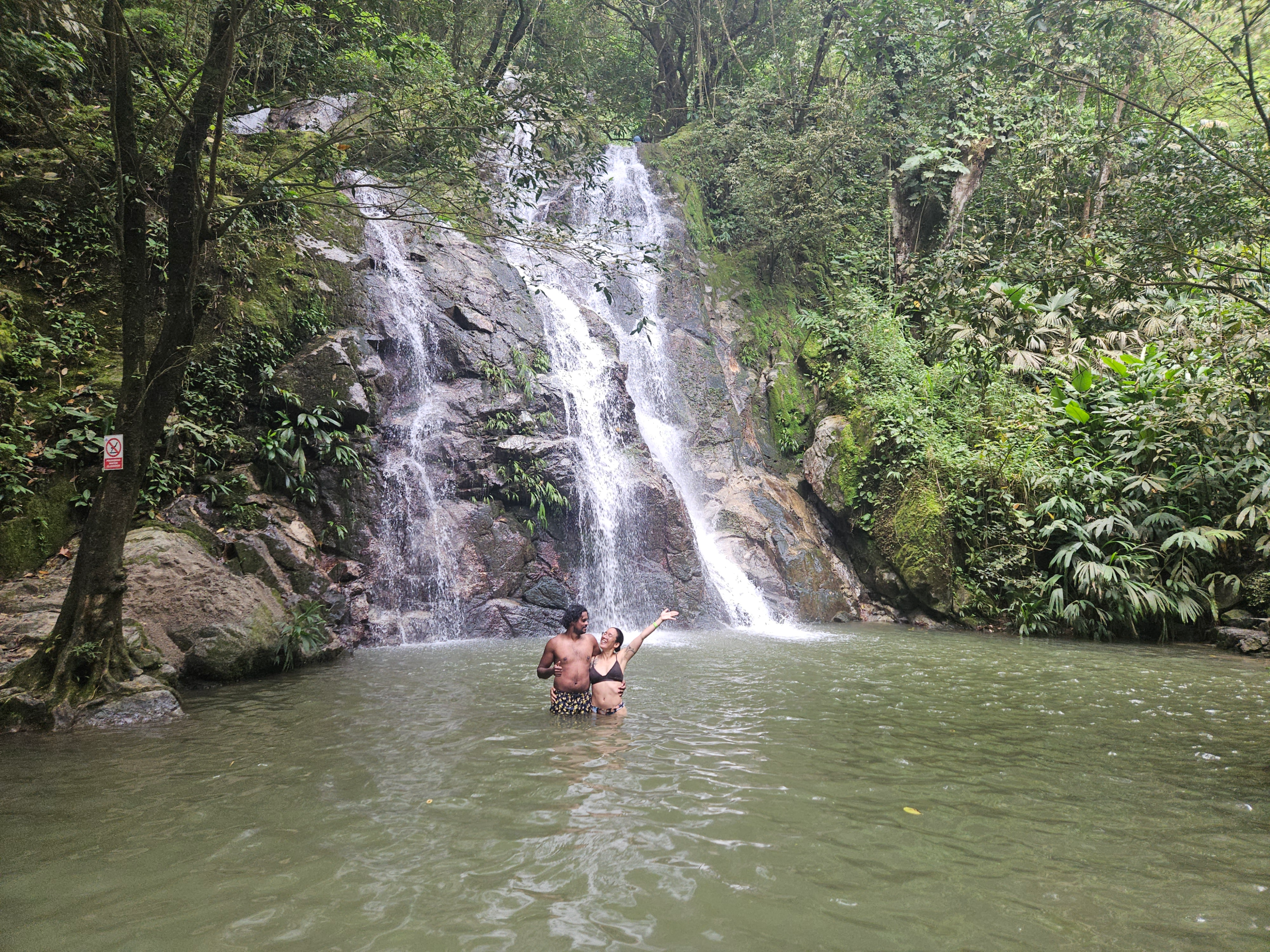
    • Minca has plenty of day-walk options. For many of them, you can catch a moto part or all of the way, but the roads are very walkable and you’ll still see wildlife (saw howler monkeys one day, and there’s lots of birdlife, especially in the mornings). Marinka waterfall was one of our faves; there’s lots of spots along the river you can bathe in; or you can overnight at Moncho Hostal to see the sunrise at Cerro Kennedy
    • As mentioned, there is hiking in Tayrona, though the fee is a bit extortionate. It’s probably worth it if you’re planning on spending a few days in the jungle, but hiking in 30 degrees with a full pack sounds rough.
    • And of course, Colombia’s biggest walking drawcard, the 4 day lost city trek, La Ciudad Perdida.
  • Walkie Guide: Trekking the Colca Canyon unguided

    Walkie Guide: Trekking the Colca Canyon unguided

    Time to visit South America’s deepest canyon, the second deepest canyon in the world. A trip to the top of the Colca Canyon will lead you to condor viewing, scenes of traditional terraced fields, and gorgeous views down the canyon. If you choose to venture into the canyon, at its base lay small villages which feel like the tropics, and a descent and an ascent which may make you question your life decisions.

    The classic Colca Canyon track is a well worn two- or three- day trek – 1000m down on day one to the first village, to get your knees fired up. A stroll on day 2 along the base of the canyon to the main oasis village, with the afternoon spent by the pool. An early start on day 3 to beat the heat, climbing straight up the valley then snagging an early bus back to Arequipa. Combine 1 and 2 to squish the route into two days: while it’s not difficult, you’ll miss an arvo by the pool if you do so.

    If you’re looking for more of a challenge, or a route less trodden, extend your route through the valley. There are alternative tracks to other villages which may appeal to someone looking for fewer companions on the walking route.

    Many companies in Arequipa offer tours of the Colca Canyon, but if you are taking the classic route there is certainly no need for a guide. Homestays in the villages can be booked online, and they’re all happy to sell lunch, dinner and breakfast if you don’t want to carry your own food. However, with short days and quite touristy prices, we’d recommend bringing your own cooker and kai to save a few bucks.

    Keeping it short and sweet

    Description

    Take a walk through the Colca Canyon over 3 days, enjoying the novelty of walking through a deep canyon and the relaxing air of an oasis. Poles are helpful for the ascent and descent, and it can be done in 2 days if desired. We took the classic route, and would say that while the views are nice, they don’t change a lot and the ‘hike’ is more of a walk. We’d advise taking a more strenuous route if you’re looking for something that resembles hiking, but the classic is worth it if you’re not expecting much and are keen to walk some chilled out days.

    Climate

    At the valley top it’s cool and breezy, even cold in the mornings as you’re sitting at over 3000m. Once you begin descending, there is very little shade, it tends to be brutally sunny, and it gets uncomfortably humid. Walk early to avoid heatstroke, and take plenty of water.

    distance

    20km (classic route)

    elevation

    ~1200m from the rim at 3400m to the villages at 2200m on the canyon floor.

    costs

    Pay to enter the canyon at the rim: it’s 70sol per person, and there are checkpoints throughout the route, so keep your ticket the whole time.

    track

    GPS is helpful for certainty, but there are plenty of people and signs on the main route through the villages.

    facilities

    Homestays with complete facilities. No need to bring anything except any extra clothes and toiletries.

    notes

    It’s easy walking, especially if you’re not carrying a pack, but poles help a lot on the descent.

    Tell me everything

    The Colca Canyon didn’t blow our socks off, but we suppose if you spend three years waiting to do a hike (having been right there but unable to), your expectations will be high. Don’t get us wrong – it’s a great activity, it’s pretty rewarding walking, and visiting an oasis at the canyon floor is pretty neat. Yet, that’s exactly what it is – walking. Hiking/trekking/tramping, this is not. The path up and down the canyon wall is steep, but it’s well formed, and the days are short, especially the one in the middle. If you’re looking for something a bit more off-trail, we’ll talk a bit more about the alternate route at the end.

    Day 1 is equal parts driving and walking. If you’re planning to take the public bus, you’ll need to take the first bus from Arequipa to Chivay, then switch at Chivay to a bus heading to Cabanaconde. We opted to jump in on the transport for one of the guided tours; which was neat, as we got blankets in the van and just passed out the first couple of hours, until the group stopped for breakfast at Chivay. We then took another two stops – one at a viewpoint of the terraces, and another at the mirador de los condors – where we saw plenty of condors from above and below, enjoying their morning flights. While it cost a bit more than catching the bus, we ended up pretty happy with the two stops and the chance to do some sightseeing, and were glad to have our brains completely off for the morning.

    We didn’t arrive at el Mirador de San Miguel until about 10am; by which time the sun was making itself known. At the rim of the canyon, this isn’t a problem as the altitude is still considerable – but once you’re descending, the heat becomes apparent. At the mirador there’s a bathroom and a resting place to apply your sunblock. Then get started! 

    The trail isn’t apparent at first; it winds a bit randomly around the few buildings, then the (actual) Mirador becomes apparent, and someone will sell you a ticket to enter the Colca Canyon. Keep the ticket the whole time you’re in the canyon, and at least until you’re on the bus to Arequipa, as they’ll check it multiple times. Then the descent begins; initially it’s gentle, a dirt path that doesn’t actually take you down much of the supposed 1200m. At some point, however, it changes – it’s never a scramble, the steps are always a reasonable height and the switchbacks are well placed, but you’ll be going down for a couple of hours. There are a few stopping points with a small amount of shade (and a weirdly large number of wasps), so take the breaks when you need them. Eventually, you’ll spy a bridge, and then another ‘eventually’ after that, you’ll arrive at it. Things always look so much closer than they are. However, once at the bridge, there’s a nice spot to cool off, someone selling icy drinks, and another someone will check your ticket.

    Once you’ve recovered, head upwards a little, then along a flat track for 10-30 minutes to the village of San Juande Cuccho. We booked in advance, which we would advise. We picked Posada Gloria, which was a little cheaper, and had a lovely garden in the sun which we enjoyed all afternoon and evening.

    We had brought our own lunch and dinner, but the homestays sell meals if you don’t have a camp cooking system (or don’t feel like using it). However, our booking at Posada Gloria included breakfast, so that was one less thing to take along.

    Day two began by exiting San Juan to the west along a well formed track, then eventually splitting off to the north. The track makes a big U-turn, redirecting up the opposite canyon wall until reaching a road. The trail gets a bit messy here, so we got on the road pretty fast. As you’ll be high up again, you get reasonable views of the valley wall, and it’s all easy walking again now. Enjoy the stroll through the villages of Cosñirhua and Malata, after which you’ll split off back onto a trail, which will descent again into the town of Sangalle and the awaiting oasis. The homestays here are a bit more fancy – most of them are like mini resorts, so we spent the afternoon in and out of the pool. There was a bar too, if you really want to feel on holiday.

    Day 3 is an early wake up – as early as you can to avoid the heat. We were walking by about 8, under the assumption that it would take us about 3 hours and we could then catch the 12pm bus. It turned out to be an unlucky choice. It took us just over two hours to get out of the canyon, and a bus left at 10am… so we only just missed it, and were stuck, stinky and waiting for a couple of hours to get back to Arequipa. 

    Despite the annoying wait time, the buses from Cabanaconde do go directly to Arequipa, with no changeover at Chivay (unsure why it’s different in both directions!), so it was a smooth journey back to town.

    Alternative Routes

    The ‘classic’ route described above can be done as a two day route if you compress days 1 and 2 together, heading all the way to Sangalle in one day. It’s not hard walking by any means, but if you’re interested in spending time at the oasis, and enjoying the pool, it’s not worth getting there late and rushing away the next morning.

    From Sangalle, there is the option to continue on in the canyon. The route from Sangalle continues to Llahuar – back up the hill to the north-east towards Malata, then turn west and follow the road toward the road to Paclla. It seems as though Llahuar is much smaller than the other accommodation options, so most people stay at the lodge. Llahuar is notable for its riverside hot pools – sounds like the perfect way to relax after a day of trekking. From Llahuar, day 3 or 4 out of the canyon will begin by returning to the road, then heading to the south to head back to the canyon wall, then head up to the south east to join back to Cabanaconde.

    To add a bit more interest, and to have the novelty of being in a hot pool by a running river, if we were to do it again, we would definitely tack on Llahuar. Because Sangalle was so relaxing, we would still go for the 4 day option to get a good afternoon of relaxing by the pool. If you end up trying it out, let us know how it goes!

  • Traveller Talks: A Debrief on touring peru

    Traveller Talks: A Debrief on touring peru

    The famous lands of the Incas have captivated travellers of all backgrounds, but it’s a country that’s greater than its history of empire, and that has so much to offer other than Machu Picchu. 

    Visiting in June 2025 marked our second time in Peru – with Machu Picchu done and dusted in 2022, this time we decided to excuse ourselves from revisiting the ancient ruins (and the massive detour that Cusco presents), instead focusing a neat line up the coast, inland to Huaraz’s mountains, then back to Lima. There were some key things that drew us back to Peru – aside from it being the next obvious step in our journey through South America. The most prominent of those was the Huayhuash, an 8-day trek around a sub-range of the Cordillera Blanca near Huaraz. We’d heard wonderful things about the trek in the Colca Canyon, one of the deepest canyons in the world. And last time, we’d only spent a couple of hours in Lima while transiting buses, so we wanted to experience some of the cuisine that Peru’s capital boasts.

    Our first piece of advice to someone visiting Peru is: do not underestimate how long and how mountainous this country is. The first time we visited in 2022, we learned this the hard way. Having entered Peru at its northernmost point from Ecuador by road (the worst border crossing we’ve ever done, to date) and with a mere 2.5 weeks to explore, we picked a few key locations to hit – Huaraz for the mountains, Cusco for Incan history and Arequipa for the canyon and colonial beauty. While that doesn’t feel like an unreasonable amount of time for only three places, starting at the northernmost part of Peru added in two days of bus travel – and choosing to bus from Huaraz to Cusco (via Lima) is also nearly a two day journey. Don’t underestimate Peru!

    Even without the allure of trekking to ancient ruins, Peru has some of the most incredible walking in the world. There are uncountable unreal vistas around Huaraz and through the Cordillera Blanca, with an offering of both day walks and multidayers. Although Machu Picchu is the main attraction in Cusco, the walking in the Andes of that region makes a definite mark, too.

    Keeping it
    short and sweet

    Geography

    The geography is crazy; don’t underestimate how long this country is and don’t rush. Across the country, Peru has coastal surfing, massive dunes, incredibly high mountains and also dips into the Amazon basin – really a bit of everything, and the activity variety to match.

    Climate

    Peru only has two seasons: a wet summer (nov – mar) & a dry winter (may – aug)

    cultural quirks

    You’ll see plenty of trash on the roadside, people throwing it out of bus windows, though it’s not as pervasive. Basic Spanish goes a long way, even though there’s a bit of English spoken.

    costs

    It’s economical, but not incredibly so – tourism booms in Cusco, but the effect is felt throughout the country and gringo and immigrant prices will catch you all around the country. On a backpacker budget, you won’t be eating out every meal, and you may have to skip some activities. Guided hikes are pricey.

    safety

    We felt Peru was quite safe where we visited and stayed. However, Lima has a reputation for violence in many suburbs. Keep your street smarts on and always check in with your hostel for their recommendations.

    transport

    Peru’s bus system is very good, reliable and safe – though the quality of the buses does vary (the 2-1 seat layout is far more comfortable than the 2-2 for overnight rides). Flights between Lima and Cusco are regular, but not cheap.

    food

    Food in Peru is varied over the regions, and it probably has the most interesting cuisine across all of South America due to more international influence. Fruits are also plentiful and delicious.

    walkies?

    Hell yes, both around Huaraz and around Cusco. Going without a guide can be tough work with the altitudes involved; get fit, get acclimatised, and be prepared for some serious cold.

    Tell me everything

    Geography

    You could pass months in Peru feeling like you’re moving into different worlds. Hit the beach one day, climb a 6000m peak the next, hop on a slow boat to cruise along to the Amazon basin as the recovery. Hence, prepare for crazy bus rides, both in length and road quality. Pack clothes for all temperatures; it’s cold at altitude but you’ll melt in the rainforest no matter the time of year.

    The border from Bolivia was a breeze to cross – Bolivia and Peru have good relations.

    We crossed over from Ecuador in 2022, it was unbelievably awful. We can’t offer updated information, but we’re a little traumatised.

    We also crossed into Chile in 2022, which was pretty smooth – we got in a collectivo to head there from Tacna, arrived before the gate opened – and there was already a line. So it seemed like it’s best to try to get over there first thing in the morning. Best to check a more recent experience.

    It’s also possible to cross into Colombia via boat from Iquitos, at the port of Leticia. It’s a real adventure, and we were considering doing this, but ended up prioritising time elsewhere.

    climate

    Being coastal and inland, there is definite variety in the ways the ‘dry’ winters (May-Oct) and the ‘wet’ summers (Nov – Apr) present themselves. On the coast, there’s a definite temperature difference across the two seasons, and the dry winters tend to be foggier (hence, ‘Lima the grey’). The temperature is more stable in the mountains, only varying by a few degrees between the two, and in the rainforest, the humidity will knock your socks off.

    In addition to all temperatures with the different geographical regions, prepare for all levels of precipitation. Even if you’re travelling in the dry season, there’s always a chance of rain; it’s not a drought season.

    Costs in 2025

    The Peruvian Sol is one of the most stable currencies in Latin America, despite political instabilities. It is also one of the strongest, making Peru a more expensive country to travel. When we were there, 2 sol = $1 nzd approx

    In 2025, a menu del dia cost 8 – 15 sol depending on your region (4NZD – 8NZD); we tended to eat out once or twice a day, and cooked for the other meals. It was economical, but not incredibly so; you might need to shop around for the best price.

    Transport is generally good quality and so a little pricey. An 8 hour bus cost about 100 sol per person (50NZD),

    Private rooms in basic homestays and hostels cost us between 50 – 100 sol depending on location (e.g. Huaraz vs. Lima)

    A Picanteria meal.
    Chicharron!

    Cultural Quirks

    Rubbish is in a lot of places, and the locals aren’t concerned about it – while it’s not the worst place in the world, you’ll likely see your share of people dumping rubbish in the gutters, out of bus windows, and along highways, especially in the desert, it just blows all about the place. If you’ve been to Bolivia first it won’t be a surprise, but it’s certainly a difference if you’ve come from the West!

    Despite being very popular with tourists, there is not a lot of English spoken throughout Peru. It is well worth brushing up on your basic Spanish to get the best experience.

    Safety

    We felt safe in all of the places we visited in Peru. While there is some instability in the region, tourists are generally not the targets in most cases. 

    Lima has neighbourhoods that are very unsafe, as do all cities so large, although if you are a tourist there is no reason for you to go out in those directions. The centro historico is more unsafe & scammer heavy than immigrant-dense suburbs like Miraflores and San Isidro.

    Cusco has a growing reputation for unsafety, partially due to gang violence and partially due to overtourism creating local dissatisfaction. When we visited in 2022, we felt no insecurity, but check recent updates – protests are regular, and there is increasing discontent which commonly affects holidayers.

    transport

    The bus network is excellent in Peru. Some people swear by PeruHop as a method to get around, but using an app like busbud or redbus is cheaper and is still easy to use. Booking directly via WhatsApp or in person should be a little cheaper because they avoid commission.

    Note that the journey from Lima to Cusco takes around 20 hours by bus; it’s a big journey inland, which is why many people will fly. For the remainder of the main tourist route, there are plenty of stops up and down the coast which should max out your journey at 12 hours.

    Views from the National Park near Paracas.
    The coastline in Lima.

    Food

    Food in the south moves more around picanteria culture, which is an experience we love. On the coast, ceviche thrives, and the fusion of Peruvian and Japanese cuisine is super popular. In the mountains, potato, quinoa and maize rule – a carb-heavy diet is what sustains you at altitude. Lima is a place for gastronomical tourism, with two restaurants in the top 10 of the world (mad), but also incredible food in markets and from street vendors.

    • Like much of Latin America, the menu del dia is a lunch staple and the easiest way to get an economical meal. Expect a soup and a main, and maybe a dessert or drink. 
    • Also head to local markets at breakfast and lunch for economical, fresh and local meals. Just be prepared for all the aunties to yell you over to their stores! To be honest, it’s a hilarious and really fun experience.
    • Chifa is the Peruvian interpretation of Chinese food – a bit of fusion, and a great way to get a cheap meal or a big fancy one – family style.
    • Japanese influence is also seen in Nikkei restaurants, which are particularly popular in Lima. Be prepared to part with a pretty penny, though!
    • In the highlands and parts of the south, you will also find picanterias, which we highly recommend; traditional Peruvian food in relaxed, family-friendly locations.
    • A few other dishes to try include: chicharron in a sandwich (breakfast), ceviche (as long as you’re by the sea! Don’t eat it if it’s not fresh) and llama or guinea pig (cuy) as part of a meal.
    Laughs on the Huayhuash!

    Walkies!

    There are two key hiking hotspots in Peru: Huaraz and Lima. Both offer tough, high altitude Walkies bound to leave you awestruck. The following list isn’t exhaustive, but should give you an idea!

    Huaraz (full post coming):

    • Huayhuash | 5 or 7 nights
    • Santa Cruz | 3 nights
    • Paso del Zorro | 1 night
    • Day hikes | Laguna Churup | Laguna 69 | Laguna Paron |

    Cusco:

    • Inca Trail | 3 nights | guide compulsory | ending at Machu Picchu
    • Salkantay Trek | 4 nights | ending at Machu Picchu
    • Lares Trek | 1 night
    • Day hikes | Rainbow Mountain

    Near Arequipa, try something more relaxing with the Colca Canyon (1-3 nights), or for something less relaxing, summit the nearby Misti mountain (guide required, 1-2 nights)

  • How to explore Copacabana and Lago Titicaca [May 2025]

    How to explore Copacabana and Lago Titicaca [May 2025]

    The final stop in our 67-day tour of Bolivia – the birthplace of the sun, and the highest navigable body of water in the world. Bolivia’s navy do their duty out on this lake (can’t get out of it even if you’re landlocked), which seems to be a prime job in a pristine location. We spent 4 days around Lago Titicaca with hardly a single cloud, and just the barest breath of wind. Isla del Sol is a place of cultural importance for both the original indigenous population (for whom this and other islands on the lake are sacred), and following on from them, the Incas, who believed that the sun god was born on the island and built temples accordingly.

    Getting to Isla del Sol’s history and views generally requires a stop at Copacabana. While there isn’t a heap to do here, it’s worth staying a night before or after visitng the isla to store your bags. Lago Titicaca is at 3800m, so clambering around Isla del Sol takes a lot of effort even without a big pack – especially when arriving at the south port, where all of the homestays are directly up the ridgeline!

    There’s also not a lot to do on the island apart from admiring the views and visiting a handful of historical markers. For us, that added to the allure; having had a number of full-on stops in Bolivia, we were looking forward to relaxing with some sweet views. Just keep in mind that the relaxing probably won’t include swimming – the water is bitterly cold, along with the air, even though the sun is strong!

    Keeping it
    short and sweet

    Getting there

    Copacabana to La Paz only takes four hours, and the cheap buses run most of the morning (from next to the Cemetario General). Once in Copacabana, is a ferry in the morning to Isla del Sol, and again around lunch. If you need to get over there in a day it can be a bit tight, you’ll probably need to stay one night.

    getting back

    Copacabana connects to Puno (in Peru) for onward travel.

    Where to stay

    We stayed at a random cheap hotel in Copacabana, which was nice enough, and on Isla del Sol there are plenty of local families with homestays to choose from. We stayed at Inti Wasi, which is a huge yes as our room had an incredible view of the sunrise over the Andes, and the family were shy but quite lovely.

    where to go

    From Copacabana, ferry over to Isla del Sol or Isla de la Luna to see historical places are great views.

    Fees

    Copacabana and Isla del Sol are both quite expensive for Bolivian standards as they’re popular tourist locations. On the isla, you will need to pay tourist fees as you walk through the different villages on the island. There are 3-4 different payments, and there’s no signposting or information – someone will just run up to you with a ticket book and name a price. Keep the ticket with you always

    walkies?

    The daywalk around Isla del Sol (it’s quite small) is super lovely and can be done in a day; we would recommend it. You can make it into an ‘overnighter’ (albeit a short one) by staying at Challapampa (north) one night and Yumani (south) the other.

    Recovery

    Drink or dine on the ridge at Yumani for overpriced food but a wonderful view, or grab a few snacks and enjoy the sunset from the top of the hill. And go for a cold, cold swim if that’s your idea of relaxing…

    tell me everything

    It was finally time to leave Bolivia, having explored and eaten our fill of the areas around La Paz. Our last stop on the way to Peru would be the sacred Lago Titicaca. For our final morning in the capital, we set a new record for the number of salteñas eaten for breakfast and nearly missed the bus to Copacabana in the process. We’d already travelled along the bus route on the way to Sorata, but had missed the most entertaining (and confusing) part of the bus ride, where the main road is blocked by an arm of Lago Titicaca. We all disembarked onto a crowded passenger boat while the bus floated alongside on a rather dodgy-looking single vehicle ferry. Nevertheless, everyone and everything made it across without incident, and another hour later we arrived at the main body of Titicaca and the town of Copacabana. 

    Copacabana doesn’t boast a wealth of activities – there’s lots of tourist shops on the road heading down to the waterfront if you want knick-knacks, and there are plenty of coffee shops aimed at gringos. On the waterfront, to the left are a row of shops in shacks which all sell basically the same variety of freshly-caught lake trout. It’s a great place to sample the local cuisine, but it’s definitely a tourist setup, with prices to match. The beach itself isn’t very nice, with a fair bit of rubbish on the beach, inflatable obstacle courses in the shallows and tonnes of speed boats and jet skis making a racket further out in the water. A few streets back from the water is the main plaza and cathedral, which is quite pretty, and off from that stems the local market, with some restaurants that are more reasonably priced, but in general we found the quality of the food here to be below the normal Bolivian standard. 

    That evening, we did enjoy the walk up Cerro Calvario for the sunset – Lago Titicaca and its surrounds are so spectacular. There are no really large cities nearby so there’s no pollution; the air is clear and the water is a pristine blue and the snow covered Andes make an unreal backdrop. Unfortunately, apparently the lake mineral balance is worsening, and the water levels have dropped nearly a metre over the last few years due to glacial melting… but uhhh, it still looks good… Anywhooooo, the walk up to the summit is worth the effort for the sunrise and for the peaceful feel!

    The sunset from Copacabana – pretty incredible

    The main thing to do from Copacabana is get out to the lake. Staying a night means you can watch a sunset and sunrise, and leave the majority of your luggage at your hotel. The ferry leaves in the morning and the afternoon, but we’d say get on that morning one. El Isla del Sol is the largest island and main attraction, with two different villages with ports at the north and south ends, several homestays to choose from, and a day’s worth of archaeological sites and viewpoints to visit. El Isla de la Luna is much smaller, but also offers homestays and a historical site if you are really interested in Incan history and a more remote visit. 

    We only visited the island of the sun, spending two nights in the same homestay in Yumani. Yumani is more populous than Challapampa, and has better views and worse beaches. From Yumani, the homestays are all directly up the ridgeline, which makes for great views from most of the accommodation options but a rough start to your stay. Leave most of your luggage in Copacabana.

    Challapampa is much flatter and easier to access, with some really nice beaches. However, to reiterate, we aren’t sure if you’d really like to swim, as the air temperature is always low here, and the water’s maximum average is around 15°C. Even with the strong afternoon sun, it sounds like too much! The ferry can drop you in either village, so if you only have a day to spare it’s possible to get dropped in Challapampa and walk through the central part of the island to Yumani, then take the afternoon ferry back to Copacabana. We’d definitely recommend staying at least a night though – if you’re dropped at Yumani, you can walk to Challapampa and stay the night, or complete the whole loop in a day and sleep back in Yumani (gives you an option to leave your sleeping clothes at your homestay, too). Staying two nights will actually give you an opportunity to relax and enjoy a moment of slow island life.

    When you land at either port, you’ll pay a tourist fee (~10bol) for that part of the island – there are at least three, maybe four different ‘areas’ of the island, where the local community charges you to visit their land (even if you are literally only passing through), so keep it in mind if you take the trail around the island. We got charged at Challa, and again in the centre of the island on the main track (when we were walking to the south). Each was 10-20 bol per person. 

    The day we arrived, we just enjoyed the views from our homestay which looked to the east over the Andes, and took a short stroll up to the mirador to the north of the Yumani ridgeline. South of Yumani is el Templo del Sol, which is one of the main attractions on the island, but we’d read that the entrance fee is not really worth it without a guide, or at least to find some relevant information online, as there’s not any information at the site itself.

    We followed the trail around the island the second day. There is a track around the island which forms a loop; we walked anticlockwise, starting from Yumani and following the tracks on the eastern side of the island; they’re a bit random at times, heading alongside farmland and through other villages, but in general it’s easy walking and really picturesque. There’s a few homestays along a beach in a community called Challa, which is just over half way to Challapampa. Grab lunch when you read Challapampa, as there are a handful of basic restaurants on the beachfront opposite the mini-port. The track then continues on to the north towards a series of archeological sites. The first is a rock formation, but as with el Templo del Sol, there’s not a lot of information about the archaeological sites. Unless you’re aware of the significance beforehand, they just look like curious rocks. The final part is an out-and-back to the end of the island, but we were both uh… needing the loo… so we didn’t complete the full length, instead taking the direct way back to the south, towards Yumani.  

    View from near Challapampa – the water is a stunning colour
    The beach at Challampampa – and a local resident

    The central part of the track is well defined and doesn’t pass through any villages, just a few small stores. We think this part of the track is more popular with the people who are only staying a single day. It is also much hillier – expect a lot of ascent and descent, but great views to match. It took until the evening to reach Yumani again, where we got a few snacks from a store, and then a pizza for dinner. A great day!

    The ferries leave in the morning back to Copacabana, and you can only get your ticket on the day, so arrive a little early to pick one up. Once you’re back in Copacabana, there are options; the buses onward to Peru leave a few times a day if you just want to go to Puno, but the overnight bus to Arequipa (where we went) or Cusco doesn’t leave until 6pm, so you’ll have some time to kill. Also note that the bus price increases a lot here – you’ll still pay in Bolivianos, but the price will be adjusted to match the Peruvian currency.

  • Sunny Skies in Sajama National Park [May 2025]

    Sunny Skies in Sajama National Park [May 2025]

    Sajama National Park is a mountain-climbing, day-hiking, sun-kissed gem. It’s another high-altitude desert, so our memories are of beautiful, sunny days and freezing cold nights. The main village of Sajama is the starting point for two different day hikes and close enough to the thermal baths to walk (although, we did take a cab – by our last day we were a bit knackered…). This gives you great freedom to get outdoors right from your doorstep.

    We read other blogs saying Sajama was deserted of tourists. While we’re sure that at one point it was, but it’s now quite a popular place – our homestay was full the whole time, but all were chilled out people who were just there to get outdoors. Whether you’re visiting Bolivia on a short trip, or spending two and a half months here, we do think that Sajama National Park is a worthy detour to get a taste for incredible landscapes and a closely knit Bolivian culture.

    Keeping it
    short and sweet

    Getting there

    From La Paz, take any bus going to Oruro and get off at Patacamaya (~20bol pp). Alternatively, head to the bus station in El Alto (blue line gondola) and take a collectivo – the buses are quite slow, we left at 7am and only arrived at 12:10pm! Arrive at Patacamaya before 12:30 to get on the connecting collectivo to Sajama (only one per day, 50bol pp).

    getting back

    Return the same way, but book your collectivo ticket to Patacamaya the evening before. The office opens around 6pm and it gets full fast.

    Where to stay

    There are plentiful options in Sajama village, the easiest point to get to, but we recommend Mario and Ana’s homestay. They were awesome, the food was yum, and if you want to cook for yourself there’s a kitchen you can use (with a donation)

    where to go

    Staying in Sajama Village means you’ve got activities which start right in the village. However, if you want to see more of the park & an even smaller village, you can take a tour to Tomarapi

    Fees

    Sajama village is inside the national park – when you arrive on the collectivo, you’ll need to pay the park entry fee of 100bol pp, but it will be good for your whole stay.

    walkies?

    Hell yeah! Climb up to Wisalla peak (5050m) for incredible close-up views of Sajama. Take a long day-hike or do an overnighter to the Sajama geysers and Laguna Chiarcota (and jump over the Chilean border!). If you’re looking for a challenge, attempt Acotango (6052m, an ‘easy’ 6000+m summit), Pomerape (6282m, more technical), Parinacota (6380m, less technical) or the highest peak in Bolivia and the park’s namesake, Sajama (6,542m).

    Recovery

    Visit thermal baths after summiting or hiking for an outdoor hot spa with incredible views.

    Tell me everything

    Bolivia is filled with wonders, truly! Even though we visited Sajama as the Bolivian weather changes from wet to dry, as it’s part of the desert plateau we experienced days of cloudless sunshine and nights perfect for stargazing. We spent four nights in Sajama, and 2-3 days is the perfect amount of time to tick off all of the standard activities in this little village.

    Sajama National Park is named so for the towering volcano right next to the village – the highest peak in Bolivia at 6542m. You can certainly attempt Sajama – but so soon after Huayna Potosi, we weren’t mentally ready for an even harder challenge. There are other summit options in the park – the three common peaks are Acotango (6052m, another ‘easy’ 6000+m summit), Pomerape (6282m, more technical) and Parinacota (6380m, less technical). While the national park is a popular place for mountaineering, and is a great learning ground, it isn’t compulsory!

    If you are considering doing a summit, there are a couple of the day hikes around Sajama are good ways to acclimatise more. Sajama village itself is at 4200m, so sleeping a few nights and doing some daily walking will definitely help. The easy option is climbing Wisalla peak directly to the east of the village. The walk will take you up to ~5000m, there are a few ways up depending on whether you prefer doing a circuit or a simple up and back.

    The longer option, best done on the second day of acclimatisation, is to visit the geysers and the lagunas. This is a massive loop if you start from town, but the best way to do it is to catch an early morning taxi to the geysers (they look the most impressive right after sunrise, due to the temperature differential, so getting there by cab is most efficient), then walking the rest of the loop. This track is incredibly lovely, a really varied daywalk with three different lagunas, high altitude meadows, lots of wildlife to spot, and plenty of peaceful spots to admire the views. If you’ve got the gear, you can turn this into an overnighter and camp by the first laguna, though by ‘the gear’ we mean stuff that is super, super warm! At 5000m it is below freezing every night. The last section of the track is a bit less interesting – once you exit the final valley, it’s about 8km over flat farmland, in, over and around fences to take the most direct route back to the village.

    Wisalla peak – so close that Sajama (almost) looks climbable
    Halfway through the lagunas loop – so beautiful!

    If you’re so inclined, take your swimwear on the hike above – not for the lagunas (WAY too cold!) but for the thermal baths – with a small detour, these are on the way back, and can be a lovely way to relax after a hard day’s hike! Just note that after you’ll have to put the boots back on to make it down the road. There are a few different options for thermal baths – as they are natural, there are supposedly a few free pools on unclaimed properties. The two ‘main’ pools are privately maintained and will cost about 20bs pp. Rather than following on our hike, we took a cab the following day to relax, to the termas of Dona Ines – this had a stunning view of Sajama from the pool, plus lots of llamas chilling out all around us. Iconically Bolivia! The water is actually so hot it can be a bit much – our advice is don’t go in the middle of the day, because it’s really easy to keep jumping in and out and get sunburnt…

    So unless you’re planning on summiting anything, two days is enough to pack in both hikes and the termas. We did it all over three days to just enjoy the peace of being in the desert. If you want to do summits, Mario from the homestay seemed super reliable and had a lot of gear, but when we visited he was booked up to the ears – he told us he was guiding 7 summits attempts consecutively! That’s basically no sleep for a week. You can also book the mountaineering expeditions from La Paz, if you prefer doing it a more ‘official’ way, but if you have a little experience or are attempting an easier peak, it’s totally fine (and more economical, probably) to sort it out in Sajama.

    The hot pool (best visited NOT in the middle of the day) with an awesome vista above.

    The local transport to Sajama is fairly easy to navigate, although we did have a little bit of a panic. Our bus leaving La Paz got stuck in heinous traffic up to El Alto, and then stopped at three different stops to wait for passengers – which delayed us by about an hour, and meant we only arrived in Patacamaya 20 minutes before the collectivo was meant to leave. Thankfully, we’d found the collectivo driver’s number online (well, through a series of online numbers), and so they knew we wanted a seat and were waiting for us. We think that catching the teleferico up to the main El Alto bus station and hitching a collectivo from there might be a better bet for a fast journey. Getting stuck in Patacamaya isn’t ideal, as there’s nothing there and there’s only one collectivo to Sajama village daily. If you are stuck in Patacamaya, there is an option to catch the bus that heads down the highway to cross the border with Chile. However, if you hop out at the junction, the dirt road to Sajama village is about 12km from the main road, so you’ll need to hitch, take a loooong walk, or get a cab.

    However you get there, once arriving in Sajama there’s a fee to enter the national park of 100bs; this will cover the length of your stay.

    We stayed at an amazing homestay run by Mario and Ana; Mario is a mountain guide, so this is a perfect place to stay if you’re keen on climbing mountains and supporting local guides. The food is great and the guest houses are amazing – they’re built in the traditional style with dome styled architecture and adobe (mud) walls. The adobe is a traditional method that is excellent at retaining heat, so they get toasty as in the night, but to capitalise on that the rooms are quite tiny. There are plenty of options in Sajama village, but we really enjoyed our stay here and would absolutely recommend it, they were so so lovely. They also have a separate kitchen which you can use if you prefer to cook yourself.

    Sajama has a few shops with basic provisions – excellent for a post-hike icecream – but if you have specific tastes while hiking, make sure you stock up in La Paz. The homestays provide breakfast and dinner at a fee; they are usually a bit more pricey than your usual Bolivian menu del dia, but it’s convenient to eat in the house, plus it’s a nice way to meet and chat to other people. If you’ve a strict budget, a couple of the restaurants around the town do provide a slightly cheaper service, although the exact schedule is a little confusing.

    We were also in Sajama for the town’s anniversary – in the morning, marching bands filled the streets, and in the afternoon, everyone filed along to the town hall for group feed and plenty of drinks. There was plenty of merriment and generosity – Emma poked her head in, looking for something to take for Awal to eat (sick & in bed! The cold is harsh on the body), and they piled up a plate of potatoes and lamb without question. So kind, and so humbling to see such a tightly knit community coming together!

  • Visiting Sorata and Hiking the Illampu Circuit: Everything You Need To Know

    Visiting Sorata and Hiking the Illampu Circuit: Everything You Need To Know

    We mentioned it in a previous post, but hiking in Bolivia is a little unusual. Poor trail quality, limited information online and from tour operators, human habitation everywhere. However, our experience with the Condoriri didn’t put us off – there is incredible beauty and a spectacular challenge in hiking at altitude in these less-travelled areas. The Illampu is particularly special because it circuits the Illampu mastiff – snow capped mountains are almost always on your right (going clockwise), with multiple peaks over 6000m sitting in the sub-range. 

    The Illampu Circuit itself is particularly strange because much of the trail is now a basic road – nothing paved, and it’s still very remote and with low populations, but we were passed by a few jeeps and a couple of diesel-spewing trucks on day three. It takes away from the serenity of nature when someone honks at you from behind. We understand that the main reason for the road building has been to facilitate mining in the mountains – an unfortunate example of ‘progress’, as in natural exploitation, changing the feel of a hike. While some of the passes are proper Bolivian track (inconsistent, unsigned, beautiful), there is a reasonable amount of walking along the rocky-gravel road. However, with the elevation changes, the gradual incline that comes with the road is quite welcome, and there are very few vehicles overall. And – the views are still incredible.

    If you want something shorter in the range, you can also hike up to Laguna Chillata, which is an overnight glacial lake at the foot of Illampu. This can be connected into a mini circuit if you start at Lackathiya and walk along the side of the range. 

    Even if you’re not looking to hike, Sorata is a lovely place to visit. The town sits in an incredibly picturesque valley, and boasts a few homestays and basic restaurants. The climate far more mild than the plateau, though be warned that the descent into the valley is terribly windy – grab a front seat if you get carsick easily. And watch out for the tiny sandflies – they leave nasty bites!

    Keeping it
    short and sweet

    Description

    Hike 5 or 7 days around one of the highest points and mythic figures of Bolivia’s section of the Andes, Illampu. The classic hike starts and finishes at the village of Sorata, beginning in the humid jungle of the town and ascending through alpine grass into high passes at and near 5000m. There are many hamlets on the route, including the village of Cooco where there are a couple of stores to restock basics. This does mean that the majority of the hike is now connected by road – in particular, the first and final days on the full loop are completely on the road – so we shortened the hike to 5 days by catching a cab, also avoiding about 1500m of ascent and descent. 

    Climate

    Drier, clearer skies in winter (April – October), wetter and warmer in summer (November – March). Starts in humid jungle, quickly moves to alpine walking (above 3500m), therefore very changeable weather. Cool during the day, fairly cold at elevations at night.

    Distance

    69km (110km)

    Elevation

    3480m to 5050m (5 days) (2680m if starting/finishing at Sorata).

    Costs

    None!

    Track

    Predominantly on the road, with sections/options to walk offroad in some places. Non-technical where it is not on the road. Does disappear at times – GPS required.

    Facilities

    None. Bury your poop, filter your water, leave no trace.

    Notes

    Because the track is so well marked, and most of the trail is near roads, we believe there is no need for a guide on this hike.

    Tell me everything

    We ended up staying two nights in Sorata before we left for the circuit. Because we were uncertain about the track, mostly misgivings about the altitude, we hired a guide… or tried to. This was a real palava – the three guides on the Sorata tourism website didn’t respond to my Whatsapp messages; there was nobody at the tourism office on the first day; we managed to find someone on the second day, one Don Julio, and all was well for a time. Then after we’d sent a few messages to confirm the route details, Don Julio called back, to check if we had a tent… for him! It turns out that while Don Julio was a local experienced in wandering the mountains themselves, he didn’t quite have the gear to get himself through as we were hoping. It was all in all a hilariously chaotic situation – his strategy was to walk with us to the campsites, then find someone at each of the hamlets that he could bunk with, before running to find us again in the morning. The first day, he actually told us he was just going to head home for the evening. While we committed to the first day of pay and guiding, we quickly realised that we could probably make do by ourselves, and also that the sleeping situation wasn’t ideal for anyone, and excused ourselves of his services for the remainder of the hike. 

    Don Julio did provide interesting information for the first part of the hike – hiking tourism used to be far more prominent in Sorata, but post COVID (and probably since the roads were built) the allure of hiking and tourism agencies have diminished. He used to be a porter for hikers and climbers in the area, and is a native of the mountains, so was very comfortable with the track we walked.

    Day one started with the three of us taking a very bumpy road for over an hour up to Lackathiya – a small hamlet where there is also an unused tourism office, a relic of previous years. The track ambles over various tracks in farmland to the east for a while before beginning to ascend steeply to the Illampu pass. This used to be the only track to the mines in the mountains – so a highway, essentially. On a good day, there are incredible views of the mastiff, but we only had a few sneaky peaks before the clouds made their bed. Before the road was built, this section was the main connection into the villages in the range – it’s a fairly rocky climb, and if you’ve also taken a taxi, make sure you walk slowly to prevent the altitude from doing anything weird to you. Stopping for lunch at Paso Illampu should give you incredible views, before dipping down the other side through a much more shallow valley. Descend for some time before eventually reaching a perpendicular valley, tracing the valley wall, and meeting up with the road. It’s easy walking along the road for a couple of kilometers until Ancoma, where the ‘track’ dips behind a property and follows the adjoining valley. Walk until you find a suitable place to camp – the trail continues the next morning on the true right of the stream (straight up the valley wall, into a different adjoining valley for the next pass). We camped on the true right in an old stone walled pen, taking off our boots a little early to cross the stream. The weather cleared up a bit, so the view up the valley to the snow peaks was incredible that night and in the morning. This campsite is at 3800m, so it’s reasonably warm overnight, but still high enough to see you hurtling into the tent after sundown to escape the cold.

    Day one’s campsite is at the bottom of the valley, and the track for day two starts by heading up the valley wall – about 100m. This is a rough start to the day, take the time to use switchbacks when you can. Because of the easterly angle of the next valley, you should get sun once you finish this particularly steep bit. It’s then a continuous trail up this new valley for a couple of hours – the path becomes more unclear as the valley lengthens, and is at times boggy, so pick your path. Once we reached the pass top (4400m), we took a break before a muddy descent on the other side. Make sure you descend on the true right of the river for the easiest (and eventually correct) path. A number of switchbacks gave us great views of the valley Coyoco sits in, but it’s rough on the knees. Once you make it to the bottom, follow the road until you reach the town. We picked up some extra bread here, the stores are pretty basic so don’t rely on them too much. After a break and a restock, cross the river at the bridge, following the road to the south. This climbs again with the track remaining as the road, although it splits into the new road and an older one, to the right. The right-hand ‘road’ leads to the campsite marked on the map, and is much more private (the ‘old’ road is eventually blocked for cars). There are a few random houses in this area and plenty of old stone ruins, though we didn’t see anyone around. Despite the proximity to the road, there were some nice grassy areas and a bubbling brook that we pitched up alongside, and we had a really lovely night’s sleep here, at about 3900m. One thing to watch out for is the prickly grassy mounds that exist around this altitude. We initially thought we’d picked a lovely soft spot, but the grass is so sharp it breaks off into anything in touches! Thankfully, we didn’t stick any holes into our groundsheet.

    Day three is rough. Like, insanely so. The day starts with the remainder of a gentle (relative term?) ascent up the current valley. Continue along the old road until it meets up with the new; you’ll have to cross the river at some point, we did so at a vehicle ford. The present pass ends at 4500m, offering some lovely views of the massive valley as you tramp along. The other side descends more steeply – follow a mix of the road and llama trails into the base of the next river valley, about 4000m, then it’s back up again. This whole section is on the road, and is where we were passed by all the ‘traffic’ – a handful of jeeps and trucks. While it’s gentle (with lots of vehicle-friendly switchbacks), it’s a fiendish ascent of 700m until the campsite. We also had pretty average weather coming up here, with the clouds packing it in again and some light drizzle, so it wasn’t a great end to the day for us. The campsite for day 3 is a little strange – it’s a ‘laguna’ on the map but really a bog for the most part. There’s a sandy patch which is nice and flat for pitching right by the road, as you arrive at the laguna. There are a few rocky/uneven spots toward the other end of the laguna, though the running water is closer and it’s a bit more private it would be a much less comfortable sleep. This is the highest campsite – at 4750m – so be prepared for a cold night with frost.

    Wake up the next morning ready to hit the highest point on the track. If you go for an early start, make sure you take care with any frozen poles – they’ll be much more prone to snapping. The highest point is called Abra de la Calzada, after which there’s an opportunity to diverge from the road and wander along the old hiking trail. This whole section has awesome views of the two lagunas below. However, there is a portion which traverses a boulder slope – which had suffered from a slip when we were on the trail, meaning it disappeared and turned into some dodgy path-picking. We had to scramble back up to the sturdiness of the road. And, once we’d got back on the road, it started snowing! Very cute at first, but it quickly became a bit problematic as the wind picked up and turned it into sleet. We hadn’t yet stopped for lunch, and with the sideways cold – now we couldn’t. We then lost trail again as it diverged from the road (cattle, llama tracks are everywhere!), and getting back on it meant sleet straight into our faces. We struggled on for about an hour, but thankfully the weather cleared up for our final climb onto the tops, which meant we could finally have some lunch before the wind picked up and got us moving before freezing. We had some lovely views over the tops, although our reactions were a bit dulled due to exhaustion. As always, the trail appeared and disappeared, but the general direction is clear for the descent into the Laguna San Francisco valley. This particular section on the mountain is very cool – it really feels like remote foothills, as you are finally completely away from the road.

    However, the map had yet to give us the biggest lie! Laguna San Fransisco is a beautiful colour and looks like a lovely place to camp. As we descended, it appeared as a flat grassy old glacial valley, and the map told us the camping spot was right in the middle. Quite exposed – considering our experiences of mountain weather, we weren’t super keen to pitch up in such an open place. Then as we tried to explore the “track” to the campsite, we found the entire valley to be a bog. Fair warning – walking is really tough, and on the far side there are streams which can make your track impassable. We aren’t sure if it’s because we were so close to the rainy season, or if it’s always like that – but in our opinion, there was no way we could pitch up anywhere in the middle. Both sides of the valley were steep and full of thick alpine grasses and a variety of nettles – there’s an old stone hamlet on each side, but there’s no flat ground in either. It was one of those times where we were exhausted, underfed, over-altituded and filled with decision fatigue. Eventually we made our way further up the valley, after crossing, to a rocky outcrop, and were lucky enough to find a grassy spot (without bog!) to pitch up at. 5:30pm pitch and 6pm sunset meant a rushed dinner and a short evening to relax. If you’re doing this trek, learn from our mistakes! Head straight across the bog, don’t muck around with the map campsite, and head up the valley – the rocky outcrop is obvious from the top valley wall. There’s also a tepid stream (termas) on the way.

    The final day begins with another ascent to the final pass. Head right up the valley wall along a mixture of old road and wide trail, and finally a gentle ascent through alpine grass. The pass is marked with a cairn shaped like a fullah with a hat on, and on a clear day you can see the spectacular blue of Lago Titicaca ahead, and the peaks on the right. The rest of the track descends randomly through farmland which gets progressively greener. Llamas turn into sheep into cattle as the pastures become lush. We lost the track a lot, ended up in several bogs, and generally were a bit irritated from exhaustion. However, luck stroke only a couple of kilometers after we reached the road. We were planning to walk to Milipaya, to then catch a taxi to Sorata, to then score a collectivo back to La Paz. However, a couple drove past us and offered us the lift to Sorata (for ‘un rojo’ – a 100 bol bill), saving us the 6km of walking down the road. So this walkie ended, with the kindness – well, opportunism – of strangers, and the chance to gaze at the changing scenery from the comfort of a seat rather than our two feet.

  • Summitting Huayna Potosi : Everything You NEED To Know

    Summitting Huayna Potosi : Everything You NEED To Know

    Calling this a ‘walkie’ is really pushing our self-made definition, but our first attempt at mountaineering was an incredible experience that we wanted to share. It was an extraordinary challenge, an introduction to a bunch of new skills, and at the end of it, an unbelievable vista along the spine of the Andes. We have absolutely minimal experience with anything snow related – we’ve both been skiing once and have panicked memories of bruised knees and uncontrolled descents. We’ve never had an ice axe in hand or had to walk with crampons. However, that won’t stop you from summiting Huayna – just ensure you’re decently fit and well determined. 

    Keeping it
    short and sweet

    Description

    One of the ‘easiest’ 6000m+ peaks in the world. There are many agencies in La Paz running safe, guided ascents of Huayna Potosi over 2 or 3 days. As the base area of the Andes is already so high, at both the base camp and high camp you’ll sleep in a refugio rather than a tent, which helps make the final ascent that much easier. The distances themselves are minimal, and summit day is a non-technical climb through the snow of 700m – 800m, depending on what company you ascend with and which base camp they use.

    Climate

    Drier, clearer skies in winter (April – October), wetter and warmer in summer (November – March). High altitude mountaineering, so very changeable weather. Cold all the time.

    Distance

    5km

    Elevation

    4775m – 6088m

    Costs

    We went with Jiwaki (reputable, neon green) and paid 1000bol pp, plus 350 bol in tips. There’s also an entry fee to the Huayna Potosi area (20 – 50 bol, can’t remember exactly!)

    Track

    Ascending to base camp is rocky, only the last part is snowy. For the summit, you’ll be kitted up in waterproof gear, boots, ice axe and crampons.

    Facilities

    Flushing toilets and refugios at both camps.

    Notes

    While quoted as one of the easiest 6000m+ peaks, it doesn’t mean this summit is easy. The whole ascent is at a very high altitude, so you’re very likely to be impacted in some way, even with good acclimatisation. Do not forget your own snacks for the final ascent!

    Tell me everything

    You read about all kinds of activities on blogs on the internet, but some are still inspired by social media. Our aspirations to summit Huayna Potosi born on Instagram – the challenge thrown unknowingly by someone we’d met in Patagonia, in the form of a story picturing a stunning summit. When we enquired about the excursion, he said it was the ‘hardest thing he’d ever done’ – well, that’s a tagline if I’ve ever heard one, so we were absolutely intrigued at the possibliltiy of a new challenge and a new outdoor hobby. The same person highly recommended his chosen company – Jiwaki – for competitive prices, good vibes and good equipment and attention to safety… something that can be a little lacking for activities in Bolivia. 

    Step 1: Pick your agency and # days

    Along the street of Sagarnaga in La Paz, there are an absolute plethora of tour companies offering excursions up Huayna Potosi. Excursions of 3 days are best if you have no experience with mountaineering, as the additional day gives you an overview of basic techniques (and a little fun in the snow). It’s also a better bet for summiting, as you have an additional night of acclimatisation. La Paz is at ~3600m, base camp at ~4700m, high camp at ~5200m and the summit at 6088m. The two day excursion will see you sleep at high camp, and ascend the next day – which is doable, but really only a good idea if you’re experienced and have acclimatised in some other way. Even though we had done the Condoriri (sleeping 4 nights at 4600m) a few days before, we struggled with the altitude on the ascent to the summit, both with nausea and general lack of focus.

    We will also recommend Jiwaki. Their prices are great at 1000pp (but tip your guide well!) for three days, it seems to attract people with really good vibes (or at least, we got luck with a great group of people), the gear is good quality (we really wanted to steal the fleeces they lent out…) and the facilities are great. While the other agencies tend to share the refugios, Jiwaki is popular enough that only Jiwaki clients will be in the refugio – it’s a little more exclusive, which could be a good or a bad thing, but we thought it was still super social and it was nice that all the guides and helpers seemed to know each other and get along well. Whatever company you pick, as there are cheaper options, the absolute most important thing is the guide:client ratio. You should have at maximum two people to a guide. The advantage of only having two people to a guide is helping other people finish. If one in a pair needs to return, the other person can be hooked onto another group, giving three people to a single guide, which is the real maximum of safety. If you’re going much cheaper, it may be worth asking to see the quality of the gear.

    Step 2: Start your tour!

    You don’t need any specialty gear for Huayna Potosi – we had a lot of warm gear already, because we’re centring all this travel around hiking, but the company should supply you with legging thermals and fleece, snow jacket and pants, mittens, hard booties for the snow, crampons, ice axe, helmet… all of the essentials for climbing a mountain. They’ll also hire out sleeping bags and liners to sleep in. Keep in mind that you will need to carry all of this with you from base camp to high camp, so don’t bring too much extra stuff – your bag may be empty as hell when you arrive, but all the snow gear packs out big and isn’t very light. 

    If it wasn’t clear, we recommend the 3 day tour for two reasons – the first is that mucking around on the glacier with all your gear is fun! It’s a great way to get a taste of basic skills like walking up different steepness of ice with crampons, using the ice axe to help you ascend and descend, walking while harnessed up to others, and generally feeling like a bit of a badass. The activity ends with a bit of ice climbing – which is actually so hard! Emma found the technique of getting your crampons into the ice a bit beyond her, though Awal got a decent way up, but we both really enjoyed a little challenge and a different activity. It’s also great for bonding with/heckling at your newfound climbing friends.

    Training using ice axe, crampons, walking, climbing an ice wall etc.

    The second reason it’s a nice idea is that sleeping at altitude is the best way to acclimatise. A whole extra day is going to give your body more time to sort out its red blood cell count and adapt to the lack of oxygen in the air, which in turn makes it far more likely that you will make the summit. However, even if you don’t make the summit, getting onto the mountain and attempting it is an achievement; there was one fullah in our group who was mountain climbing and motorcycling his way around South America, living by this exact sentiment – you can’t expect to summit every peak, even as someone with more experience, so just enjoy every challenge and always, always listen to your body and respect your own limits. The mountains are not forgiving.

    Whichever tour you take, it should be mentinoed that the drive from La Paz to Huayna Potosi is not a comfortable; the roads are fairly shoddy, so you’ll be bumping around a fair bit, and it’lll take a bt longer than you expect. 

    Day two of three is also fairly relaxed – you get a late wakeup, a big breakfast, and all morning to laze around and chat. Before lunch, you’ll head back out onto the mountain, ascending to high camp for lunch, dinner and an early night.. However, whereas the previous day you were all geared up, this day you get to ascend in your own selection of clothes – and most importantly, your own boots! We both found that walking in the multi-layered snow boots on day 1 (without crampons) was way more clunky than our usual hiking boots. Hefting all the snow gear up the hill can be a bit difficult if you’re not well balanced, so if you have the option to bring your own 50L (minimum) pack, we would definitely recommend it. The trail itself is very well trod, though ascending from 4700m under any conditions will always be a little hard on your lungs. Take it at your own pace and enjoy whatever views back over the valley you can get! It’s more relaxing at the high camp, until an early dinner and an early night.

    Day three is the day! And it’s a long one. Apparently (news to us, but it makes sense in hindsight), any snow climbing is best done in the cool of the night. It’s not just to get you to the summit for the sunrise (although, that is fully worth it), but that once the sun rises, it will begin to melt the snow, which can then solidify into ice – either way, making walking very slippery. We were up at 1am for some semblance of breakfast, then on the trail before 2am. The ascent takes 4-6 hours, depending on your fitness and how your body goes with the altitude. The most important thing is just to be conscious of how you’re feeling – a little bit of sugar will always go a long way if you’re starting to feel a little funky. 

    We were lucky and had outstanding weather. Clear skies, no wind, but a little fresh snow from the evening before. This meant it never got too cold (we had friends who did it in some much colder conditions a couple of weeks later – their hair was freezing in the air!). However, even with all these perfect conditions – it really was a true challenge. We took lots of breaks – breaks with the bigger Jiwaki group when it was convenient, but also our own breaks to catch our breath, eat a little something or take a drink. We both got random bouts of nausea on the way up, but found that just putting one foot in front of the other, breathing deeply and consistently, were about all we could focus on. To be honest, it’s a little bit like meditating because of the brain fog. Our guide, Tio Silverio, offered encouragement, but in the end having each other’s support was the most important thing to getting us to the summit. Genuinely, most of it is just walking straight through the snow nice and slowly. There are a couple of steep sections where you need to walk on an angle, and another couple of sections where we had to use the ice axe – which was pretty cool. We felt pretty badass amongst the altitude fog.

    It took us nearly six hours to reach the summit – not fast, but consistency is the key. Don’t worry about anyone else’s pace. Do your own thing. Rock your own vibe. The view from the summit on a clear day is mindblowing. The sun had only just risen when we reached the summit, so we still got some of that golden hour. You get a 360 degree view, of course, with the Amazon bowl stretching to the east (though usually covered in cloud), and the plains of Bolivia stretching westward below you. It’s such a crazy perspective being so high, made more mad by the elation of reaching the summit – though be warned, Awal gets vertigo in general, and it turns out that mountaineering and being up 2000m or so from our surroundings will trigger that… Some combination of the exhaustion and elation and the lack of oxygen meant that Emma was also a bit out of it. Our photos of our highest achievement are a little potato, but that’s just a good representation of how we felt! 

    Two essential things here for the ascent: bring your own snacks and store them somewhere accessible for the summit (any movements are difficult, and brain capacity is a bit low), and do not rely only on a bladder! We don’t actually travel with waterbottles, as our filters attach to our bladders – however, even in the mild conditions we walked in, the tubes on our bladders froze, meaning we couldn’t use them. Thankfully, there was a spare coke bottle at the high camp, which we used for the day. 

    After summiting, it was just a matter of absolutely booking it down. Our guide was keen to get us down quickly – to walk on a nicer trail, and because the summit area is fairly small, the companies seem to have some system to ensure not everyone is there at the same time. There’s a little flat spot below the summit, about 20 minutes downhill, so we stopped here and delayered, had a little more to drink, and then didn’t stop again before we reached the high camp. The trail was still in good condition as it was daytime but not heating up yet, and before most decending groups. We got there mostly without incident, although we all slipped down a few of the steeper sections and Awal did inexplicably faceplant on a flat bit around the glacier. Maybe he was just trying to keep our tio on his toes. 

    A third essential thing for the descent – while it’s a lot faster than the ascent, only a couple of hours, the brightness of the sun on the snow can still screw up your eyes. Make sure you have sunglasses (ESSENTIAL), and sunblock or a UV proof face wrap.

    Once at high camp, it took another hour or two for the rest of our group to descend – while everyone made it to the summit, there were varying degrees of being affected by the altitude, so some people took longer than others. It’s common to get a little altitude cough from the dry, cold air, and the guides will tell you not to sleep while you wait – as you’ll wake up feeling totally hungover. Rest until everyone arrives, take a light ‘lunch’ (I think it must have been 10am) of soup and bread, then descend in normal gear again to the low camp. Then you’ll be heading back to La Paz – no matter what altitude you reached, with a sense of achievement and pride – because the mountains are ruthless, and we always have to respect them!

  • Essential Guide to the Condoriri Trek | 5 Day Trek [2025/2026]

    Essential Guide to the Condoriri Trek | 5 Day Trek [2025/2026]

    Hiking in Bolivia is… chaotic. It’s not an activity that’s popular amongst locals, and travel agents aren’t very forthcoming with information on how to navigate tracks unless you pay them for a guide. Trails aren’t marked, the paths that you may find are probably made by cattle, and will probably disappear after five minutes. People and their livestock live everywhere in the mountains, so you’ll likely be walking on someone’s land (even though they may not be nearby to care). It’s certainly not a hiking experience of isolation and peace, but there is still a lot to be enjoyed and incredible beauty to experience.

    Since we’d arrived in Bolivia, we’d chickened out of multi-day hikes in both Sucre and Cochabamba, but La Paz is perched on the edge of the major heights of the Andes, and we were set on our first foray into high altitude hiking. We’ve had a taste of altitude sickness before, in Ecuador in 2022 where we took a tour up to Cotopaxi base camp (4900m). It was only a day, we didn’t even summit, but we’ve experienced the nausea and lack of focus that altitude can cause. We thought we knew what to look out for, but the Condoriri means five days of walking, eating and sleeping up high – the lowest point is right at the start at around 4400m, but you never sleep lower than 4600m, and the high point at Pico Austria is 5300m. It’s only 43km, but we’d read other blogs & AllTrails reviews saying to do it over 5 days – which seems ridiculous! But it is completely reasonable. We’d spent four days in La Paz acclimatizing, but nothing really prepares you for sleeping at 4600m four nights in a row. Every day was a struggle – sleeping was freezing – the trail was fairly non-existent on the first two days – and we both got mild altitude sickness.

    For anyone else who’s trekking for the first time at altitude – or for the people who’ve done it and want to relive their first experiences – we think the key aspect to monitor at altitude is a lack of appetite. It’s easy to identify acute altitude sickness. If you’ve got serious nausea and certainly if you’re vomiting, get out of there. Dizziness, headaches, are normal for mild sickness – but the lack of appetite is the absolute kicker. The effect is twofold: not eating means you won’t have enough energy to tackle the remaining hiking. It also means you aren’t reducing your pack weight like you planned, so you’ll just lug around (already feeling drained) an extra few kgs until the end of the trek. To be fair, stuffing yourself doesn’t really work, because it brings on the nausea (worse). A shitty solution is having foods that are more bland – anything that’s easy to consume without thinking too hard.

    Don’t let the warnings put you off. We seriously think hiking at altitude is some of the best. It’s an incredible challenge that is so satisfying to finish – hitting heights that you haven’t before, pushing through lower oxygen and steeper hills. And of course, being in the mountains – walking under snow-capped peaks, past massive mirrors that are glacial lakes, and amongst rocky outcrops and alpine grasses is all part of the beauty of the landscape.

    Note: AllTrails does have reasonable trail descriptions in Bolivia, so you can use this alongside WikiLoc to gather more up to date information.

    Keep it Short & Sweet:

    Description: A high altitude three or five day hut-to-hut (with prior booking only) trek between glacial lakes and under the peaks of the Andes. The glaciers have mostly melted, so the lakes have been dammed for preservation. Unfortunately, this means there is a lot of debris from construction along the hike, and you’ll see many hamlets and sections which are connected by road. The trek is part of a greater trail that runs along the sub-range between Illampu and Illmani, and can be linked up with a summit of Huayna Potosi, if you have time to acclimatise.

    Climate: Drier, clearer skies in winter (April – October), wetter and warmer in summer (November – March). Alpine walking (above 4000m), therefore very changeable weather. Cool during the day, fairly cold at night.

    Total Distance: 43km

    Elevation: Highest point 5300m at Pico Austria (slight detour), otherwise ~4400m – 5100m

    Costs: On day 3, before ascending Pico Austria, you need to pay if the collector arrives before you leave (this is the starting point for many day hikes). May need to pay fees to camp on other nights if there are shepherds/land owners around (very variable, we didn’t encounter anyone on night 1 or 2). If using refugios, fees vary.

    Track: Non-technical, except for some of the rock scrambling around Pico Austria. Unmarked and inconsistent track. GPS essential. Some places require very steep ascents to make up ground if you lose the track. Many animal tracks make the path confusing. Each ‘campsite’ is at a hamlet of some description, so you’ll always be around some evidence of humanity.

    Facilities: Hand-pour flushing toilets at the refugios (the refugios & toilets may be locked – see below).High altitude makes ascending more difficult than usual.

    Notes: Always carry small change on these types of treks. If anyone wants to charge you they will not (or, they will say they do not) have change. Be mindful of your body with the altitude at all times. While a guide is absolutely unnecessary on this track, get in touch with an agency to help you book the refugios (or at least open the toilets for you if you’re happy to camp).

    Getting there: Taxi to the north side of the Cemeterio General; take the bus going towards Cochabamba (20BOL pp); disembark at Palcoco (~1 hour); take a taxi to the trailhead (150BOL to Condoriri (2N 3D), ~300BOL to Laguna Karakota (4N 5D) (~1 hour for either)

    Day 1: Laguna Karakota – Laguna Ajwani (10km). After arriving (probably around mid-morning), at the end of Laguna Karakota, ascend with the ridgeline. The path is not clear – pick your own way. At some point a path should appear and will turn eastward after about 3km, around the curve of the hill. The path continues into a bowl between the mountains, before reaching a high point and descending into the neighbouring valley. There is a road and a small settlement. Cross the stream at an appropriate place and then ascend steeply up the opposite side until about 4500m, then follow the elevation. The trail should eventually turn to the right, alongside a small stream. You may need to pass across a fence to reach a few deserted buildings and a dam. There was a number on the outside of a dorm room here: 71268235, but it and the bathrooms were locked.

    Day 2: Laguna Ajwani – Laguna Juri Khota (8.3km). This day is more marching through a combination of dry alpine grass, across gravelly tops, and also through boggy wetland. The elevation is similar – ascend to start, drop down into the neighbouring valley, cross the stream, and head up the opposite side to the next laguna and your dam and campsite. This one had an unlocked toilet, a big locked new dorm, and some old concrete dorms which were unlocked. There was no contact number, but someone came the next morning to charge us for the Pico Austria walk.

    Day 3: Laguna Juri Khota – Laguna Chiar Khota (6.1km+1.3km to Pico Austria). While the distance is small, do not underestimate this day. The highpoint of the trail is 5100m, but Pico Austria is at 5300m, and walking gets quite hard at that altitude. The trail is well marked with cairns as you ascend into the rocky saddle of Pico Austria. There are a couple of sketchy bits of moving around rocky ledges, so take your time and possibly rethink it if it’s rainy and certainly if it’s icy. The descent on the other side to the refugio is a very easy trail. Because Pico Austria is a popular trek, this refugio appears to always be open, so you should be able to get a mattress inside if there is space (20bol per person). If doing the 3-day trek, you can start with this day, or start at Laguna Chiar Khota (possibly leaving bags at the refugio) and climb Pico Austria as an out-and-back trail. This one-day ascent of Pico Austria is quite popular.

    View from Pico Austria

    Day 4: Laguna Chiar Khota – Unmarked Refugio (12km) There are a few options on this day for both camping and trail. We ascended via Paso Condoriri, then skirted around the next pass (trekking adjacent to Laguna Pouchinta, rather than upwards). There is a hamlet at Laguna Sura Khota, but no clear refugios which were open and no nice camping spots (a lot of rubbish). We continued up the hill, through a fence and along another road to find another refugio at a very small hamlet (halfway to Maria Lloko), where another group were staying – so we were able to use the facilities. Mario Lloko is at a higher altitude, and the campsite didn’t look amazing.

    Day 5: Unmarked Refugio – Road End (6km). The advantage of continuing further the previous day is reducing the distance on your final day – and therefore how early you need to wake up. The trail follows the road for a few kilometres before starting up the hill and towards the final pass. At the other side of the pass is a road, and the end of your trek if you’ve arranged a ride. Otherwise, you’ll need to continue another 6km down the hill until you reach the main road between Huayna Potosi and La Paz.

    Getting out: Pre-arrange a taxi from the closest road end, get lucky and meet a group trekking alongside you and jump in their car, or walk all the way to the main highway between Huayna Potosi basecamp and La Paz. For the last option: you must arrive before 11:30 to have a good chance of getting in a returning vehicle with one of the tour groups. After midday most of them will have departed.

    Tell me everything:

    As noted above, getting information about hiking in Bolivia is a bit of a nightmare. There are no hiking guilds, no government departments, and it’s not a super popular activity with the locals. There are plenty of agencies in La Paz who will offer you packages, but there is no need for a guide on this hike, unless you are interested in chatting to the guide while walking, and you’re in a big enough group to make the guide and cook fees worthwhile. It is worth noting that the hike will probably be more difficult than you expect – only because of the altitude. Keeping a light pack goes far in having a good time, so if you want to go unguided but are worried about gear, you should try to book refugios to save on tent and mattress weight. The travel agencies in La Paz can be a bit cagey, but if you ask directly and with confidence (there should be enough information here for you to know what to ask for! If not, leave a comment) for the refugio owners’ numbers, we assume they would be more forthcoming. 

    It’s also pretty cold at night at the altitudes you’ll be sleeping at, so having a refugio is a nice way to get another barrier between you and the frost. We actually slept inside 3 nights out of 4 – on the first night, none of the facilities were open, but on the second night, the doors on an old concrete dorm were only tied shut (rather than padlocked), and the toilet was open for use. We ‘pitched’ by setting our groundsheet down in one of the dorms, and our mattress on top – being in an enclosed space kept the warmth in much better. On nights 3 and 4 the refugios were open, and we paid a few bolivianos for our own room and a straw mattress each – and an extra blanket to throw on top of our sleeping bags. So cosy!

    Getting to the start of the Condoriri requires a few different modes of transport, but the most annoying part is bartering with the taxi drivers once you arrive at Palcoco. Our hostel was very helpful in getting us this information – of course, you could take a private taxi to the start of the hike (as you’ll need to taxi at either end, anyway), but you can get a fair way via bus, which should cut your costs down. First taxi to the north side of the Cemeterio General; tell the driver you want to go to Cochabamba (also – take this bus if you want to go to Cochabamba, they’re cheaper than the ones from the main bus terminal). It should be about 20BOL per person. Tell the driver you want to go to Palcoco for the Condoriri trail. When you get off, you’ll be on a random bit of highway, but there should be a few taxi drivers waiting around. Now, these guys are used to taking people to ‘Condoriri’, which is the trail for Pico Austria, but if you are doing the 5 day hike you want to go to the far end of Laguna Karacota. It really is about the same distance from Palcoco, but because the latter is less popular (I guess from the Condoriri they can score a return ride) they tried to charge double to get to the Laguna. We spent a bit of time haggling but eventually settled on 220BOL. We arrived late morning, around 11am, to a construction site.

    In this part of the Andes there used to be a great number of glaciers. Because of rapid global climate change, they are melting off, but the lakes that they form are essential to the lifestyle of the people in the valleys below. As part of maintaining the landscape, unfortunately, the government has had to build dams along the range. This means there’s a lot of really ugly concrete amongst what was once beautiful and untouched lagunas. However, it seems necessary for the lives of the local people. At any rate, the start of the hike was, for us, in the middle of a construction site, which also made us a little uncertain. We eventually found the trail, and although it didn’t appear for a while, the initial ascent provides increasingly incredible views of Laguna Karakota. We had incredible weather for this whole hike – very lucky with blue, blue skies and little wind. Once the trail appears, it’s reasonably easy to follow across the saddle and down into the next valley. Then it disappears again as you cross the base of the valley and begin ascending, just keep an eye on your GPS and it should reappear eventually. The last ascent takes you next to a small stream and into a property of some kind – we think it was an old dorm designed to house workers who built the dam (it was certainly abandoned), and a refugio. The number for the refugio was scrawled on the wall, and both the refugio and the bathrooms (down the hill) were locked up tightly. We slept in our tent outside the refugio – not the best place, but at least the ground was flat. We both had a bit of altitude sickness so had a really small dinner, and crawled into bed as soon as we could to ward off the bitter cold!

    Day 2 is pretty similar to day one – up to the next saddle, down into the neighbouring valley, across a stream, and then back up the other side towards the next laguna and your campsite. However, for us it was a little less straightforward. As we climbed to the first saddle from the campsite, we had a little mishap with the reading of the map and getting our bearings, and ended up well to the right of the track. While we could’ve doubled back a little, we could see a track in the distance, and decided to go with it. Instead of skirting around the right of the main peak, we walked further to the north, walked up a different scree saddle, and ended up having to make a very sharp descent into the valley. We probably were on a random llama trail – a classic mistake, but thankfully we were still able to get down on the other side. It didn’t add too much time but it was a little stressful – better practice reading topo lines a bit more.

    Another thing to note in the wet areas near the river – there are lots of hairy caterpillars! They’re weird little guys, but their crawling is a little creepy and they look like the type that would give you a rash if they touched your skin. Thankfully, they aren’t near the campsites, only in the low areas.

    Once you’re out of caterpillar world and up the ridge, the next campsite awaits – this one is situated next to a stunning long lake and really gives you the idea of sitting at the foot of mountains – you’ll be able to see tomorrow’s challenge, Pico Austria. The campsite had a new big refugio (locked), and a small concrete dorm which was unlocked. There was a bathroom behind the main dorm which was only covered by a curtain, so I assume it’s always unlocked. We were a bit whacked by this point – having had the extra km or so with the detour, and generally being fatigued from the altitude and lack of food. However, we still arrived pretty early, set up in the open concrete area with our groundsheet, had a nap to stave off the altitude headache (it’s kind of like a hangover), enjoyed the sunshine, and tried to eat a decent meal before the sun set. The only problem with this campsite – was there was some asshole animal (rat or fox – who knows) who decided to scrape around in the discarded metal outside in the middle of the night, which woke us up a few times. 

    Day 3 started in a less-than-ideal way; Emma found that the zip holding her pack frame closed had burst, making the whole thing a lot less stable. While not a trip-ending event, it’s pretty annoying to have a 4-month-old 500NZD Osprey Pack break mid-hike, so we had a slow and unsuccessful morning while we tried to get it back together. This was also the first morning we saw anyone else interested in hiking – first of all, a fellow arrived on a motorbike, and once we were done with our pack disaster, came over to say hello and ask for payment for a ticket for the next part of the trail – we paid 20bol each. Once we got started, it turned out that he was probably there to get payment from a van of other hikers, so if we had’ve been a bit earlier in getting our shit together he probably would’ve missed us altogether!

    This day really is a stunner, but it’s tough. At barely above 6km (7km, including the summit of Pico Austria), it’s short day in theory, but you’ll be hitting the highest altitude on the track today – so take it easy and take it slow. Eat and drink often. Today’s the only day it gets a little technical – it gets a little steep on the scree ascending to the upper lake (note, on the map it says you can camp next to this lake – but the campsites are tiny and it’s very rocky, so it might be a tough pitch. Past the lake, there is a little bit of rock climbing and scrambling – keep your cool and get your hands and feet set before you move too fast (especially with weighty packs!). Keep an eye out for cairns on this section of the track, as there’s no path to follow. It is, however, an incredible day. Once you get to the lake, you can see Condoriri and the snowy peaks to either side. The trail up to Pico Austria is tough but getting a true view of Condoriri (with the birdlike perspective!) is awesome. You’ll also get your first shot of Huayna Potosi, on a clear day.

    This section is quite busy with day hikers, but the funniest thing (if you’ve got your big backpack on) is how interested and impressed all the guides are – every one asked us where our guide was, realised we were carrying all our own gear, and made a whole lot of impressed noises – hilarious, but also a great way to make a good impression (and some chatty friends!) fast.

    View from Pico Austria

    The track down to the refugio from Pico Austria is easy, with a well worn track, but longer than you’d expect. The descent can be tough on the knees so if you weren’t convinced by poles we would say 100% yes right about now. The refugios here are busy – there are a few different buildings – and lots of overnighters or day trippers or people heading up to Condoriri (at the laguna above) in the high season pass through here. We were able to snag a room with a couple of mattresses, and have a cosy night cooking and eating inside. We were absolutely stuffed after this day, so we were in bed very early – and seriously considering taxiing back the next morning.

    We started day 4 slowly, uncertainly, but once a tour group of four, who had been staying in the same refugio as us, started up the trail to Paso Condoriri, challenge mode was on. It was actually an excellent decision too – the track up to the pass was icy and filled with mischievous llamas, and the views over the mountains on the way up and at the pass were incredible. The descent on the other side got a bit muddled, as (again) there are plenty of animals tracks mixing and mingling. The trail will cross over the river at the bottom, and we scrambled up the ridge to meet up with the road (we aren’t sure, but we think you can skirt around it and still meet up with the right place – it’s probably easier). The trail continues along the road for a while, before turning off and passing by the small Laguna Puchinta. There’s an alternative route that continues upwards, runs up to another saddle, and meets up with a big descent on the other side. We were able to see the track from the laguna, but decided that was a biiiiig no. The lower track is reasonably well marked and follows the curve of the hill, sometimes on quite loose scree. It ascends a bit, before dipping back down towards the Lagunas Sura Khota and Wichu Khota. There’s a hamlet between these two lakes, and we’d read that there are refugios here too; however, nothing was open, even though one local pointed us in the right direction. There was flat ground, but the vibe was a bit weird, and there was no running water. We were pretty keen to continue on to somewhere nicer, but we weren’t convinced by anything the map was telling us now.

    Yet we were in luck! We didn’t realise, but somehow we’d overtaken the group of 4 and their guide and cook. As we sat at the ‘refugio’, a bit desolately, we spotted them coming down the hill. Not that we were waiting (we were waiting), but instead of turning towards us they continued along the other side of the lake. In comes a bit of hope and the smell of a little opportunity. We picked up our weary bodies and followed – under the pretense of walking toward the next campsite on the map, Maria Lloco, but really with the hope that they might stop at another refugio with a spare room. We eventually caught up to them, and we just want to acknowledge – we have really got so lucky so many times on this trip. We had a friendly chat about the track, the refugios at the lagunas, the general scenery… and their guide (our new mate Vladdy), who recognised us from the day prior, said we’d be able to stay in their pre-booked refugio – and that they’d have space for us in their vehicle going back to La Paz the next morning. An absolute stroke of kindness and good timing – we have been so thankful for such people!

    We again got our own room at the refugio, comfy straw beds and an extra blanket. This refugio was next to the road, halfway between the lagunas and Maria Lloco (see the image of the map for the marking). We don’t really know who to contact for this one, but there are a few houses around here so you might just be able to knock on a door and ask to stay. The refugio is in a gorgeous spot surrounded by snow capped mountains and right next to a burbling stream. The tour group actually caught some trout for their dinner with the help of the refugio owner, which was a hilarious scene.

    Refugio for our last night

    The great thing about the stay at our random little refugio was the proximity to the road. We still had one more pass over 5000m to walk over (normal by this point – how did it end up like this?!), but it was only going to be 6km, and now we conveniently had a guide to follow. The track followed the road for the first few kms, before starting to ascend (a bit randomly) up the side of the mountain to the pass. Although the group had acclimatised a couple of days less than us, they also weren’t carrying anything, so we struggled a little to match their pace. However, it was totally worth it – where we were intending to walk all the way to the main road (another 6km) to wave down a taxi, the vehicle was waiting at the road right on the other side of the pass. The group of four were actually using the 3-day Condoriri to acclimatise for Huayna Potosi – so we first drove to basecamp, waited for the day’s hikers to return, then got back in the van back to La Paz. We ended up heading off at about midday; it’s really early, but we really recommend if you don’t have a pre-planned ride, try to get to the highway by midday at the latest – all the hikers get down at about the same time, and if you can’t get on one of those vans it’s really hard to find another shared ride.

    We ended the hike still with half our food – a solid 4kgs or so of uneaten food, just weighing us down. Even though we’d worked through the appetite struggles by night 3, there’s only so much you can consume during the day. But what a learning experience it was – with stunning mountains and weather, friendly people and overwhelming kindness. While it’s not the most disconnected hike out there, it’s beautiful and it’s tough and it’s so very Bolivia.

  • Why La Paz is the Perfect Base for your trip to Bolivia

    Why La Paz is the Perfect Base for your trip to Bolivia

    Have you ever wanted to explore a city – yet still wake up amongst great snow capped mountains? Felt the urge to wheeze your way up (and down) every street? Thought to commute by the absolute best method in the world – telēferico? La Paz holds potential for all that and more. Bolivia’s capital – the highest in the world – has something for everyone, from mountain summits to wrestling extravaganzas, street market chaos to fancy cafes and restaurants. We spent over a month jumping to and from La Paz, always revisiting between sights to recover for a day – recovery meaning grabbing coffee, boba and as many saltenas as it’s possible to consume at breakfast. 

    La Paz is a ridiculous logistical nightmare. It sits in a narrow, rocky valley, hemmed in on one side by the heights of the Andes. La Paz extends massively eastwards and upwards and to the plains where sub-city El Alto lies, and downwards to the south into lower, milder elevations – and more posh suburbs. The demographic changes massively with altitude, which is a curious and somewhat controversial facet of the city’s layout. Whatever biases it represents, the vistas are spectacular – the best way to get an idea of the craziness of the geography is to catch the telēferico (gondola) around the city. As its purpose is to more effectively navigate the steepness of the city, the lines take you to all the good viewpoints. The carriages (what else do you call them?!) are clean, the lines are efficient, it’s smooth and quiet, and for foreign currencies, it’s incredibly affordable.

    Being the nation’s de facto capital, La Paz can also be tumultuous – fireworks on the weekend = party, but fireworks in the week = protest. Although we were always safe, there were protests where tear gas was used while we were in the region, and it’s quite common to have the road blockaded between La Paz and Cochabamba.

    Bear in mind that we visited Bolivia while the Blue Dollar was particularly strong – so our experiences of eating in more upscale restaurants and cafes was very affordable, and we were more flexible than usual with taking tours.

    Keep it Short & Sweet:

    • Getting there: if you’re starting your South America journey in Bolivia, this is where you’ll probably land (though, El Alto is technically not La Paz). By bus, La Paz is very well connected – as the financial capital and largest city, it only makes sense!
    • Where to stay: Central suburbs, Rosario or Centro Historico, when first arriving. Universo Hostal for a quiet vibe, Wild Rover (not that we stayed there) for an iconic La Paz hostel experience. Stay in Sopocachi if you’re staying longer or looking for a more authentic time, we wholeheartedly recommend Raven Hostal.
    • Where to go: Take a walking tour – exploring Mercado Rodriguez, the Witches Market and the Centro Historico is best with a guide. Visit the El Alto market at 16 de Julio, then go experience a Cholita Wreslting match. Bike down Death Road for an adrenaline rush, or use La Paz as a base to explore many other areas of Bolivia.
    • Fees: Despite being a bigger city, La Paz has prices at both ends of the range and we found it very comparable to the normal Bolivian prices – upmarket tourist areas and gringo-centric cafes charge a premium, but local restaurants with excellent menu del dias and cheap produce at markets will exist just a few blocks over. If you’re on a budget, just keep hunting. 
    • Walkies? Yes! Huayna sort-of fits the walkie category – and check out the Condoriri Trek nearby, or the Illampu Circuit & Sajama National Park further afield. Nearer to La Paz but dependent on the wet season is also the El Choro Trek (we didn’t complete this). Closer day walks in the valley of the moon & the dead are accessible by pupblic transport.
    • Recovery: Eat salteñas from Los Castores or Salteña Mania. Relax with views on the teleferico (not at rush hour though!)

    Tell me everything:

    Our arrival into La Paz was ungracious – travelling by overnight bus from Cochabamba only takes 7 hours, so it’s a leave-late-arrive-early situation no matter what departure time you select. We walked 10 minutes in the wee hours of a Sunday morning and arrived at our hostel doors unhassled and sleep-deprived. Thank god for South America’s chill hostels for relaxed check-in times – by 6am we were in a proper bed (and a proper bed – it was at least a super king!) and ready for a decent sleep in. We stayed at Universo Hostel, which isn’t on any websites, but the rooms are so incredible, the staff are ridiculously helpful, the location is central but not hectic, and the beds – well our bed – we still remember as the best bed we’ve slept in (at time of writing – in 9 months). It’s a pretty quiet vibe, there aren’t great common areas, but if you’re looking for something cheap and quiet, it is perfect. We stayed there two separate times before moving suburbs. 

    We also stayed in the Greenhouse Hostel (good social vibe, but 0% recommend unless you’re looking for a bargain – the rooms were a bit dirty and small, and the guys owning the place were unfriendly, and we’re pretty sure they tried to scam us), and Raven Hostel in Sopocachi. Raven was incredible – really good vibes, super friendly staff, and also really amazing rooms. It’s a bit pricier, but the facilities are extraordinary and it’s in a great location.

    Now – why to move? The area around Universo Hostal is central as it gets – Sagarnaga is the key road for tourism, lined with tour operators and international food options. A visit is essential to organise tours in and out of town. One of La Paz’s main tourist attractions, the Witches Market runs parallel – shops filled with stillborn llama fetuses, items for offerings, and charms and potions for whatever you can imagine, next to stores packed with knick-knacks and ponchos. Sagarnaga ends at the Basilica of San Francisco, which marks the start of the Centro Historico – a great place to check out some old churches, refreshed museums, parliamentary locations, and a plaza that’s seen some serious history – we definitely recommend getting an overview with a walking tour. Sagarnaga and the Centro Historico sit on either side of the valley, and La Paz’s main road sits in between them. Combine steep hills, a single key thoroughfare of the city, old architecture and therefore street layout… and we have some serious crowding and traffic issues! There are plenty of cool hostels on both the western (Rosario) and eastern (Centro Historico) sides of the highway, but the chaos and clustering of tourists and locals in the area can be a bit overwhelming at all times of day. Sopocachi is about an hour’s walk to the south, it’s a little lower in altitude, a little warmer, and a lot more relaxed. If you’re planning to stay in La Paz for a while, we think you’ll end up here naturally.

    Activities in La Paz

    We’ve already alluded to a few key spots to visit – Sagarnaga, el mercado de las brujas, centro historico. We also loved the sprawling Mercado Rodriguez on a weekend – there is so much produce to sample, and it’s a wonderful way to interact with locals. Most of these sites you would explore if you took a walking tour – and the history of La Paz is quite interesting, so we absolutely recommend it. We went with Red Cap Tours, which we found pretty great. 

    We visited the Museum of Ethnography and Folklore, which was quite cool – although most of the plaques were only in spanish. We never made it to the Coca Museum, but this shouldn’t be something you also miss – as such an essential and unique part of Bolivian culture.

    Going further abroad, it really is easiest to use the teleferico. Traffic is heinous, and while taxis are cheap and respond to bargaining, getting stuck for an hour is not great fun. Looping around the teleferico is a chill activity – just don’t go at peak hours as the carts can get really full. If you started the loop at Prado (midway between Sopocachi and central), you’d travel via:

    (prado) celeste > (del poeta) blanca > (villarroel) naranja > (central) rojo > (16 de julio) plateada > (faro murillo) morada. There are other lines – the two majors are the verde line taking you down into the gentrified lower suburbs, or the azul line which traverses El Alto. 

    The teleferico is by far the best way to get to El Alto if you want to explore. Thursdays and Sundays are the best days – for the El Alto market, South America’s largest outdoor market, which sprawls over streets and streets, selling all kinds of goods (and snacks). In the evening on both days, you should also be able to catch Cholita Wrestling – Lucha Libre, but with women in traditional dress. It’s a pretty amusing spectacle, and while it now caters in its majority to tourists, it began as a form of protest for the rights of indigenous women – so its roots are in a pretty special place.

    Going wider afield, but still in the city – a half day trip to the Valle de la Luna or a full day to Valle de las Animas can get you off your arse and on your feet for some more crazy rock formations. Buses or collectivos can take you to both locations – just check in with your hostel for the exact location.

    Activities Around La Paz

    There are two main excursions out of La Paz. A one day adventure cycling down Death Road (though we’ve also heard that staying a night in Coroico and exploring some of the lower elevation is a good way to tack on some more exploring) is one of the most popular activities in La Paz. Named Death Road for the ridiculous number of accidents which occurred along its length, this was previously the main road towards the Amazon, but since a new (safer) highway has opened, it has been closed to general traffic and opened up as an adventurous downhill biking experience. We didn’t actually spend the money on this – but it’s done by basically all travellers, so take from that what you will!

    The other is Huayna Potosi – one of the ‘easiest’ and most accessible 6000m+ summits you can do. It’s super popular; there’s a trail of lights heading up the mountain every night to hit the sunrise summit. It’s also very affordable, and a really incredible first-time mountaineering experience. Experienced (or time-poor, though we wouldn’t recommend it) climbers can do this in two days, but the three day option gives you an extra day for acclimatisation, which really makes summiting a lot more likely! We’ll make a separate post dedicated to Huayna – while it’s not quite a Walkie in our traditional sense, it was a pretty special experience!

    Other Destinations

    In the end, we visited La Paz six separate times – staying between two and four nights depending on how much recovery we needed. We returned after the Condoriri Trek, Huayna Potosi, Sorata & the Illampu Circuit, Sajama and Rurrenabaque. Because a lot of that was recovering from hiking, we didn’t do a lot in La Paz in the days that we were there. But we could always find a good spot to eat a Saltena, or drink a coffee, or somewhere to wander about and watch the people of the city go about their days. It’s a place that holds a special place in our memories, for the people we met and the experiences we had.