
It’s difficult to change the way one travels, as much as one may want to – old habits die hard, and our are formed from a deep-rooted need for organization and order, along with a strong sense of competition (it’s us vs. the daily budget). We are self-aware enough to realise that while on some days we can embrace ‘just going with it’, most of the time we do not. But as we reflect on our time and travels in Northern Argentina, we realise what really helped was keeping an open mind – to be more comfortable connecting through a stuttered conversation in Spanish, and a moment to take it all in.
Tell me everything:
As noted – the main attraction of the Salta and Jujuy provinces was the allure of revisiting Argentina at a more economical price, as our previous visits were in southern Argentina- much more on the $$$ side. We arrived in Salta on a Friday night from San Pedro de Atacama via a long bus ride through beautiful and winding mountains. In Salta, we were greeted by a lively, cheerful atmosphere. We walked from the bus terminal, down a main road into the centro historico, which also met alongside an evening craft market and a huge number of food stalls selling giant hot dogs, burgers and milanesas at thrifty wee prices. Families were out, friends were out – having been the first ‘city’ we’d visited in months (bar Santiago, which we literally breezed through), we were ready to enjoy some local comforts!
Salta is nicknamed ‘La Linda’, the beautiful – the centro historico is well preserved, with white facades and lovely architecture perfect for photography. There are also plenty of churches to marvel at (we didn’t take a walking tour, so we don’t know why so many), so there’s a great calling for just wandering around, looking at knick knacks and shops during the day. We also love a good market – both for a good deal and to look at all the quality produce (even if we’re just going to cook a plain pasta dish – again). The mercado municipal in Salta is a great place to pick up anything you need – one thing I love about the South American markets is picking up dried herbs and spices, because you can just buy a massive bag all at once instead of the silly, tiny plastic bags they sell at the supermarkets. So much more efficient!
Salta was also a major change in climate for us – we’d been from the wind and cold of Patagonia (even in the summer!) to having our noses dry out in Atacama, to Salta – hot late-summer days, a humid, jungle like feel and – god forbid – mosquitos in the backyard! Despite the heat, our favourite thing in the city was a sweaty hike up Cerro San Bernado. A well worn staircase will bring you from some fancy suburbs up to the summit with magnificent views across the city. You can take a cable car up to the summit if you aren’t able to walk it, and from the summit you can also catch a gondola to a neighboring peak – for even more views! Bring plenty of water in the summer – it’s a hot one.
Now for something we haven’t covered in a while – food! After many moons of cooking and eating dinner in our hostel, we were able to get something more than just a coffee. In Salta, we had the best lunch of empanadas we’d ever thought we could find. There are lots of little spots selling empanadas, and lots of Google Maps reviews stating ‘they’re the best we had in Argentina!’. Certainly, the quality across the board is higher, but our favourite spot was called La Ollita. It’s not in the centro historico but so absolutely worth it. Not only were the empanadas fabulous value for money – so kind was the lady who took our order – patient with our poor Spanish, full of recommendations, big on smiles. We bought a dozen empanadas to share – 6 chicken, in the oven, 6 cheese, fried – all of them, to die for! We ate them in a nearby park, freshly cooked, and burnt our mouths enjoying them so much.
Another key element in the food scene of Salta, and north Argentina in general, is the Pena. Penas are an experience, not just a restaurant, made so by the musicians who occupy the rooms every night. A talented group will be employed or contracted by the restaurant to play traditional folklore music late into the evening. Classically Argentina, penas only open late, and run late into the night. We must have left around 11 and there were still people just arriving for dinner – on a Sunday, too! We visited ‘La Casona del Molino’ for our experience – it seems to be a bit of an institution, for tourists and locals alike. We booked in advance via Whatsapp, because while you can turn up at any time, there was a line waiting for the doors to open. Once we were in, we were guided through a series of rooms to sit out the back – my impression was that you could sit anywhere, or at least that moving around was acceptable, as each of the different areas had different performers – pick your style of music, pick your seating, and have the perfect night! The food was plentiful, and good quality, and the two fullahs who performed in our section had the most stunning voices – many of the locals were singing and clapping along, but there were a few other clueless gringoes peppered about too. We ordered the parrilla for two (great value!) plus tried the Locro, a (delicious) regional stew. If you can’t make it to La Casona, or don’t want to head so far out of town (it’s very safe to walk around at night in Salta, so if you need to walk off a big meal, it’s doable!), you can try Balcarce Street for alternative penas.

One night, we cooked at home, but felt like a little something extra… wandering down Avenue San Martin towards the bus terminal from the centre will offer plenty of street fast food – think fries, sandwiches, burgers, and hot dogs – in a super cheerful setting. We grabbed a (very salty) milanesa to eat for second dinner, and enjoyed watching the people go by. Just a note for where the cheap little snacks are!
Now, getting out of Salta and around the province is a very popular trip; plenty of agencies offer day excursions, to the North, West and South. If you want to explore more of this area of Argentina, renting your own car is the best way to do it – however, we were sold on the prospect of travelling north towards Bolivia. It seemed to be a fairly blanket cost of 35000ARS pp for a full day tour – not including lunch, but including quite a lot of driving, in some cases!
In Salta Province, many of the pueblitos (small towns) are so popular because they are so cute – think colourful buildings, or well maintained colonial architecture, handicraft markets and real local vibes. A lovely combination of good photography ops and a real snapshot into Argentinian life. We didn’t visit any specifically, but we got some details from a local tour agency and did a little research to figure out what we thought was worth it. We think overall, a road trip through the following would serve you better – more time to pick some day hikes, and more freedom to skip the spots you find boresome!
To the south, the key stop is Cafayate, a wine-making town set amongst red rocks. Tours definitely include a stop at the Quebrada de Las Conchas, the Shell Canyon, to check out some fossils and rocks, but I think the itinerary has a few other spots en route – this area has a number of vistas.
Immediately to the west of Salta is the town of Cachi – although it’s not so straightforward to get to, as there is a mountain range in between! However, day trips do still go here to see this picturesque little town and we did some reading that there is also some hiking to be found in the mountains of this area.
Heading to the North West will take you past the Salinas Grandes – Argentina’s own salt flats. We didn’t need to take this tour, as our bus from San Pedro took us along highway 52 and straight through the middle of them! While we didn’t stop, it was a stunning sight out the window, so we think worth a visit.
Usually tours will loop back through the town of Purmamarca, a town known for its ‘Mountain of Seven Colours’. The valley that it’s set in is certainly beautiful (again, our bus passed through on the way to Salta), but we didn’t see it in the flesh.
Now – we can give a little bit of personal advice on heading to the north! By this time in mid-March, we’d had nearly three weeks since our last multi-day hike – and we were itching for another way to explore the countryside. Using Wikiloc, we found a few random multiday trails, but nothing seemed particularly popular in this area – moreso because summer is the rainy season in the jungle areas. We decided to try out a trek from Tilcara, which had a handful of good reviews – a homestay-to-homestay hike, from the alpine pampas to the humid jungle. We’ll do another post on the details but – this was definitely one to remember! We had some incredible uplifting interactions with people, and a real taste of Argentinian hospitality and kindness that you may hear so much about.
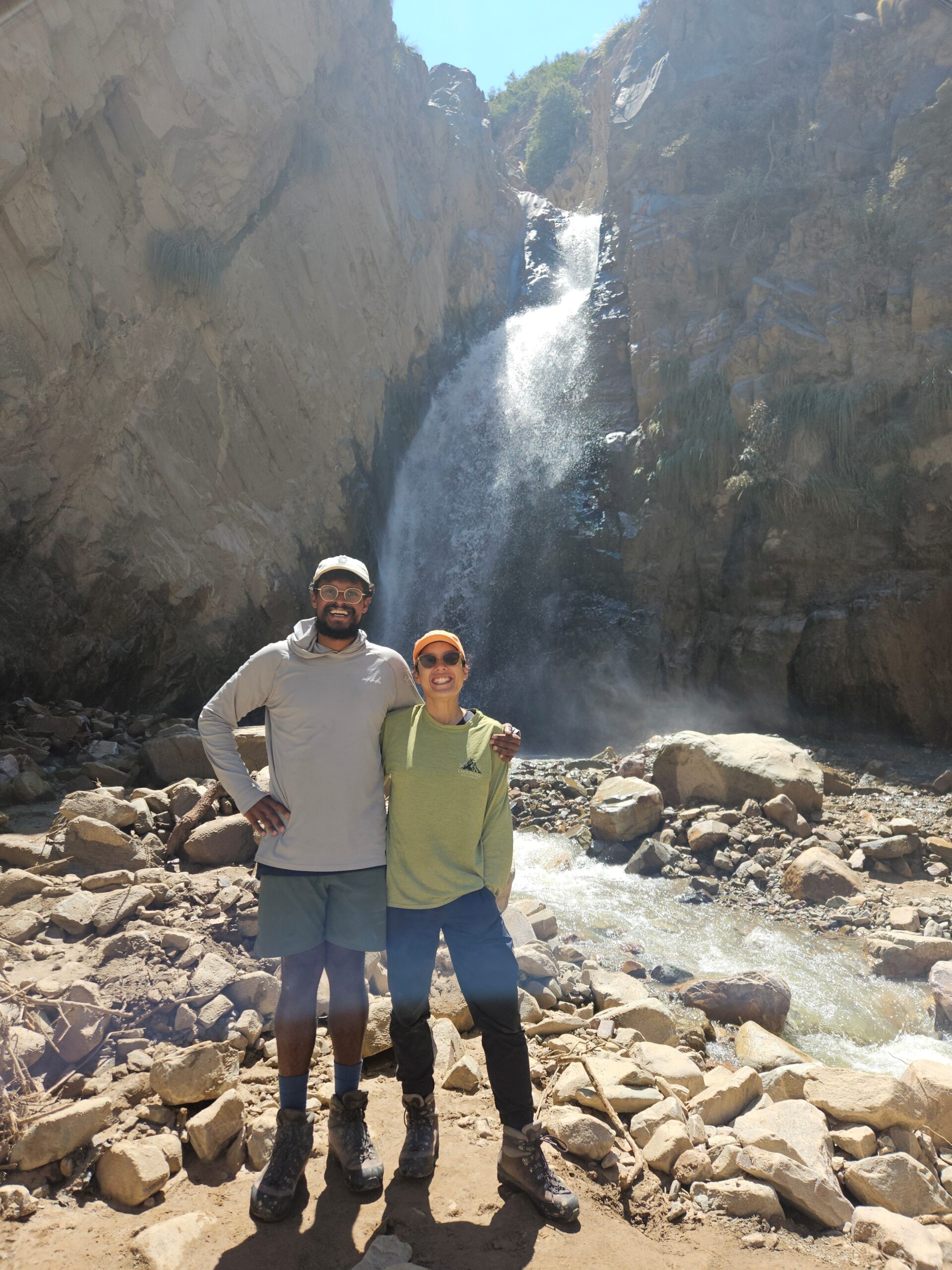
Other than a multi-day, Tilcara is popular for a short day-hike to the Gargantua del Diablo (if you read the last post, you’ll find this is a recurring theme – though this one refers to a waterfall rather than a narrow gorge!), which is a nice way to spend a morning. The entrance was 3000ARS pp. The market in Tilcara is tidy, and a great place to pick up fresh produce and see what’s up. We also found a really lovely cafe that served the most insane cakes – La Casa de Champa. We both got a full portion slice, which it turned out to be a mental amount of sugary deliciousness – we had to take the leftovers away. Their outdoor area was lovely to sit in, and we spent some time journaling here. Otherwise, Tilcara has quite a few international restaurants for such a wee town. If you’re looking for a cheap meal, Killa O Wasi serves a decent menu del dia for dinner, with basic but yummy kai. There’s a couple of other spots to check out if you want to spend more than a day here, a historical site and a cactus filled botanical garden, but we didn’t go for them.

Our next stop on the trail up to Bolivia was Humahuaca, which bests Purmamarca with its Mountain of 14 Colours! We took a ‘tour’ for 15000ARS each, though the tour guide didn’t have much to say (and all of it was in Spanish – and ours was still not very good at this point!), we met our Brazilian friend Guillerme and a wonderful Argentinian couple by taking a shared van up to the site. We saw a few Vicunas on the way up (how are their eyes so large?), and the mountain itself is gorgeous and lovely to just gaze upon. It does run up to quite a high altitude, so if you decide to take the short walk to the lower viewpoint, be prepared to puff on the way up! And in another unexpected moment of kindness, on the drive back down Florian & Esteban helped us indulge in our first mate experience – kindly, not judging when we didn’t know to slurp on the straw as we finished. And while we have no frame of reference, their organic yerba was incredible and delicious and we are so grateful that on our last day in Argentina, we were able to experience such a key part of this culture!

Other than this tour, there’s not a lot to do in Humahuaca – but there’s some good cheap street food near the river, and we tried Llama Cazuela in one of the restaurants here – a traditional plate of the area. One thing that we might’ve tried if we had a little more time (or the freedom of our own car) is a tour to Inca Cueva, which is a historical site to the north of Humahuaca that involves a small amount of hiking.
And thus ended our excursions in Argentina’s north – a part of our trip that surprised us, surprised us, and surprised us again. Everything in travel is great for different reasons, and while ‘no expectations!’ can give you a good experience, it’s the unexpected human interactions and snapshots of a whole different culture that leads to satisfaction.
Keep it Short & Sweet:
- Salta: Not the home of the Saltena, but certainly an excellent place to pick up a delicious Empanada, or experience local food and traditional music at a Pena.
- Spend a morning walking up Cerro San Bernado for some sweet views.
- Wander through the old town for shopping, chaos and churches galore!
- Pick up cheap street food along Av. San Martin.
- And it’s a great place to start a road trip, or take some full day tours: explore South for canyons, wine tastings and gentle hikes, West for the Salinas Grandes, or North for charming towns tucked in alongside dramatic Andean valleys. In March 2025, all of the day tours were about 35000 pp.
- Explore the north:
- Tilcara offers a sweet day hike to the Gargantua del Diablo (if you read the last post, you’ll find this is a recurring theme – though this one refers to a waterfall rather than a narrow gorge!), or an extraordinary hike across the mountains, from the pampas through to the selva. Check out our next blog post for more details.
- At Humahuaca you can jump in a 4×4 to explore Serrania de Hornocal, the mountain of 14 colours, or if you feel like a dash of history, a day tour to Inca Cueva, an old Incan site.