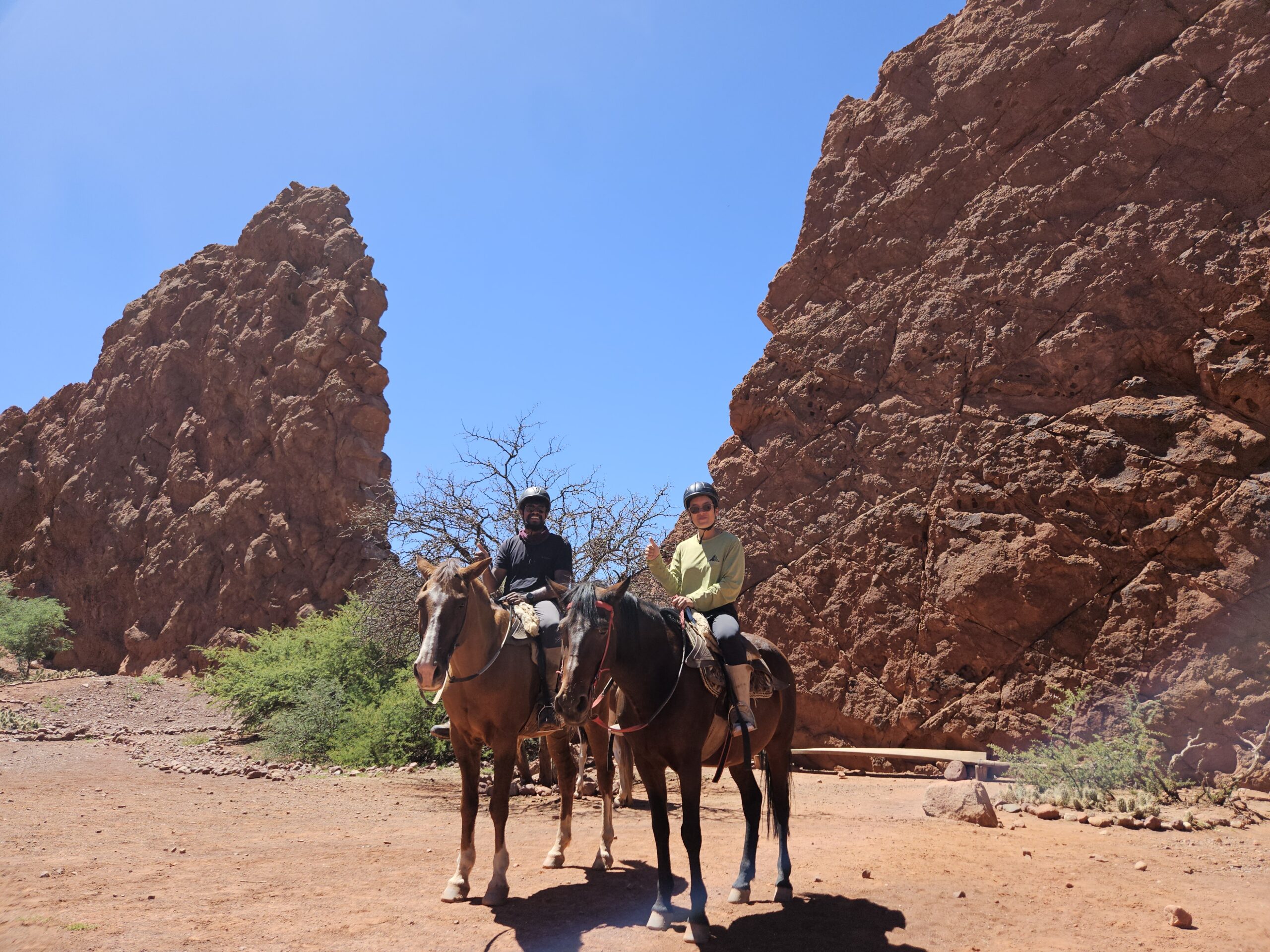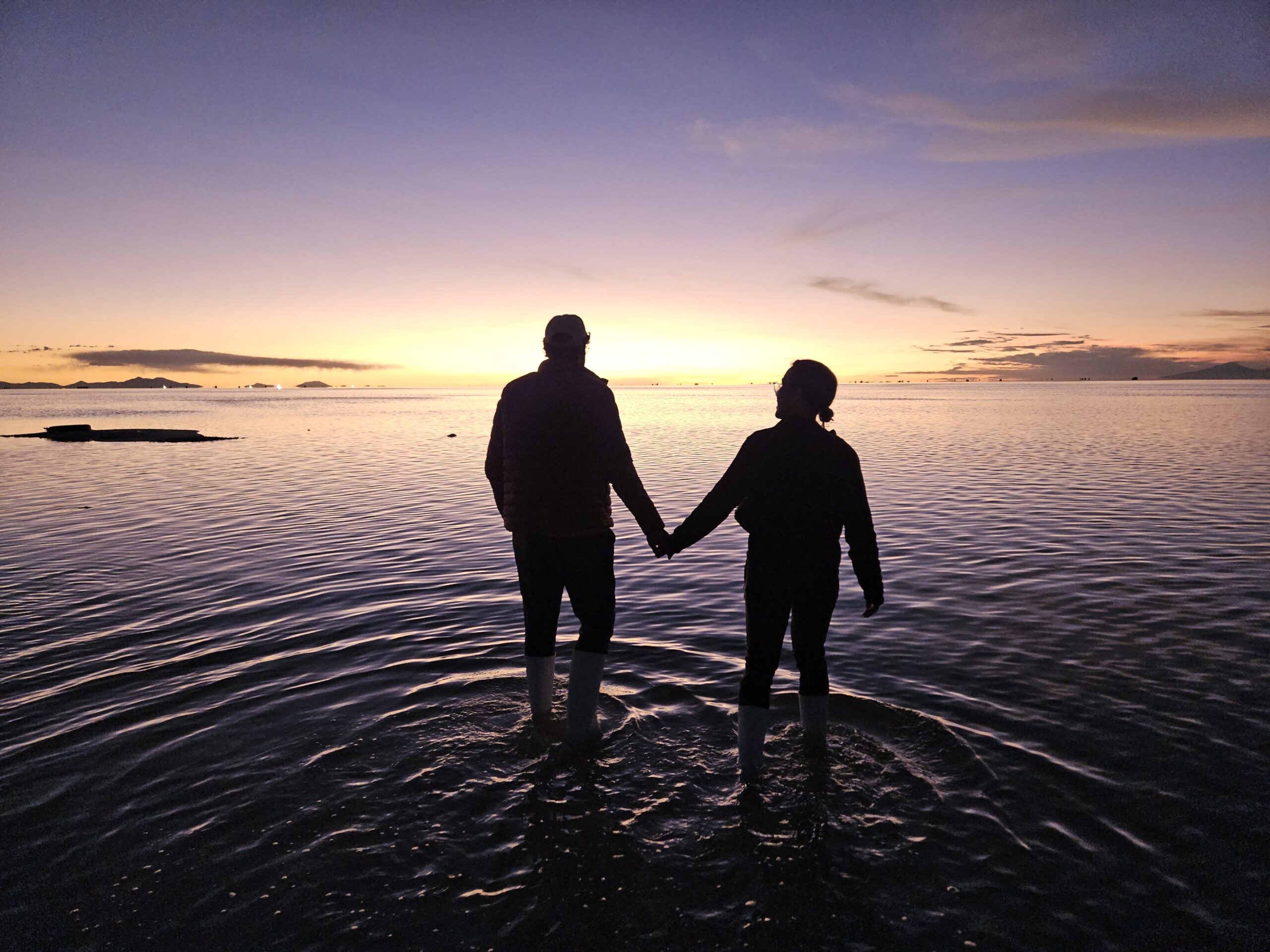
The Salar de Uyuni (Salt Flats) is Bolivia’s major attraction. The greatest salt flat in the world brings in thousands of tourists annually, both in the dry season for blinding white perspective, or in the wet season to see the world’s largest mirror. Both are famous for the extraordinary photos that arise from them, but it’s not just the Salar that is popular. While you can ‘just’ tour the Salt Flats, the surrounding desert offers plenty of sights to see.
Otherworldly rock formations standing randomly amongst otherwise empty desert. Snow-capped volcanoes rising up far above your bumpy 4×4 route. Toxic lagunas of all kinds of colours – pretty means don’t touch. Flamingos and alpacas galore! All await on a multiday tour of the Salar de Uyuni.
Keep it Short and Sweet:
Touring the Salar & Surrounds:
- Start from: Uyuni (cheapest (BOB) – salar first), San Pedro de Atacama (more expensive (CLP) – salar last), or Tupiza (more expensive as there is an extra day – Salar last)
- Booking in person is cheapest, and the tours leave from Uyuni/San Pedro daily – the market is smaller in Tupiza.
- Be aware of the altitude – if you can acclimatise beforehand, that’s best!
- Bring your own snacks – you’ll get hungry
- Be ready for lots of driving and viewpoints, but not a lot of walking.
Tell Me Everything
Tours of the Salar begin in three different locations, Uyuni (Uyuni), San Pedro de Atacama (Chile), and Tupiza (Bolivia). Generally, people will take the tour from Uyuni to San Pedro (or vice versa) to combine it into the rest of their travel, although you can return to your start point – but the costs may be different. This tour takes three days. The tour from Tupiza to Uyuni (which we took), takes four days, but only the first, and part of the second day, is really very different.
So which tour is the cheapest:
Tours from Uyuni will give you the best chances of getting a good deal – there’s lots of competition and the Bolivian exchange rate is very favorable to foreigners. Tours from San Pedro de Atacama will be more expensive, as the Chilean Peso is much stronger, and Tupiza will be slightly more expensive, as there is an extra day involved and there is less competition amongst tour operators.
However, the great thing about starting from either San Pedro or Tupiza – your tour finale is the Salar. While everything included in the three/four days is cool, nothing comes close to the beauty and otherworldly feeling of the salt flats, so finishing off on that high is, in our opinion, the best way to complete your little adventure.
Additionally, Uyuni is not a lovely place to be – it’s not a wealthy city, although during the age of silver mining in Bolivia, it was a central point for the movement of the metal throughout the country. It’s cold and dusty, with people really only arriving with the aim of touring the Salar. We left immediately after our tour, preferring to catch the bus to our next stop (Potosi) and rest there, rather than risking a bad experience in Uyuni. If you start from the other two cities, you can do the same, but it’s nearly impossible to book a same-day multi-day tour (as they start so early), and if you book a same-day single day tour you’ll be pushed for time… so staying a night is basically unavoidable.
How to Book a tour and whats included:
Booking the tour itself is pretty easy, just check in with some operators for prices on Whatsapp (or in person – you may get a better deal, though we’ve generally found that the Whatsapp prices are fair – much fairer than those online, for sure!), make sure their Google Reviews aren’t horrific, and confirm that they’re able to start on your preferred day – you may have to shop around to find a combination of best price and starting date, as they’ll only send a car out with 4 people minimum. Of course, if you’re on a very tight schedule you’ll probably want to book online in advance for peace of mind, but as always this costs far far more than it needs to.
As far as we know, all the tours go to the same attractions – it’s just the hostel at the end of each day that differs. Whatever you pick, there is very little walking involved, only short opportunities to stretch your legs by wandering the shores of some lagunas or around windswept rocks. We found that the food on the tour was somewhat lacking – good quality, but low quantity. We heard that this is pretty consistent across the different tour companies, so bring your own snacks! One thing that they may be relying on is the altitude. The tour takes you up to nearly 5000m on one day, and you sleep at over 4000m most nights, so there is a real chance of altitude sickness – if not serious (one guy on our tour spent a whole day wiped out – it seemed like food poisoning, but could’ve just as easily been the altitude. He didn’t eat anything!), often one of the minor symptoms is reduced appetite. Do take it easy and go hard on the sweet treats, coca and water – altitude sickness can really ruin your trip. Don’t push yourself on the walking parts, just enjoy stretching your legs, and always, always be realistic with how you’re feeling – altitude sickness is no joke and can be fatal!
While it’s a lot of time driving, it’s a nice way to bond with some people over your country’s most iconic tunes, stare at incredible moonlike landscapes, practice your Spanish with the tour guide, and really experience some 4×4 adventure. For parts of the Salar, especially the route from Tupiza, there is no true road – paths will disappear into the dunes, or your driver will be picking one of many tracks winding all over desert hills. It’s a pretty humbling experience, as you’re entirely reliant on the memory of your driver and their skill at handling an old Toyota in these freezing sands. Google Maps isn’t helping anyone!
We really thought that the build up of the tour, through the desert scenes and alpine grasses, checking out alpacas and llamas and flamingos and rheas (seeing them run – simply hilarious), made seeing the Salar at the end that much more exciting. The whole tour is worth the time and the money. However, if you really are on a short holiday and don’t have that much time, and just want to check off the Salar, that’s okay too – as mentioned many times, it really is the highlight. Make sure your tour gets you either a sunrise or sunset on the Salar, as the flatness makes it a stunning place to watch from (and if you’re there when it’s wet, the mirror effect with the sun is truly incredible).

If there is water in the Salar, you may need to hire some gumboots – when we were there in April, it was so deep that Emma’s gumboots were almost not tall enough (short person problems). Basically, if the whole Salar is covered, there will be deeper and shallower sections, which are inconsistent, and the cars driving around create lovely wee waves that will send you jumping for higher ground. It’s important to have protection because the salty water can really irritate your skin. If the water is low enough to use your own boots, probably in the shoulder seasons, take care to clean them afterwards to prevent damage.
Another curious thing about the Salt Flats – they are a highway, as the salt is mined in parts of it, and it’s an easier, flatter path to enter Bolivia from Chile. Expect to see some big trucks randomly moving though, plus locals using it to get from place to place. However, the composition of the salt flat does make this complex. It’s not the most stable of ‘roads’ due to the compacting and crystalline patterns of the salts. There are sometimes massive pockets under the top layer of salt, which can cause a vehicle to sink entirely! The salt itself is problematic too – it can do some major damage to cars if left to marinate on the metal, so it’s important to clean it all off once you’re off the flats.
A Day by Day Summary of a Tour From Tupiza:
Day 1: Lots of driving! We didn’t stop a lot – first, to enjoy the view of the hills around Tupiza. Then to watch some wild alpacas. There was a ghost mining town with a pretty crazy story to it. All day the views are great, but it is a long one!
Day 2: Is inside the National Park. More llamas and flamingos today! Plus rheas and foxes on the roadside, if you’ve got your eyes peeled. Visit lots of lagunas of all different colours, take in desert vistas, listen to bubbling geysers and top it off with a relaxing stop at natural thermal baths. The views from the baths are pretty special too – Instagram worthy, if you’re going for that kind of thing. It’s a stunner of a day!
Day 3: Start the day off by checking out some eroded rocks just sitting in the middle of the desert – if you’re good at taking photos, they’re great material, otherwise they’re just so curious to look at and consider just how they ended up like that! More lagunas await – we loved the vibe at Laguna Negra, which is one of the few lagunas which isn’t full of toxic chemicals. This means no flamingos, but a great variety of other birds – including Emma’s favourite, the Giant Coot, which builds a nest of reeds on the surface of the water and makes a call like a crazy person laughing – it’s incredible to hear. The last stop of the day is the train graveyard… we remarked that it’s impressive that they’ve managed to turn a bunch of useless junk into a tourist destination. It’s not super interesting for those who aren’t train spotters (and we think it’s also a great place to get tetanus, so watch out for the sharp edges), but it’s nice to wander around before settling in for one last night.
Day 4: The Salar. Wake up before the sunrise, and be out on the Salar for the changing colours of the sky and some unbelievable reflections. Take breakfast with your group in the salt house, then spend some more time mucking around, taking photos, videos, wading through the flats, and generally enjoying this special experience.
If you’re starting from San Pedro de Atacama, cut out day 1 and the schedule should look basically the same. Reverse that – and it’s the tour starting from Uyuni.
There are plenty of ways to enjoy the Salt Flats, totally dependent on your trip length and the time you have available, but if you have the flexibility, visiting Tupiza in the first place (as detailed in our last post) and starting the tour from there is a great option to experience a little more about Bolivia and still end your tour at the Salar.