
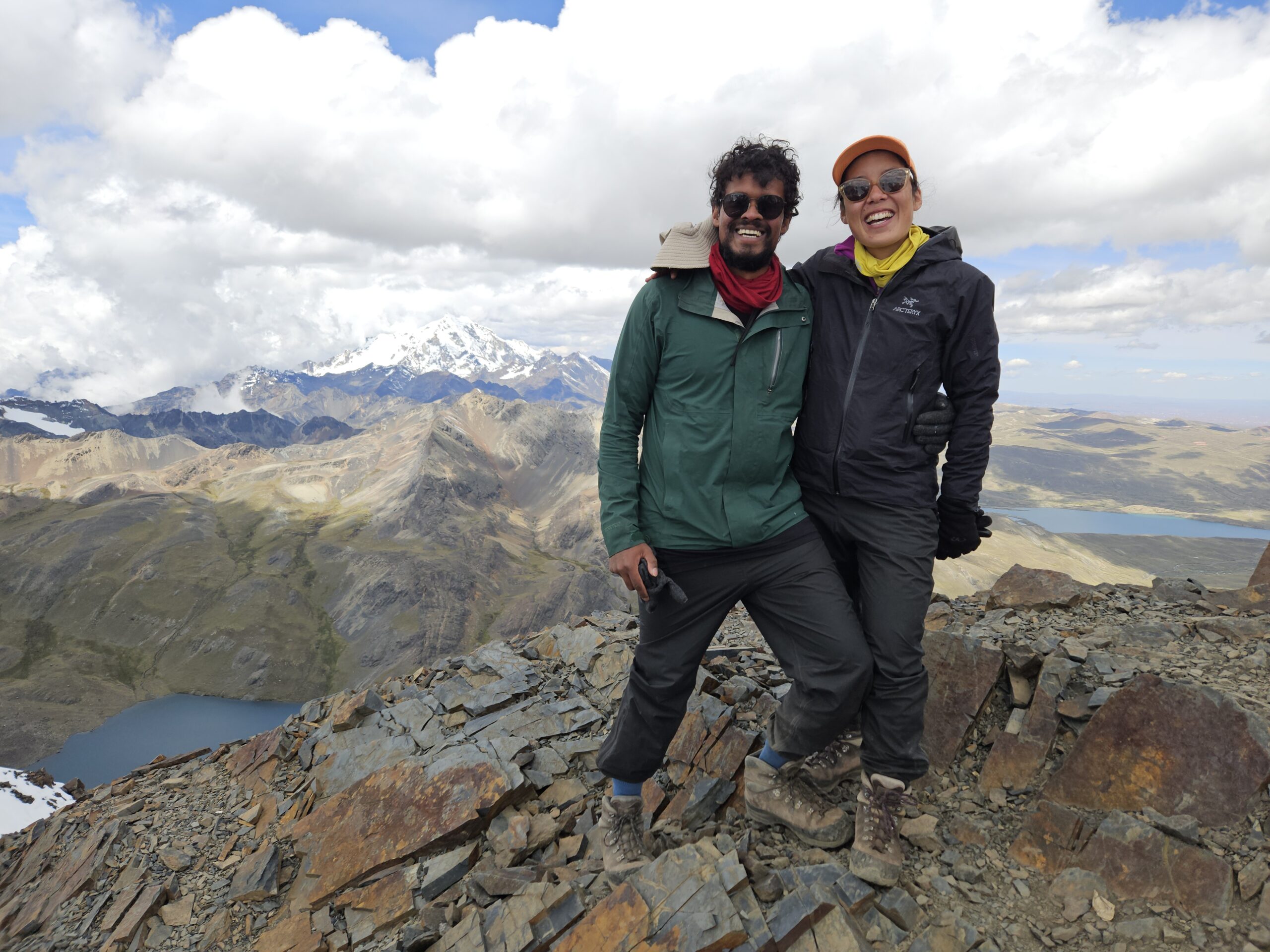
Bolivia is a seriously underrated destination. We were just planning on ‘passing through’ and ended up spending 2 months there. It is filled with an incredibly special culture, marked by a strong blend between pre-Hispanic indigenous groups and Spanish, catholic influence. Pachamama is as important, as figures from the bible; pagan rituals are as impactful as Sunday mass. The mountains and the jungle are sacred in many areas, with tribes continuing on with their traditional rites. Communities maintain strong bonds, celebrations are common, and the people are so varied – from the altitudes of the altiplano to the heat of the jungle plains, ways of life change immensely. It’s a country that has so much to offer, but that is best explored with time and plenty of patience.
Many travellers don’t dedicate a lot of time to Bolivia – they’re in and out with a few key sights – Salar de Uyuni, Death Road, La Paz’s night life and teleferico, maybe a quick stop at Copacabana and Isla del Sol on the way to Peru. But there is so much to see in Bolivia, with some truly awe-inspiring mountains, so many quirky cities, a really pleasant climate (god, we miss the cold), and an incredible culture.
We’ve read some blogs that interpret Bolivianos as colder, less welcoming than other South American countries. We think that this is a miscommunication. Across the board, our feeling is that Spanish is a language of love, of welcome, of hospitality. But so often our sense of warmth is linked to a feeling of hospitality, and that can really be a Western Thing – experiences in the traditional settings of cafes and hostels and restaurants. But Bolivia is far from the Western World – and more so than its neighbors. It receives less tourism, and it’s less influenced by international parties. Its indigenous roots have more of a say in the overall country of the culture. It’s different. And a western mindset is different to the people – maybe it makes them uncomfortable, maybe it makes them shy. Understanding that and being open to that is important to making yourself recognize the hospitality in Bolivia. Making all efforts to speak Spanish – visiting local markets with real local people – being respectful of people’s dress and culture – there are a myriad of ways to engage in a scenario where you are speaking to a local as an equal – rather than as a foreigner.
Hands down, the kindness, smiles and hospitality we received in Bolivia was second to none when compared to the other beautiful south american countries we visited.
Click here to take you to short and sweet that summarizes this blog post
Tell Me Everything
Altitude & Coca Leaf
One thing that can really mess up your time in Bolivia is the altitude. If you are coming by land via Brasil or Argentina, you should be travelling a route that ascends gradually – this is perfect for acclimatizing. If you come through Peru, Copacabana and Lago Titicaca are high, but if you’ve already been to Cusco or Huaraz, you should be somewhat acclimatized. If you travel across the desert from Chile – well, that’s a high altitude journey in its own right, so take care. And if you’re flying directly into La Paz, don’t forget that you’ll be resting in the world’s highest capital city. Seriously – altitude sickness feels shit, can ruin your trip plans, and, worst case, genuinely cause fatalities – so don’t go messing around when you first arrive! Our advise is to take 2-3 days walking around the city, drink lots of water and eat alot during the day. Your body will be working on overtime as there is less oxygen in the air so you need to fuel it properly. Dont try walk superfast up the hills, listen to your body and try keep your heart rate in zone 2.
Coca leaves are the Bolivianos’ answer to the altitude. Coca tea, coca leaf for chewing, coca lollies – all are widely available and are touted to be an excellent way to stave off altitude sickness. While we’re not sure at the effectively against altitude sickness, there is no doubt that coca leaves have a real impact on your system, and it’s a huge part of the local culture (there is even a specific coca museum in La Paz!). Purified cocaine is made in a pretty complex process from the plant, but the leaves themselves have only a small amount. Consuming coca leaf is similar to drinking coffee – it helps you focus, keeps you more awake, leaves you on a little buzz. It also tastes fantastic! It’s easy to spot locals munching on leaves – the normal thing to do is to shove leaves into your mouth (don’t chew them too much), until you have a little ball in the side of your check – 10-20 leaves should do the trick. Then you just… leave them there, letting the coca-juices mix in with your saliva and slowly make its way into your system. Don’t swallow the leaves!
Pro tip from Awal: If you’re feeling a bit tired on a hike, put some coca leaves in your mouth and watch the magic happen. I dont know if this was placebo but i was boosting up the hill for several hours.
The Blue Dollar
Up until at least August 2025 (as of writing), Bolivia’s economy is a bit… fucked. In the same way that Argentina had the Blue Dollar rate for many years (the ‘tourist rate’), Bolivia now faces the same situation. Today, the Bolivian dollar is officially valued at 7Bs per USD – but to someone in Bolivia, the dollar is actually for 13.5Bs. Why? Some weird economic thing, where the trust in the Boliviano currency is so low, the locals tie it instead to a cryptocurrency. Awal can explain…
But while this is rough for locals, who are constantly seeking USD to exchange, it means that as a tourist – you have a real advantage. Bringing in physical USD (or euros – there is also a Blue Rate) will mean you can exchange your cash at any casa de cambio and more than double the official value of your money. Official exchange houses may display the official dollar – but if you enter and ask, they will give you the blue dollar rate. There are plenty of people exchanging cash on the roadside too. This makes travel in Bolivia at this time incredibly cost effective. Double your money – half the cost of everything. This is a major reason we could spend so much time in Bolivia; we could do so much, for sure good value.

Its important to recognize that although this is incredibly advantageous to yourself, locals do not feel the same way. Its important to remain respectful towards locals, especially with regards to comments made. Saying things like ‘omg thats so cheap’ is incredibly disrespectful when general locals are really struggling to make ends meet and can only earn in BOL. This topic is the top of every locals mind and once you get to chatting to a couple of locals, the topic will come up.
A scenario to explain how this is impacting the locals is to use your hostel for example. Booking.com will take a cut from the booking made, the price advertised on booking.com will likely be bolivianos, even if it is advertised in USD, the hostel will use a conversion close to the official exchange rate, something like 7-9bol max. This means that when they pay their commission to booking.com, they will pay in USD, which they can only exchange at a rate of 7bol, when compared to the 14bol you exchanged for. YES, this is an unrealized loss, but the feeling of ‘missing out’ when you’re trying to run a business is a tough one!
Accommodation:
Your best bet for booking accomodation is to message the hostel directly on whatsapp and locking in a price in Bol. The last thing you want to do is book on a platform like booking.com, show up and have a disagreement on the exchange rate used. You will definitely feel like you are getting ripped off even if the hostel is using a slightly higher rate than the official rate as their standard practice.
In our experience, booking through what’s app gets you a better price anyway as there isn’t a 10% commission added on top, with regards to these booking apps.
Safety
We found Bolivia overall to be incredibly safe. People were welcoming or shy and very rarely did we feel watched. Homelessness and substance addiction wasn’t prevalent in the places we stayed or explored, even though it was readily available. Obviously, this is our personal experience – the political climate can change drastically over the months and years. And we travel as a couple – which generally makes a lot easier, we know. But truly, the most concerning thing in Bolivia is the number of stray, feral dogs. The dogs around towns and on the surrounding hiking tracks can be a major issue – having a few rocks in your pocket (or a pair of hiking poles) is the best deterrent, as unfortunately they seem to only respond to aggression.
Climate
The altiplano holds the major part of Bolivia’s main attractions, and many more besides, High altitude means freezing nights, cold days (even with sun), and a much higher chance of sunburn. Lots of layers and good sun protection is important. Don’t expect to walk about in your shorts and jandals – your gringo ass will stick out like nothing else.
While still on the altiplano, towns like Sucre and Cochabamba are in valleys at far more reasonable altitudes – and to match, there is more mild weather.
Bolivia also stretches out to the east into the plains towards Brasil, and north into the Amazon. These regions are hot, humid and full of biting things.
Being near to the tropics, Bolivia experiences a pretty mild temperature change between summer (Dec – Feb) and winter (Jun – Aug), but the more distinct difference is the amount of rainfall. The summers are wet and the winters are dry. The shoulder seasons are the best for the Salar – getting a combination of wet and dry across the desert gives you the best of both worlds (although – when it is completely full of water, it is a real spectacle). The dry season is the best for hiking, and although it will be a little colder it’s always tit-freezing cold on the mountains, so it’s no big deal.
Getting Around
Bolivian bus terminals are an experience. There is no quiet terminal; upon entry you’ll be assaulted with the cries of sellers and their wares – namely, the titles of cities that companies run to, at full volume. This can make it easy to find the company you need, but always check around the terminal (or on an App like busbud, although it may not have all the optional) for the closest leaving time – and to check you aren’t getting a cheeky tourist tax throw on top. Because of the Blue Dollar, we definitely recommend buying tickets in person or via WhatsApp rather than reserving and paying online. All Bolivian terminals also have a fee associated with them, so you’ll have to pay a few BOL as you leave the terminal. This also means that the bus will stop a minute outside the terminal to pick up locals who don’t want to pay the tax – fair warning to take scheduling in Bolivia with a grain of salt.
Overall, buses are the way to go in Bolivia. Flying around is always an option, but it’s pricey, and the bus system is great. Even the bus we took to Rurrenabaque (often travellers’ ‘worst bus experience in South America’) was reasonably comfortable, although it was delayed a few hours due to awful roads. The buses consistently have fold out leg rests, even if they’re older, which makes a huge difference to comfort. Most of them don’t have seat belts… but that’s just the culture. We met one traveller at the terminal in Potosi who said he will only go on a bus with seatbelts, I think the brother is still looking for that bus!
We’ve heard that there can be blockades which can really mess with your travel plans, usually in major cities like Cochabamba and La Paz. We didn’t experience this at all, but that’s pure luck. Keep up to date through your hostel.
If you’re planning to drive through Bolivia yourself – fair warning that the fuel situation in Bolivia is complex and rather dire. The supply of gasoline is inconsistent and seriously inhibits foreigners, both in terms of price and availability. The locals will get served first and only if there is more to go around, foreigners will get fuel at an inflated price.
Taxis are a fine way to get around in Bolivia. Uber isn’t really a thing, but with the Blue Dollar again – taxis are fine and economical. Just check with your hostel or a friendly local what the price should be, and try name your price rather than letting the driver do so. Never ask ‘how much?’, always say the price and then stick to it. Because youre a tourist, you will likely pay 10-20% more – if you are good at haggling – so just take it.
Food
Bolivian cuisine may not be the most inspired – but there are some gems out there to be found.
If you’re on that shoestring budget, finding a menu del día is key – ask your hostel for the economical options in town (we learned not to use the word ‘cheap’ – it doesn’t have the same connotations in spanish), or spend some time wandering the streets. Google Maps will often not show you what you want! They’re also rarer in the night, it’s more commonly a lunchtime offer.
If you want to cook (although, it’s often just as economical to eat a menu del día), the quality of produce is excellent, and the markets in Bolivia are so so fun. We’d definitely recommend picking up produce and staying in a hostel with a good kitchen for at least a couple of nights, to make the most of all the amazing fruits and veges to eat.
We’ve got a few core memories of Bolivian foods: namely, Saltenas, Bolivia’s greatest gift to the world. Saltenas are a Bolivian creation; while the name alludes to the Argentine city of Salta, the story goes that the creator moved from Salta to Bolivia, and the idea was first birthed in Bolivia itself. I don’t think there’s much of a contest from Argentina for the rights to a Saltena (they seem to prefer their empanadas), but my god – a Saltena takes the crown on all stuffed pastries. The filling is sweet, spicy and liquidy – the act of eating a saltena successfully is honestly an art, and if you’re not careful you’ll lose all the tasty juice and burn your hands while you’re at it. The pastry is short, not puffy, but also a little sweet, and pleated like a dumpling or curry puff to make a cute wee package.
Other outstanding foods that come to mind include papa rellenas (stuffed, deep-fried mashed balls), charqukan (a dried meat typical of the altiplano, served with mote and chuno), and anticuchos (pieces of heart skewered and cooked over a grills). Both papa rellenas and anticuchos can be found in Peru, although the style is slightly different.
Soups are another staple of Bolivian food culture. With your menu del dia you’ll receive some soup to start, most often with pasta (fideos) or quinoa. However, our personal favourite is Chairo, which is a rich beef stew.
Another major, major prevalence in Bolivia – potatoes. There are so many different varieties of potato in the region. We think that the most curious one is ‘chuno’, which is a potato that’s dried to last multiple seasons. They must be rehydrated for hours before they can be eaten, and this results in a really curious texture but a lovely flavour. They’re also black – which is kind of wild.
I wouldn’t say that we’re connoisseurs of fried chicken, but I think we’re pretty close – and the quality of the dirty bird in Bolivia is OUTSTANDING! Whether youre buying it from the side of the road, from a chinese restaurant or a chicken shop, Awal will be the first to tell you that Bolivia has consistently the best fried chicken in the world. It’s consistently fresh, crispy and never too oily. Chicken shops are everywhere, and our favourite thing about it was something we’ve affectionately named ‘the holy trinity’ – with your chicken, you’ll receive fried rice, some noodles (well, pasta), and fries. It’s a meal that’s cheap, massive, delicious and an absolute recipe for gaining some weight.
The last point on the food list is an honorable mention; not Bolivian cuisine. We spent two weeks in Sucre, and so got to know it’s cafe scene pretty well… and we’ll never forget SOMOS, a cafe near Parque Simon Bolivar which served excellent coffee and the most exquisite cinnamon rolls – as i said, not a Bolivian staple, but a pastry that i will dream about my whole life. Don’t miss it if you’re there!
Availability of International Goods
Because Bolivia had no port and a fraught relationship with the USA, many international brands simply cannot be found in Bolivia; or if you can find them, they’re hellishly expensive. Expect to live without a few of the classic haunts, and don’t plan to do any branded shopping in Bolivia.
Navigating While Hiking
Tracks are not well defined in Bolivia – trail management is not a thing. This is an iconic part of the Bolivian trail experience, but don’t let that put you off. A bit of bush bashing or back-tracking never did anyone any harm! Mostly…
We also found that (at least in the altiplano), the ‘tracks’ that we walked tended to be near mountainous settlements. People live traditional lives all over the place in Bolivia, so you’ll never be far from a random homestead… or a misleading cattle track. Our best advice is to check your GPS regularly, and trust your trailfinding instincts a little less than usual – cattle, sheep, goats, llamas – they’re all out there walking tracks that will not take you where you’re planning!
Rubbish
It’s not the worst place in the world, but Bolivia, like many places in South America, does have a considerable amount of rubbish that piles up around the place. While there are often signs which state ‘no botar basura’, it is not followed or punished. There isn’t the culture in the local populace to maintain the environment trash-free.There’s not much that can be done, so fair warning.
Keep it Short and Sweet
- The altitude is no joke – take it slow and always listen to your body.
- Make sure you know if the Blue Dollar is operating when you leave; bring in physical cash accordingly. Check our budget post for an ideal of how much you might need.
- Always make your own assessments and read the latest political news, but in our opinion, Bolivia is a safe place to travel.
- Take clothes for all seasons – but mostly for the cold! The altiplano is frigid att night.
- You could travel by plane, but the bus system in Bolivia is great and works fine.
- The local food can be tasty! It’s generally not full of flavours – spices are lacking! – but they do the basics well and there’s definitely stuff to appreciate. If you’re vegetarian, it’s a little difficult…
- Hiking is amazing in Bolivia, there are so many mountains and gorgeous views. However, the tracks are not necessarily easy to follow, and we didn’t come across any trails where you actually completely avoid people – there are people living all in the mountains.